-
by sayum
25 August 2026 6:19 AM







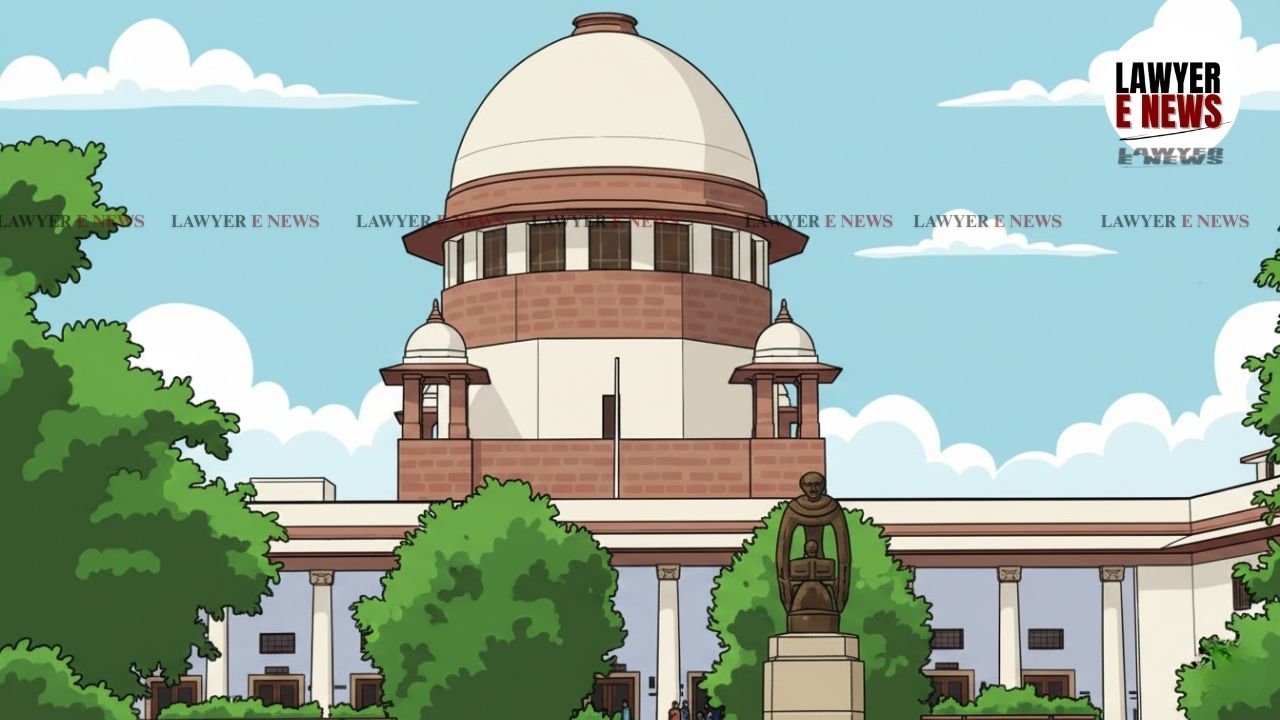
“The rights guaranteed to persons with disabilities are not acts of benevolence, but expressions of the constitutional promise of equality, dignity, and non-discrimination”, On this Wednesday, in a landmark ruling with far-reaching consequences for inclusive governance, the Supreme Court of India, in Mission Accessibility v. Union of India & Others, Writ Petition (C) No. 206 of 2025, delivered a powerful verdict recognising the full scope of constitutional rights of visually impaired aspirants in the Civil Services Examination. The Court directed the Union Public Service Commission (UPSC) to restructure its examination framework to provide reasonable accommodations mandated under the Constitution and the Rights of Persons with Disabilities Act, 2016.
The case, heard by a Bench of Justice Vikram Nath and Justice Sandeep Mehta, arose from a public interest petition filed by Mission Accessibility, a disability rights organisation, seeking systemic changes in the examination process to ensure that visually impaired candidates are not pushed to the margins of India's most competitive public recruitment test. The petition demanded use of screen reader-enabled digital question papers, relaxation in scribe timelines, permission to use laptops with assistive software, and an end to procedural rigidity that violates Articles 14, 16, 19, and 21 of the Constitution.
“Equality Does Not Mean Uniformity, But Removal of Barriers” – Justice Sandeep Mehta
Opening with a strong constitutional vision, Justice Mehta observed, “The measure of a just and inclusive society lies not merely in the freedoms it proclaims, but in the opportunities it ensures for all its citizens to realize their fullest potential… The law, as an instrument of justice, must therefore move beyond formal equality to ensure substantive inclusion.”
Framing the issue not as a question of administrative leniency but of enforceable rights, the Court clarified that the visually impaired are not seeking special treatment but the “rightful fulfilment of the constitutional vision of equal opportunity for all.”
UPSC’s Delay in Implementing Assistive Technology Invites Judicial Scrutiny
The dispute arose primarily from the UPSC’s failure to accommodate the technological and practical needs of visually impaired candidates. Among other things, the existing rules required furnishing scribe details at the time of application submission, leaving no flexibility for changes due to personal emergencies or unforeseen circumstances.
During earlier hearings in May 2025, the Court had questioned the UPSC on its silence regarding screen reader software. Though an affidavit filed later by the UPSC claimed to have received 27 such requests and assured decisions on merit, it notably ignored the screen reader issue. The Court directed that all requests for change of scribes be accepted till May 18, 2025, and that they be decided by reasoned orders within three working days.
When UPSC finally submitted an additional affidavit dated September 12, 2025, it disclosed that the Commission had taken an “in-principle decision” to introduce screen reader software in future examinations. However, it simultaneously admitted that it lacked its own examination infrastructure and depended on State Governments, District Authorities, and educational institutions for logistics. The affidavit failed to provide any concrete roadmap or timeline, leaving the Court unsatisfied.
The petitioners rightly pointed out that such a policy announcement, without an executable plan, left the matter “in a state of uncertainty.”
Supreme Court: Implementation Must Match Constitutional Mandate
Expressing clear displeasure at the absence of structured execution, the Court remarked that the goal of accessibility cannot remain a paper promise. It said, “While the policy decision has been taken, the mechanism and modalities for its effective implementation remain to be streamlined and operationalised.”
The Court appreciated the intent but questioned the logistical inertia. It insisted that without inter-agency coordination and a clear timeline, the UPSC’s commitment to inclusion would be meaningless. The Bench stated emphatically that the changes sought by the petitioners were not matters of administrative grace but a constitutional necessity rooted in equality, dignity, and non-discrimination.
“Not Indulgence, But a Rightful Claim” – Court Issues Mandate to UPSC and Union Government
The judgment directed the UPSC to fundamentally reform its processes to make public examinations truly accessible. It was held that any denial of assistive measures to visually impaired candidates not only violates their statutory rights under the RPwD Act, 2016 but also offends the guarantee of equality and dignity under Articles 14 and 21.
The Court specifically mandated that UPSC must permit candidates to request a change of scribe up to seven days before the examination, and dispose of each such request within three working days. The Bench further directed the Commission to file a comprehensive affidavit within two months, detailing a clear timeline, operational plan, testing standards, and infrastructural readiness for deploying screen reader software in future examinations.
The Commission is also required to collaborate with the Department of Empowerment of Persons with Disabilities and the National Institute for the Empowerment of Persons with Visual Disabilities to formulate uniform protocols that will govern the use of assistive technologies, ensuring both accessibility and examination integrity.
Calling on the Union Government to provide all necessary administrative and technical assistance, the Court reminded the authorities that meaningful inclusion requires coordinated action and institutional commitment.
“The Constitutional Vision Must Become a Lived Reality”
The concluding paragraphs of the judgment reflected the philosophical core of the Constitution. In words that resonate far beyond the litigation at hand, the Court observed:
“The true measure of inclusivity in governance lies not merely in the formulation of progressive policies but in their faithful and effective implementation… The Union Public Service Commission, being the premier constitutional body entrusted with upholding the values of merit and fairness in public recruitment, must ensure that its processes are accessible, transparent, and sensitive to the needs of every segment of society.”
By reinforcing that disabled candidates are not at the periphery but at the heart of constitutional vision, the judgment elevates accessibility from a procedural question to a civil rights issue.
The matter has been listed for further compliance on February 16, 2026.
Date of Decision: December 3, 2025