-
by sayum
26 August 2026 8:37 AM








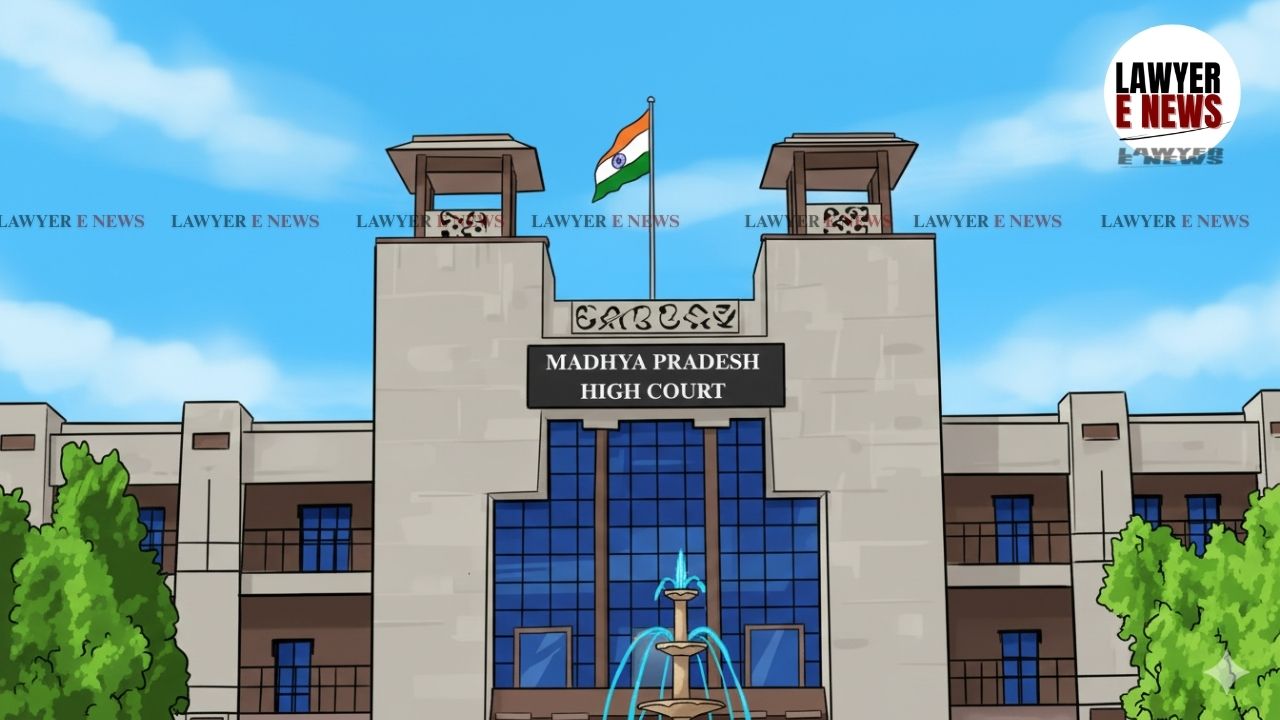
Once the Law Redeems a Mortgage, No Court Can Revive It – Madhya Pradesh High Court, in Ranjeet Singh vs. Radheshyam & Others, dismissed a second appeal challenging the automatic redemption of a usufructuary mortgage under Section 165(2)(b) of the Madhya Pradesh Land Revenue Code, 1959 (MPLRC). Justice Prem Narayan Singh, while upholding the first appellate court’s decision, ruled that since the mortgage had extended beyond the legally permissible six-year period, it was deemed extinguished by operation of law, and the mortgagor (plaintiff) was entitled to recover possession.
The court categorically stated: "A usufructuary mortgage, by its very nature, cannot continue beyond six years. When the law itself declares it extinguished, no court can hold otherwise."
The dispute arose when Radheshyam (plaintiff) filed a suit in 2010, claiming that in the year 2000, he had taken a loan from Ranjeet Singh (defendant) against a usufructuary mortgage of agricultural land. He alleged that despite repaying the full amount, the defendant refused to return possession, citing outstanding interest.
The plaintiff further claimed that in 2009, he cultivated the disputed land, but the defendant forcefully harvested the crop, leading him to file an FIR at Depalpur Police Station on September 29, 2009.
During proceedings under Section 145 CrPC, the Sub-Divisional Magistrate ruled in favor of the defendant, holding that he had been in continuous possession since 1999 and had thereby gained ownership rights as a permanent cultivator.
In the civil suit, the trial court partially ruled in favor of the plaintiff, recognizing that the loan had been repaid and directing that the land be returned upon depositing Rs. 20,000 plus Rs. 10,000 as interest. However, the first appellate court reversed this, holding that under Section 165(2)(b) of the MPLRC, the mortgage had been automatically extinguished after six years, making repayment conditions irrelevant.
Aggrieved, Ranjeet Singh filed a second appeal, contesting both the automatic redemption and the order to vacate the land.
The High Court upheld the first appellate court’s ruling, categorically stating that the mortgage stood extinguished by operation of law, regardless of any dispute over repayment.
Referring to Section 165(2)(b) of the MPLRC, Justice Prem Narayan Singh observed: "A usufructuary mortgage ceases to exist after six years. The law itself provides that upon expiry of this period, the mortgage is deemed fully redeemed, and possession must be restored to the mortgagor without requiring any payment."
The court further cited the Supreme Court’s ruling in Kondiba Dagadu Kadam vs. Savitribai Sopan Gujar (1999) 3 SCC 722, which emphasized that second appeals should not disturb findings of fact unless there is a substantial question of law.
Reiterating this principle, the High Court held: "The first appellate court’s conclusion was based on statutory interpretation and proper appreciation of evidence. No substantial question of law arises to warrant interference in a second appeal."
The defendant had filed a counterclaim, asserting that he had gained ownership rights through continuous possession and that the plaintiff’s suit was time-barred.
The High Court rejected this argument, clarifying that: "When the law extinguishes a mortgage, the mortgagee’s possession thereafter is unlawful. The defense of adverse possession cannot override statutory redemption."
The court further held that the counterclaim was contradictory, as the defendant simultaneously asserted that the mortgage still existed while also claiming ownership through adverse possession.
The Madhya Pradesh High Court’s ruling in Ranjeet Singh vs. Radheshyam & Others reinforces the automatic nature of redemption for usufructuary mortgages and clarifies that no court can override a statutory extinguishment of rights.
By dismissing the second appeal and upholding the plaintiff’s right to reclaim possession, the judgment reaffirms that land laws exist to protect borrowers from perpetual encumbrances, ensuring that possession reverts to the original owner as mandated by law.
As the court decisively concluded: "Once the law redeems a mortgage, no court can revive it. The defendant's continued possession is without legal sanction and must come to an end."
Date of Decision: 11 March 2025