-
by sayum
26 August 2026 8:37 AM








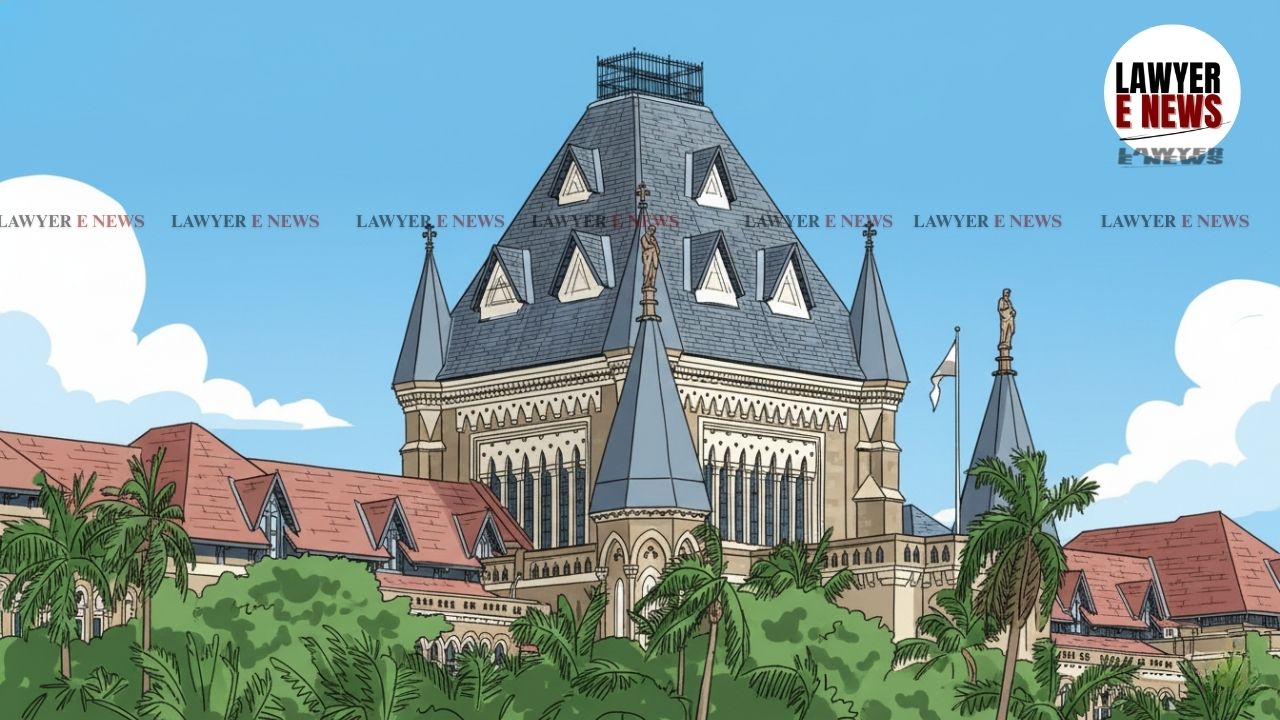
Law Favors the Vigilant, Not Those Who Sleep Over Their Rights - Bombay High Court, in a significant judgment, dismissed a writ petition filed by Uday Laxman Pawar, who sought reinstatement in government service as a Project Affected Person (PAP) nearly three decades after his employment claim was rejected. The Court ruled that the claim was hopelessly barred by limitation and held that "a legal notice issued 27 years after the cause of action cannot revive a dead claim."
Rejecting the petitioner’s argument that his right to reinstatement was a "continuing cause of action," the Court emphasized that "reopening stale claims would disrupt settled rights and administrative stability" and that "judicial review cannot be misused to disturb government decisions taken decades ago."
"Employment Denied in 1997, Case Filed in 2024 – Courts Will Not Entertain Unexplained Delays"
The petitioner, Uday Laxman Pawar, approached the High Court under Article 226 of the Constitution of India, challenging a letter dated April 5, 1997, and Resolution No. 89 dated November 7, 2002, both of which had denied him employment under the Project Affected Persons (PAP) rehabilitation scheme.
His case was based on the fact that his father’s agricultural land in Sondeghar, District Ratnagiri, was acquired by the State of Maharashtra in 1975 for an irrigation project, making him eligible for employment under the PAP quota. He was initially appointed as a daily wage worker (Grade III) in 1993 but was removed from service within a few months. His request for permanent employment under the PAP scheme was rejected in 1997 and again in 2002.
Despite these rejections, the petitioner took no legal action for nearly three decades. Instead, he sent a series of representations and complaints between 2021 and 2023 before issuing a legal notice in January 2024 and finally filing the present writ petition.
"Repeated Representations Do Not Extend Limitation – Delay of 27 Years is Fatal to the Claim"
The petitioner contended that his name still appeared on the unemployed PAP list, and therefore, his right to employment remained alive. He further argued that his claim had a "continuing cause of action" and that the authorities' failure to act on his 2024 legal notice justified his writ petition.
Rejecting these arguments, the High Court categorically stated, "A stale claim does not come back to life simply because repeated representations are made years later. The law of limitation is not a mere technicality but a fundamental principle to ensure legal certainty and administrative efficiency."
Relying on the Supreme Court's ruling in State of Tripura vs. Arabinda Chakraborty (2014) 6 SCC 460, the Court reiterated that "A person cannot keep making representations for decades and claim that the limitation period is extended each time. If such an argument were accepted, the law of limitation would become meaningless."
The Court found the petitioner’s reliance on a 2024 legal notice completely untenable, stating, "A legal notice issued 27 years after the original cause of action cannot restart the limitation period. Courts cannot encourage such attempts to revive dead claims through afterthought representations."
"Judicial Review Cannot Be Used to Reopen Decades-Old Employment Disputes"
Emphasizing the importance of finality in administrative decisions, the Court warned against reopening cases that had been concluded decades ago, stating that "granting relief in such cases would disrupt settled rights, disturb government records, and create legal uncertainty."
The High Court relied on Union of India vs. M.K. Sarkar (2010) 2 SCC 59, where the Supreme Court held that "when a belated representation is considered and rejected, the date of such rejection cannot be treated as a fresh cause of action. The limitation period must be calculated from the original denial of relief, not from subsequent rejections of stale claims."
The Court further referred to State of Uttar Pradesh vs. Rajmati Singh (2022 SCC OnLine SC 1785), where the Supreme Court emphasized that "undue sympathy in cases of stale claims breeds administrative inefficiency and leads to unwarranted burdens on the public exchequer."
Observing that the petitioner was already 55 years old, the Court also pointed out that the upper age limit for PAP employment had been fixed at 45 years as per a Government Resolution dated February 3, 2007, making his claim legally untenable even on merit.
"Law Does Not Protect Those Who Sleep Over Their Rights"
Dismissing the writ petition, the Bombay High Court ruled that the petitioner’s claim was inordinately delayed and barred by limitation. The Court firmly held that "a party who remains silent for decades cannot later claim a right that was long extinguished by law."
Criticizing the petitioner’s attempt to revive the claim through belated representations, the Court stated, "The petitioner remained silent from 1997 to 2024. Legal remedies must be pursued within a reasonable time, and the law cannot assist those who fail to act diligently."
This ruling underscores the strict application of limitation laws in service matters, preventing individuals from reviving employment claims decades after rejection. The judgment upholds the principle that courts must not disturb settled rights or create administrative uncertainty by reopening cases that have long been concluded.
Date of decision: 11 March 2025