-
by sayum
12 August 2026 1:53 PM







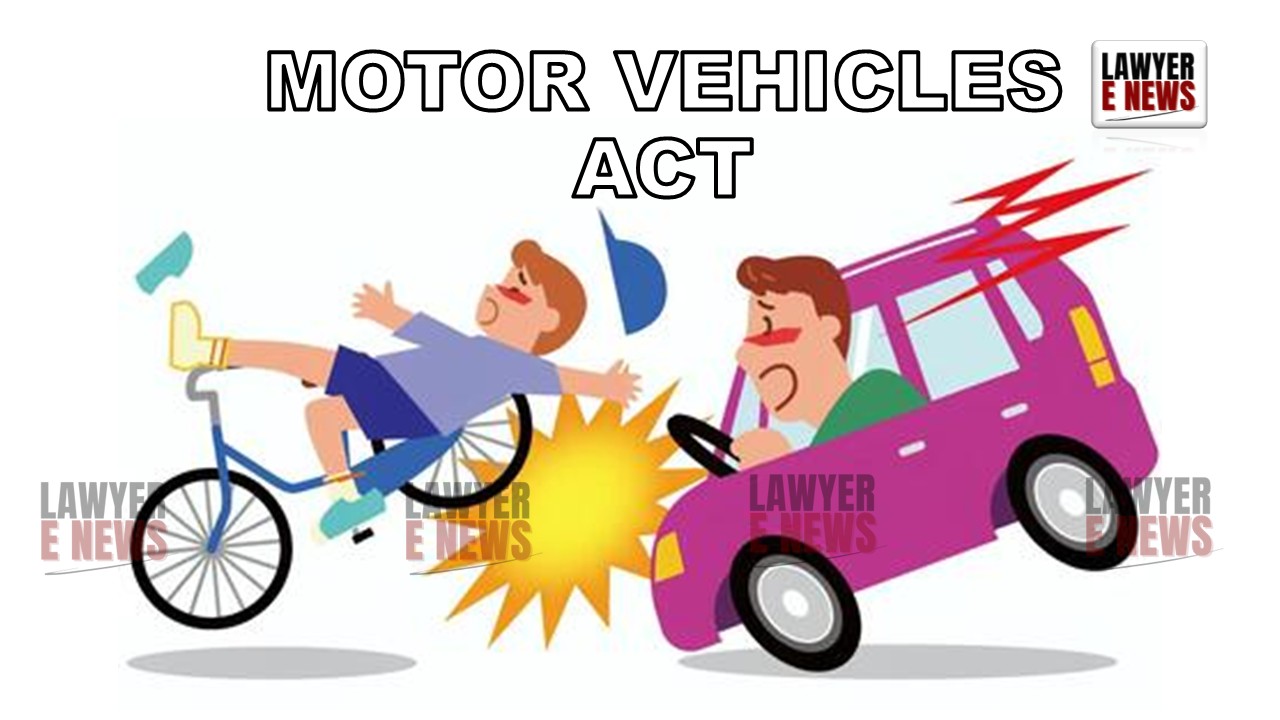
False Implications Must Be Rectified—No Evidence That the Minor Was Driving - Supreme Court of India, in a significant ruling delivered on February 28, 2025, has held that a minor who was merely seated beside the driver at the time of an accident cannot be presumed to have been driving the vehicle or held responsible for the incident. The case, Sachin Yallappa Usulkar & Ors. v. Vijayata & Ors., involved a fatal accident where a minor was wrongly accused of negligent driving, leading to a prolonged legal battle over compensation and liability.
The Court, in a judgment authored by Justice B.V. Nagarathna and Justice Satish Chandra Sharma, overturned the findings of the Motor Accident Claims Tribunal (MACT) and the Karnataka High Court, which had previously held the minor accountable. Expressing strong disapproval of the lower courts' conclusions, the Supreme Court observed:
"A thorough examination of the record makes it clear that the father of the minor was driving the vehicle at the material time, and not the minor. The lower courts failed to appreciate this crucial aspect of the evidence, leading to an erroneous finding that cannot be sustained in law."
While exonerating the minor of all liability, the Supreme Court upheld the compensation awarded to the victims' family, directing the insurance company to pay the full amount without seeking recovery from the vehicle owner.
"A Fatal Accident Leads to a Controversy Over the Identity of the Driver"
The case arose from an accident that occurred on January 13, 2016, in Belagavi, Karnataka, when a Bolero vehicle (KA-22-P-1449) allegedly driven in a rash and negligent manner struck and fatally injured Vijay Jumnalkar. The deceased was standing on the roadside making a phone call when the vehicle, which was said to have been driven recklessly, lost control, hit him with force, and dragged him for some distance, leading to his death on the spot.
An FIR was registered against the vehicle owner and a minor, who was alleged to have been driving at the time of the accident. The owner of the vehicle challenged the FIR in a criminal petition, but the High Court refused to quash the charges.
The deceased’s wife, mentally disabled son, and elderly mother filed a claim petition under Section 166 of the Motor Vehicles Act, 1988, seeking ₹50 lakh in compensation. The Motor Accident Claims Tribunal (MACT) concluded that the minor was driving the vehicle and awarded ₹7.74 lakh in compensation, directing the insurance company to pay and recover the amount from the vehicle owner.
On appeal, the Karnataka High Court enhanced the compensation to ₹21.82 lakh but maintained that the minor was driving the vehicle, upholding the "Pay and Recover" principle, which meant the insurance company had to compensate the victims but could later recover the amount from the vehicle owner.
The vehicle owner and the minor challenged this finding before the Supreme Court, arguing that the minor was falsely implicated and that his father was, in fact, the one driving the vehicle at the time of the accident.
"Courts Must Not Presume Liability Without Clear and Direct Evidence"
The Supreme Court undertook a detailed re-examination of the evidence presented before the Tribunal and the High Court and found no credible proof that the minor was driving the vehicle at the time of the accident. The Court emphasized the dangers of wrongful implication, stating:
"Mere presence in a vehicle does not establish liability. A minor sitting beside the driver cannot, by assumption alone, be held responsible for an accident. Courts must act with caution and base their findings on clear, cogent, and direct evidence."
The Court identified multiple flaws in the findings of the lower courts, noting that crucial witness testimonies and documentary evidence clearly established that the father of the minor was driving the vehicle at the time of the accident.
"The conclusions drawn by the Tribunal and the High Court are manifestly erroneous and cannot be sustained. There is no substantive or direct evidence that the minor was driving the vehicle. The assumption that he was at the wheel is nothing more than conjecture, unsupported by the record," the Court held.
"Key Witnesses Confirm That the Minor Was Not Driving"
The Supreme Court closely analyzed the testimonies of witnesses, finding clear contradictions in the case made against the minor. It observed that the only eyewitness to the accident, a friend of the deceased, initially stated that the minor was driving but later, in cross-examination, admitted that it was the minor’s father who was behind the wheel.
"The prosecution’s primary eyewitness, upon detailed questioning, conceded that the father of the minor was actually driving the vehicle at the time of the accident. This admission alone dismantles the entire basis of the claim against the minor," the Court stated.
Further, another independent eyewitness, who was cited in the police charge sheet, also confirmed that the driver was an adult male and that the minor was merely sitting beside him. The Court observed:
"There is no contradiction in the statements of the defense witnesses. They have consistently maintained that the minor was merely a passenger. The courts below erred in disregarding this crucial aspect of the evidence."
Based on this overwhelmingly clear evidence, the Supreme Court set aside the lower court’s finding that the minor was responsible for the accident, concluding that: "The claim that the minor was driving is legally unsustainable. There is no direct evidence linking him to the act of driving, and therefore, he cannot be held responsible for the accident."
"Compensation for the Victims Must Be Ensured, But the Insurance Company Cannot Seek Recovery"
While absolving the minor of liability, the Supreme Court upheld the compensation awarded to the deceased’s family, recognizing the severe financial distress caused by the loss of the sole breadwinner. Acknowledging the suffering of the deceased's wife and disabled son, the Court stated: "The deceased’s family has suffered an irreplaceable loss. The compensation awarded is fair and just and does not warrant interference. Their rights as victims of a negligent accident must be safeguarded."
However, the Court modified the liability for payment, holding that: "The insurance company shall not be entitled to recover the compensation amount from the vehicle owner. The liability to pay rests solely on the insurer."
This overturned the High Court’s 'Pay and Recover' directive, ensuring that the vehicle owner would not face any financial burden for an accident in which his minor son was wrongly implicated.
"Supreme Court’s Final Decision: Minor Absolved, Compensation Upheld"
Concluding its judgment, the Supreme Court partly allowed the appeal, making it clear that: "The minor is completely absolved of any involvement in the accident. The compensation awarded to the claimants shall remain intact. However, the insurance company shall bear full liability and cannot recover the amount from the vehicle owner or driver."
Reaffirming the importance of judicial scrutiny in motor accident cases, the Court emphasized: "False implications must be rectified. Courts must base their findings on direct evidence and not on assumptions. A minor seated beside the driver cannot be presumed to have been at the wheel. Judicial caution is imperative in cases involving questions of liability."
With this ruling, the Supreme Court ensured that justice was served both for the victims and for the wrongly accused.
Date of Decision: February 28, 2025