Auction Purchaser Has No Vested Right Without Sale Confirmation: Calcutta HC Upholds Borrower’s Redemption Right Under Pre-Amendment SARFAESI Law Mere Breach of Promise to Marry Doesn’t Amount to Rape: Delhi High Court Acquits Man in False Rape Case Father Is the Natural Guardian After Mother’s Death, Mere Technicalities Cannot Override Welfare of Child: Orissa High Court Restores Custody to Biological Father Assets of Wife and Father-in-Law Can Be Considered in Disproportionate Assets Case Against Public Servant: Kerala High Court Refuses Discharge Identification Without TIP, Electronic Records Without 65B Certificate – Conviction Set Aside: Patna High Court Nothing Inflicts A Deeper Wound On Our Constitutional Culture Than A State Official Running Berserk Regardless Of Human Rights: Jharkhand High Court Orders ₹1.5 Lakh Interim Compensation Dishonour Due to ‘Account Blocked’ Not Attributable to Drawer—No Offence Under Section 138 NI Act: Delhi High Court Quashes Criminal Proceedings Presumption Under Section 139 NI Act Cannot Be Rebutted By Mere Assertions: Delhi High Court Affirms Conviction In 32-Year-Old Cheque Bounce Case Signature Alone Doesn’t Prove Debt: Kerala High Court Upholds Acquittal in Cheque Bounce Case, Rejects Blanket Presumption Under Section 139 NI Act Justice Cannot Be Left to Guesswork: Supreme Court Mandates Structured Judgments in Criminal Trials Across India Truth Must Be Proven Beyond Doubt—Not Built On Flawed FIRs, Tainted Witnesses And Investigative Gaps: Supreme Court Acquits Man in POCSO Rape-Murder Case Once parties agree and reconciliation is impossible, a fault-based decree is unnecessary: Supreme Court Sets Aside Divorce on Desertion No Escape from Statutory Ceiling: Exclusive Expenditure by Foreign Head Offices Also Attracts Section 44C Income Tax: Supreme Court Loss Of A Child Cannot Be Calculated In Rupees, But Law Must At Least Offer Dignity In Compensation: Supreme Court Enhances Compensation Sessions Court Cannot Direct Life Imprisonment Till Natural Life Without Remission: Supreme Court Reasserts Limits on Sentencing Powers of Subordinate Courts ‘Continuously Means Without a Single Break’: Supreme Court Bars Expired-and-Renewed Licences From Police Driver Recruitment Chief Justice’s Power Under Section 51(3) Is Independent and Continuing: Supreme Court Upholds Kolhapur Bench Notification Last Seen Evidence Alone Cannot Sustain Conviction: Supreme Court Acquits Accused in Murder Case No Cultivation on Forest Land Without Central Clearance: Supreme Court Cancels Lease Over 134 Acres, Orders Reforestation Appointment from Rank List Must Respect Communal Rotation: SC Declines Claim of SC Waitlisted Candidate After Resignation of Appointee Supreme Court Dissolves 20-Year Estranged Marriage Under Article 142 Despite Wife’s Objection Murder Inside Temple Cannot Be Treated Lightly: Supreme Court Cancels Bail of Father-Son Convicts in Group Killing Case No Notice, No Blacklist: Calcutta High Court Quashes Debarment Over Breach of Natural Justice Prosecution Must Elevate Its Case From Realm Of ‘May Be True’ To Plane Of ‘Must Be True: Orissa High Court Strict Compliance Is the Rule, Not Exception: Himachal Pradesh High Court Dismisses Tenant's Plea for Late Deposit of Rent Arrears When Accused Neither Denies Signature Nor Rebuts Presumption, Conviction Must Follow Under Section 138 NI Act: Karnataka High Court A Guardian Who Violates, Forfeits Mercy: Kerala High Court Upholds Natural Life Sentence in Stepfather–POCSO Rape Case Married and Earning Sons Are Legal Representatives Entitled to Compensation: Punjab & Haryana High Court Enhances Motor Accident Award to ₹14.81 Lakh Driver Must Stop, Render Aid & Report Accident – Flight from Scene Is an Offence: Madras High Court Convicts Hit-And-Run Accused Under MV Act Delay May Shut the Door, But Justice Cannot Be Locked Out: Gauhati High Court Admits Union of India’s Arbitration Appeal Despite Time-Bar Under Section 30 PC Act | Mere Recovery of Money Is Not Enough—Demand and Acceptance Must Be Proved Beyond Reasonable Doubt: Delhi High Court Allahabad High Court Slams Bar Council of U.P. for Ex Parte 10-Year Suspension of Advocate

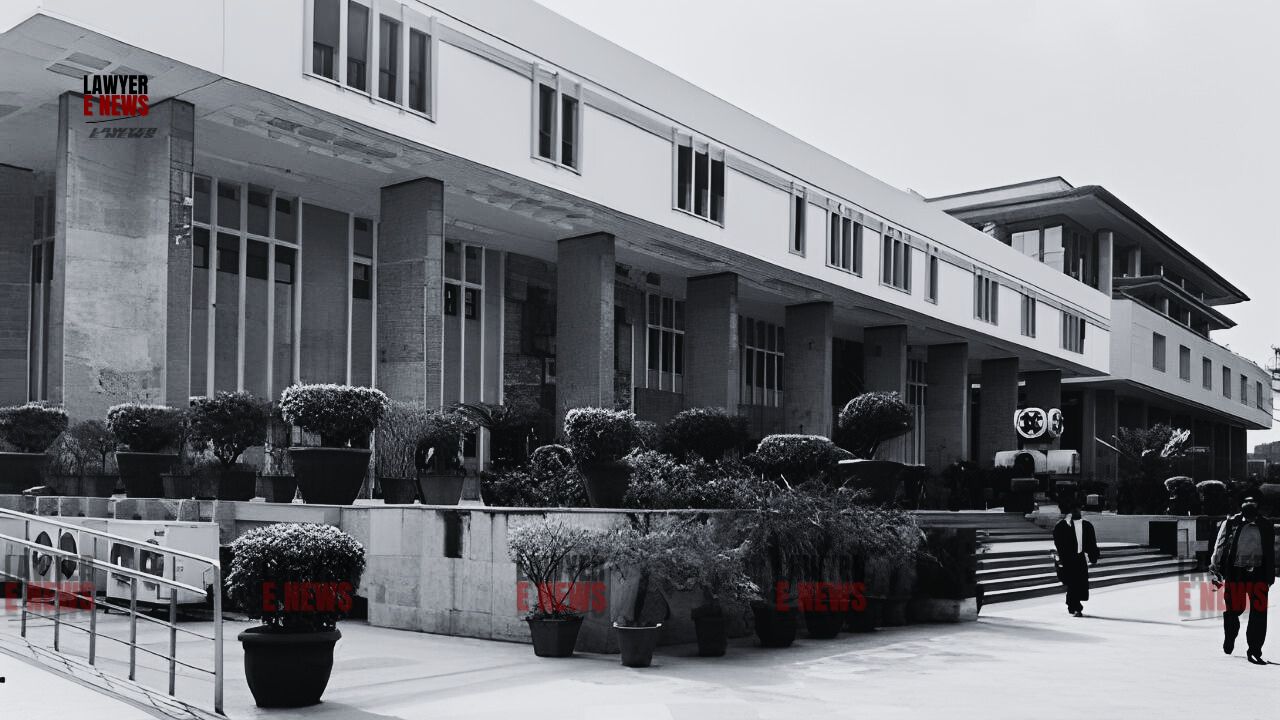
A Conviction Cannot Be Founded Merely on Forensics When Identity Remains Unestablished: Delhi High Court Acquits Youth Accused in 2015 Chain Snatching and Shooting Incident

08 September 2025 3:19 PM

By: sayum


“Ballistic Report Alone, Without Positive Identification, Cannot Be the Sole Pillar of Conviction”— Delhi High Court, while delivering a landmark judgment , set aside the conviction of Furkan @ Faizan, who had been held guilty under serious charges including Sections 393/397/34 IPC and Sections 25/27 Arms Act. The Court found that the prosecution’s failure to establish the identity of the accused beyond reasonable doubt rendered the conviction unsustainable, notwithstanding the ballistic evidence.

The case revolved around a 2015 incident in East Delhi, where two assailants on a yellow Pulsar motorcycle attempted to snatch a chain from a woman and, upon resistance, opened fire—injuring a minor girl. The prosecution alleged Furkan to be the pillion rider who fired the shot, but the High Court found the link tenuous and largely speculative.

“A Helmeted Face Cannot Support Identification; Doubt Must Be Resolved in Favour of the Accused”

Justice Manoj Kumar Ohri, delivering the judgment, categorically observed:

“The complainant’s mother explicitly stated that the pillion rider was wearing a helmet with the visor tilted down. She could not see his face.”

The injured child also gave consistent testimony that both assailants had their faces covered. The complainant himself could not confirm the identity of either person involved. The Court held that such lack of identification is not a minor flaw—it is fatal to the prosecution’s case.

The Court further noted that Furkan refused to participate in the Test Identification Parade (TIP), claiming his photograph had already been shown to witnesses. The prosecution failed to disprove this assertion, weakening their case even further.

“A Ballistic Report Does Not Substitute for Human Testimony; Forensic Links Must Be Supported by Factual Foundations”

The prosecution relied entirely on a pistol recovered from Furkan’s rented premises in another FIR registered two days later (FIR No. 715/2015). A forensic report had linked that pistol to the empty cartridge found at the scene of the present crime.

But the Court found this insufficient and procedurally questionable, noting:

“There exists variance with respect to the date on which the pistol came to be recovered. The seizure memo states 14.10.2015, whereas the Investigating Officer stated 15.10.2015.”

The Court held that such contradictions raise serious doubts about the reliability and continuity of the evidence, particularly when there was no other incriminating material.

Further, the Court expressed deep concern that no efforts were made to trace the auto-rickshaw driver or recover the motorcycle—two of the most vital components in the prosecution’s narrative. It added:

“The I.O. also made no attempt to ascertain the appellant’s location through CDR analysis or by any other means.”

“An Accused’s Past Cannot Be Tried in the Present; Conviction Must Stand on the Evidence of This Case Alone”

The prosecution sought to strengthen its case by highlighting Furkan’s alleged involvement in multiple other cases, including under Section 307 IPC. The Court refused to be swayed by this, stating:

“The appellant’s conviction cannot be upheld merely because of his stated involvement in other cases. The prosecution is duty-bound to prove the facts of the present case.”

Justice Ohri reiterated that criminal justice cannot function on the basis of predisposition or profiling, and that each case must be judged on its own merits, grounded in independent and reliable evidence.

“Conviction Cannot Survive in the Face of Reasonable Doubt”

In setting aside the conviction and acquitting the appellant, the Court concluded:

“In the absence of positive identification of the appellant as pillion rider on the motorcycle, the only incriminating evidence that remains is the ballistic report, with a doubt having been created regarding the seizure of the pistol itself.”

The judgment not only reaffirms the bedrock principle that “justice must not be done in suspicion, but in proof”, but also serves as a clear warning against convicting an accused on the strength of isolated scientific evidence when the chain of circumstantial facts is incomplete or corrupted.

The appellant was acquitted of all charges and directed to be released unless required in any other case.

Date of Decision: 4th September 2025

Latest Legal News