-
by sayum
25 August 2026 4:32 AM







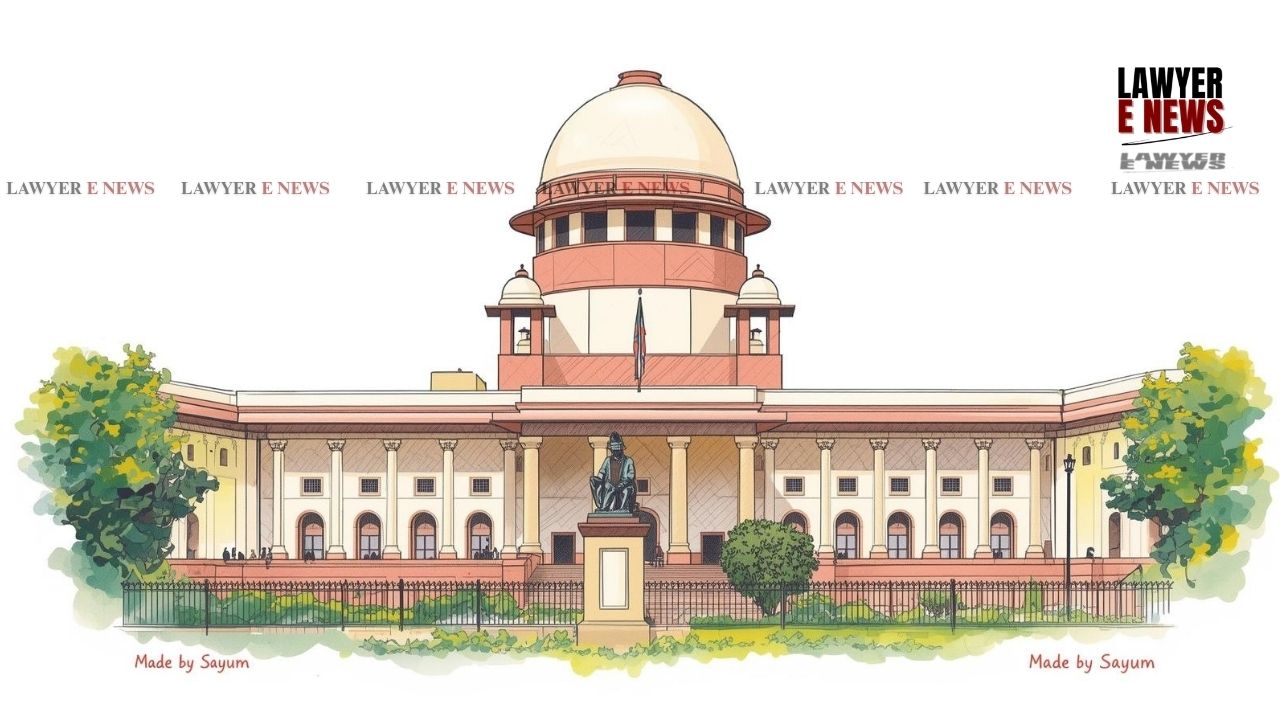
“Sanction order must reflect objective consideration of facts and evidence; failure to do so renders it invalid” – In a powerful reaffirmation of constitutional protections for civil servants and citizens alike, the Supreme Court of India quashed the criminal prosecution of IAS officer Robert Lalchungnunga Chongthu in a long-pending case relating to the alleged irregular issuance of arms licences during his tenure as District Magistrate of Saharsa, Bihar. The Court held that the sanction granted under Section 197 CrPC lacked the requisite application of mind, the chargesheet was marred by 11 years of unexplained delay, and the entire process amounted to a violation of the fundamental right to speedy trial under Article 21 of the Constitution.
Calling the prosecution “a classic case of abuse of criminal process”, the bench of Justice Sanjay Karol and Justice Nongmeikapam Kotiswar Singh delivered a detailed and scathing judgment which is set to become a guiding precedent on delayed investigations, mechanical sanctions, and judicial responsibility in cases of prolonged prosecution.
“An Accused Cannot Be Held Hostage to an Endless Investigation”: Court Rules Delay of 15 Years in Chargesheet Violates Article 21
Opening the judgment with the reality that the genesis of the FIR dates back to 2005, the Court was unequivocal in condemning the lethargy of investigating agencies. “The accused cannot be made to suffer endlessly with this threat of continuing investigation and eventual trial proceedings bearing over their everyday existence,” the Court observed, holding that such delay, in absence of fresh material or justification, “strikes at the root of fair trial and due process”.
Despite an earlier closure report in 2006 terming allegations against the appellant “false”, a supplementary chargesheet naming him was submitted after more than 11 years, in August 2020, with no explanation for the delay. Cognizance was taken in June 2022, 17 years after the FIR, by which time the appellant had already been exonerated by the disciplinary authority in 2016, following a detailed departmental inquiry.
The Court cited Abdul Rehman Antulay v. R.S. Nayak, P. Ramachandra Rao v. State of Karnataka, and CBI v. Mir Usman to underscore that “speedy trial is not a slogan, but a shield”, constitutionally enshrined in Article 21. The judgment further warned that investigation cannot be allowed to become “a slow poison” threatening to “erode liberty through judicial lethargy”.
From FIR to Supreme Court
The controversy began with a 2005 FIR alleging that the appellant, in his capacity as District Magistrate, had granted arms licences without proper police verification to certain individuals, some of whom were allegedly fictitious or physically unfit. One of the accused was charged in 2005, while the appellant was explicitly cleared in the 2006 supplementary chargesheet, with the investigation officer stating:
“No offence under the Arms Act is made out against FIR accused Shri R. L. Chongthu... the allegations against him have been found to be false.”
However, in 2009, the CJM, Saharsa permitted further investigation under Section 173(8) CrPC. Even though the case had effectively been closed against the appellant, the matter was reopened, culminating in a fresh chargesheet in 2020 and sanction to prosecute in 2022.
The appellant challenged this chain of events before the Patna High Court, which declined to interfere. The present appeal before the Supreme Court challenged both the High Court’s refusal and the order taking cognizance.
“Prosecution Sanction Cannot Be a Ritualistic Recital of Law” – Court Rejects Non-Speaking Order of Bihar Government
A key turning point in the judgment was the Court’s assessment of the sanction granted under Section 197 CrPC. Calling it “non-speaking, vague, and devoid of application of mind”, the bench declared the sanction order legally untenable.
“The sanction awarded against the appellant... can in our considered view, in no way be said to be reflecting application of mind by the authorities.”
The order merely repeated statutory provisions, without evaluating the closure report, the absence of new evidence, or the fact that departmental authorities had discharged the officer after due inquiry.
Quoting Mansukhlal Vithaldas Chauhan v. State of Gujarat, the Court stressed that:
“Sanction is not an idle formality... It must be a solemn act, based on a genuine and independent application of mind. Mechanical or influenced sanctions are fatal to the fairness of criminal process.”
The Court also reaffirmed that Section 197 CrPC acts as a safeguard for public servants performing official duties in good faith and must not be circumvented by vague bureaucratic authorizations.
“Even Where Discretion Exists Under Law, It Must Be Exercised Reasonably” – Court Examines Section 13(2A) of Arms Act
The Court delved into the licensing powers of a District Magistrate under Section 13(2A) of the Arms Act, observing that the statute allowed the authority to grant licences even in the absence of a police verification report if the report was delayed. However, the appellant’s discretion must be weighed against standards of reasonableness.
Citing decisions such as Collector v. D. Narsing Rao and P. Mangamma, the Court held:
“What is reasonable must be determined in light of the facts. When no timeline is prescribed, it is not for courts to impose unrealistic standards.”
The State had relied heavily on a single instance where a licence was issued two days after requesting police verification. The Court held that while such haste may be unjustified in that particular case, “one aberration does not justify criminal prosecution, especially when the department itself accepted the officer’s explanation.”
Court Slams Judicial Passivity in Overseeing Investigation Delays
Importantly, the Court also issued systemic directions to prevent recurrence of such delays and injustices. It held that once further investigation is permitted under Section 173(8) CrPC, the court must retain judicial oversight.
“The Court is not rendered functus officio after granting permission. It is duty-bound to ensure the investigation proceeds fairly and reasonably.”
The Court directed all trial and appellate courts to seek explanations from investigating agencies in case of prolonged delays, allowing accused persons to move for updates or quashing where proceedings are stagnant.
It warned that without judicial vigilance, the justice system risks “collapsing into procedural paralysis”, especially when prolonged investigations compromise fairness.
Departmental Exoneration Adds Weight Against Criminal Trial
The appellant had been served a departmental show cause in 2015, in which he provided a comprehensive reply citing the lack of prescribed verification time, the reminders sent to police, the nature of discretion under Section 13(2A), and the absence of any misuse of licences. The department, after reviewing the records, accepted his explanation and closed proceedings in 2016.
The Court gave due weight to this, observing:
“Discharge from departmental proceedings assumes relevance when criminal prosecution is based on the same facts and there is absence of any act of corruption or criminal conspiracy.”
It also noted that several accused in related cases were acquitted by the High Court, and no fresh material had surfaced against the appellant to warrant his trial.
Quashment of Cognizance, Chargesheets and Proceedings
Summing up its conclusions, the Court ruled:
“Though, in the one case highlighted by the State, it cannot be said the appellant acted within the scope of authority as given by Section 13(2A)... given that administrative authorities have already discharged him, that issue need not be taken further.”
On the grounds of invalid sanction, delay in investigation, and violation of constitutional rights, the Court quashed the order taking cognizance, the chargesheets, and all consequential criminal proceedings.
A Judgment with Far-Reaching Impact on Public Servants and Criminal Justice System
This ruling marks a critical moment in Indian administrative and criminal jurisprudence. It draws a sharp line between accountability and persecution, asserting that public servants must be protected from vexatious and mechanically sanctioned prosecutions, especially in the absence of timely investigation or fresh evidence.
By reinforcing the constitutional value of timely justice and issuing structural directions for judicial oversight of delayed investigations, the Court has set a benchmark for future cases dealing with long-pending prosecutions, service-related allegations, and the interplay of departmental and criminal proceedings.
Date of Decision: 20 November 2025