-
by sayum
09 August 2026 1:53 PM







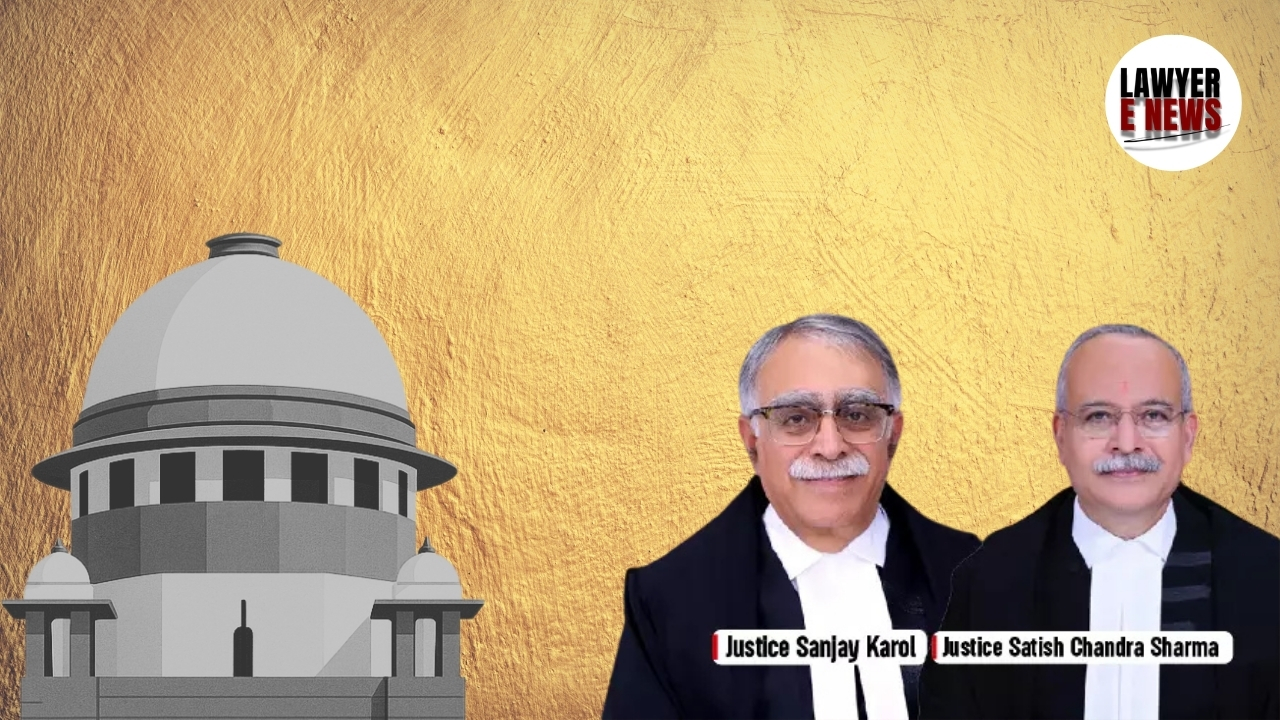
“Denial Of Pension For Three-Month Shortfall Violates Beneficial Purpose Of Pension Law”, Supreme Court of India on 16th July 2025 delivered a landmark judgment Where in setting aside the denial of family pension to a widow of a deceased railway employee who had died in harness after 9 years and 8 months of continuous service. The Court emphatically held that family pension is a statutory right accruing after one year of service under the Railway Pension Rules, 1993 and that denial on the grounds of non-regularisation or minor shortfall in service period was unjustified.
Supreme Court Condemns Technical Denial of Pension, Upholds Widow’s Right To Family Pension Under Rule 75 Of Railway Pension Rules
On 16th July 2025, a Bench comprising Justices Sanjay Karol and Satish Chandra Sharma allowed the appeal of Mala Devi, widow of a deceased railway employee, by reversing adverse decisions of the Central Administrative Tribunal and the Patna High Court. The Court declared:
“The disqualification of family pension on the basis of the deceased falling short of 10 years by three months violates the very purpose of the beneficial scheme of pension rules, which are designed to protect the dependents of employees dying in harness.”
Notably, the Court further exercised its powers under Article 142 of the Constitution to grant Mala Devi an additional ₹5,00,000 ex-gratia compensation for the prolonged hardship faced since her husband’s death in 1996.
Widow Denied Pension Despite Husband Serving For Over 9 Years, Dying In Harness
The deceased, Late Shri Om Prakash Maharaj, was appointed as a Substitute Waterman in Indian Railways on 15.10.1986 and worked continuously for 9 years, 8 months, and 26 days until his death on duty on 10.07.1996. Though he cleared screening for regularisation, his employment was never formally regularised. His widow, Mala Devi, received compassionate employment but was denied family pension on the grounds that the deceased had not completed 10 years of service and was not regularised.
Her applications before the Central Administrative Tribunal and the High Court were dismissed, citing the decision in Uttar Haryana Bijli Vitran Nigam Ltd. v. Surji Devi (2008) 2 SCC 310, where pension was denied to a non-regularised employee.
Legal Issues and Court Observations: “After One Year Of Continuous Service, Family Pension Becomes A Right Irrespective Of Regularisation”
The Supreme Court framed the key issue as whether Mala Devi was entitled to family pension despite her husband not being regularised and having served slightly less than 10 years.
The Court, relying on Rule 75(2)(a) of the Railway Services (Pension) Rules, 1993, ruled:
“Family pension is payable to the family of a deceased railway servant who dies after completion of one year of continuous service, without any discrimination whether the employment is temporary, substitute, or regularised.”
The Court further clarified the distinction between pension for superannuation (which requires 10 years of service) and family pension in death cases (where one year of service suffices).
Referring to Rule 1515 of the Indian Railway Establishment Manual, the Court held:
“Substitute employees acquire the status and privileges of temporary railway servants after four months of service and are thus eligible for family pension benefits in case of death in harness.”
Courts Below Misapplied Law, Ignored Binding Precedents
The Bench condemned the reasoning of the High Court and Tribunal, observing that both authorities misapplied Surji Devi’s case, which dealt with employment benefits and not family pension under Rule 75.
Relying on the judgment in Prabhavati Devi v. Union of India, AIR 1996 SC 752, the Court ruled:
“The beneficial purpose of the Railway Pension Rules is to secure dependent family members from destitution, especially in cases of death while in service. The denial of pension for an insignificant shortfall of three months is unjustifiable and contrary to legislative intent.”
Pension Restored With Arrears and ₹5 Lakh Ex-Gratia
Allowing the appeal, the Court directed:
Immediate grant of family pension to Mala Devi from the date of her husband’s death, with full arrears;
Monthly pension payments henceforth without interruption;
Ex-gratia payment of ₹5,00,000 in exercise of powers under Article 142 for hardship faced due to the wrongful denial of pension;
Compliance within four months from the date of judgment.
The Court concluded: “In cases of death in harness, it is the duty of the State to ensure the family of the deceased is not left destitute. The pension scheme must be interpreted liberally to achieve its purpose, and technicalities cannot defeat rights of dependents.”
A Progressive Ruling Upholding the Welfare Principle of Pension Law
This judgment stands as a powerful reaffirmation of the Supreme Court’s commitment to protect the rights of dependents of government employees, ensuring that beneficial legislation serves its true purpose. By distinguishing between qualifying service for retirement pension and family pension in death cases, the Court has delivered social justice and remedied a longstanding injustice.
Date of Decision: 16th July 2025