-
by sayum
29 August 2026 7:20 AM







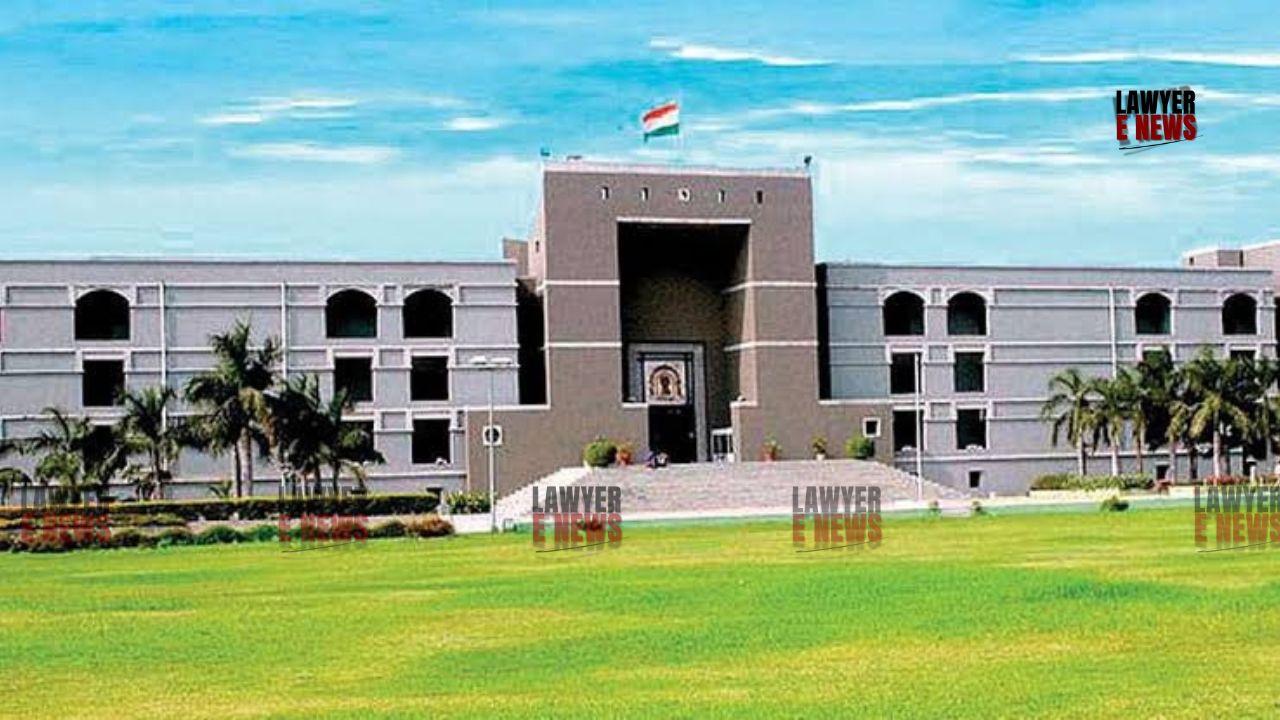
“Despite knowledge of the illegality and the evident threat posed to human life... their inaction facilitated the circumstances that led to the fire” — Gujarat High Court, in a significant judgment, refused to quash criminal charges framed against multiple officers of the Rajkot Municipal Corporation and Fire Department, implicated in the horrific TRP Game Zone fire tragedy of May 2024 that claimed 27 lives, including children.
Justice L.S. Pirzada, while upholding the framing of charges under a gamut of IPC sections including 304, 308, 337, 338, 120B, and sections relating to forgery, observed that the deliberate inaction, knowledge of illegal construction, and the subsequent fabrication of documents pointed to more than administrative lapses — they amounted to criminal culpability, deserving to be tried under serious penal provisions.
“They Were Duty-Bound To Act — But They Chose To Remain Silent”: The Court Finds Prima Facie Case Of ‘Illegal Omission’
The High Court's opening observation was direct: “The act of omission by these officials falls within the meaning of ‘illegal omission’ as defined under Section 33 of the Indian Penal Code.”
The Court emphasized that the officers not only had knowledge of the illegal status of the game zone, but had also been involved in administrative procedures concerning it — yet chose to do nothing, ultimately enabling the death of 27 individuals in a structure they knew was unsafe and unauthorized.
The Court was unsparing:
“Despite being the designated officers of the civic body… they willfully failed to take further mandatory steps… directly enabling the continued operation of the amusement facility for an extended period.”
The case emerged from the catastrophic fire that occurred on 25th May 2024, at TRP Game Zone, a tin-shed structure near Sayaji Hotel in Rajkot. The facility, operating without requisite fire safety measures or construction permissions, caught fire due to welding work carried out amid strong winds.
As flames engulfed the premises, 27 individuals perished, trapped inside a structure that lacked exits, emergency response equipment, or any approved fire safety plan. The initial police response treated the matter as an accidental death. However, investigations soon exposed a web of regulatory non-compliance, official apathy, and even post-incident tampering with municipal records.
“They Created A False Paper Trail — Not To Save Lives, But To Save Their Own Skins”: Court Slams Fabrication Of Official Records
Justice Pirzada minced no words in condemning the post-tragedy attempt by officers to fabricate documents and create a false narrative of compliance. The Court highlighted how municipal officers — particularly the applicant Jaydip Balubhai Chaudhari (Accused No. 11) — allegedly:
“Made entries in the inward register of the Rajkot Municipal Corporation on the night of the incident itself, backdated to 04.05.2024, inserted between entry nos. 2739 and 2740... and subsequently destroyed the original register to create a new one.”
The Court declared such actions amounted to tampering with evidence and obstruction of justice, observing that: “These acts were not only intended to obstruct the administration of justice but also amounted to tampering with the evidence.”
On this basis, the Court upheld charges under Sections 465, 466, 471, 474, 201, and 120B of the IPC, holding that the material on record “justifies prosecution for the serious offences of forgery, criminal conspiracy, and destruction of evidence.”
“Framing Of Charge Is Not A Mini-Trial — Prima Facie Material Is Enough”: Court Applies Settled Jurisprudence
The applicants contended that Section 304 IPC (culpable homicide not amounting to murder) could not be invoked against them as there was no intent or knowledge on their part to cause death. They argued that at most, the case may fall under Section 304A IPC (causing death by negligence).
But the Court relied on settled law — especially the Supreme Court’s ruling in State of Gujarat vs. Dilipsinh Rao (2023) 17 SCC 688 — to hold that at the stage of framing charges, the Court is only to look for prima facie existence of material, not proof beyond reasonable doubt.
“It is trite law that application of judicial mind being necessary to determine whether a case has been made out by the prosecution… the court must proceed on an assumption that the material is true and evaluate whether it discloses the ingredients of the alleged offence,” said the bench.
The Court emphasized that: “If the court thinks that the accused might have committed the offence on the basis of material on record, it can frame the charge.”
“Negligence Is Not Just Civil When It Costs Lives — It Is Criminal”: Court Rebukes Attempt To Downplay Responsibility
Rejecting the argument that the applicant Jaydip Chaudhari was merely following superior orders and had no direct causal link with the deaths, the Court stated:
“The record discloses a clear nexus between their dereliction of duty, subsequent cover-up and the fatal consequences… The systemic inaction enabled the circumstances that caused the deaths.”
In scathing terms, the Court observed that: “Their omissions cannot be whitewashed as mere administrative lapses… these are acts of knowing and willful breach of public duty, with grave consequences — and that is criminal.”
The same reasoning was extended to Accused No.13, a fire officer who allegedly ignored a prior fire incident on 04.09.2023 at the same Game Zone, failed to act, and never ensured compliance with fire safety norms.
“This Court Will Not Interfere In Prosecution Where Officials Enable Death By Neglect”: Revision Applications Dismissed
Holding that the High Court’s revisional powers under Section 397 CrPC are narrow and not meant to interfere at the stage of framing charges unless there is gross illegality or perversity, the Court categorically dismissed both Criminal Revision Applications Nos. 1216 and 1365 of 2025.
It held that the trial must proceed and that the allegations — even if eventually disproved — were serious enough to warrant full prosecution.
In a compelling judgment that puts public accountability and statutory duty at the heart of criminal law, the Gujarat High Court has made it clear that willful ignorance, collusion, and deliberate inaction by public servants — especially when they result in loss of innocent lives — will not be excused as mere official negligence.
As the Court noted: “Where the offence is even broadly satisfied, the Court should be more inclined to permit continuation of prosecution rather than its quashing at that initial stage.”
This judgment is likely to serve as a precedent in cases of civic disaster, where bureaucratic failures are not just policy lapses but potential crimes against the public.
Date of Decision: 08.09.2025