
-
by sayum
26 August 2026 1:49 PM







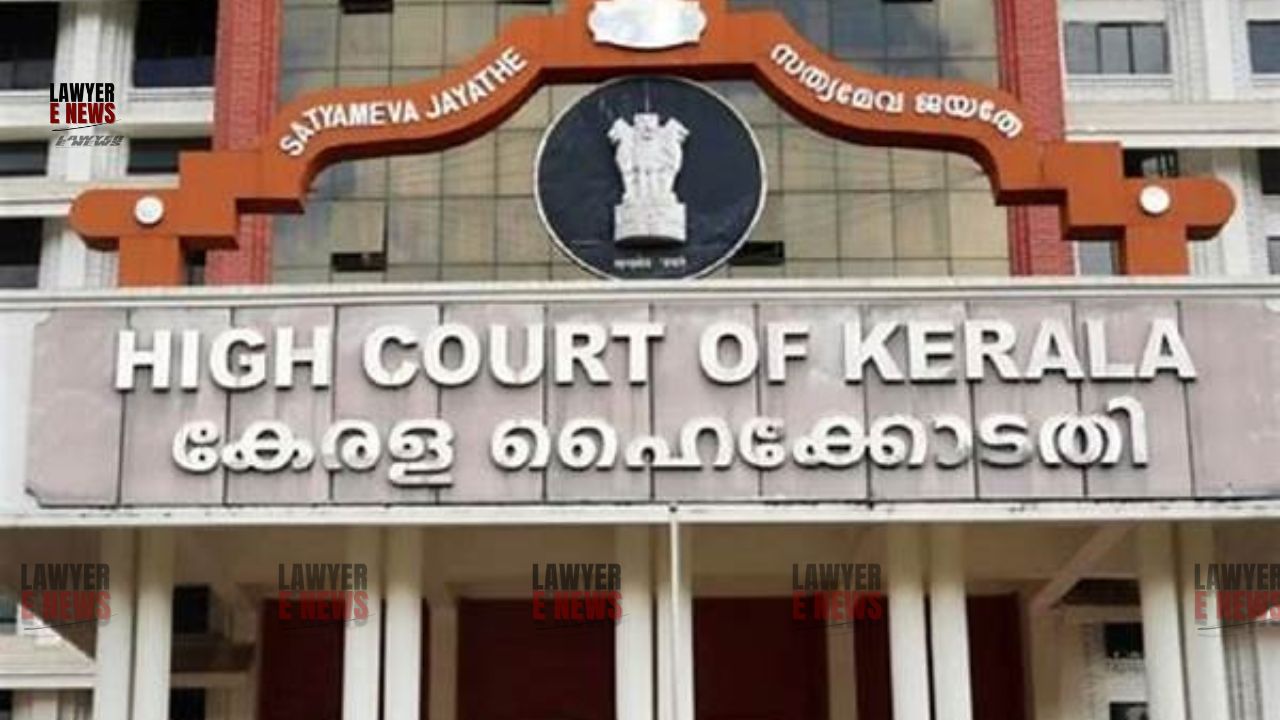
“High Court cannot interfere once possession is taken under Section 13(4); borrower’s recourse lies before the Tribunal under Section 17” – Kerala High Court emphatically ruled that writ petitions under Article 226 of the Constitution challenging SARFAESI recovery actions are not maintainable once possession of the secured asset has been taken by the Bank. Setting aside the judgment of the learned Single Judge, the Division Bench of Justice Anil K. Narendran and Justice Muralee Krishna S. allowed the appeal filed by Kerala Bank, holding that the borrower must first exhaust the statutory remedy before the Debt Recovery Tribunal under Section 17 of the SARFAESI Act, 2002.
The Court observed that the direction of the Single Judge to return possession of the mortgaged property upon part payment of ₹4,00,000 was not only without jurisdiction but contrary to the legal framework laid down by the Supreme Court.
“Writ Jurisdiction Under Article 226 Cannot Be Used to Circumvent SARFAESI Mechanism” – Kerala High Court Cites SC’s Binding Authority in Naveen Mathew Philip
The respondent-borrower, Jishith Kumar, had availed a business loan of ₹16,00,000 from Kerala Bank in March 2019, secured by mortgaging 20.5 cents of land. Upon default, the Bank initiated recovery under the SARFAESI Act and took possession of the property on March 17, 2025 under Section 13(4), invoking the assistance of the Magistrate under Section 14.
Despite this, the borrower filed W.P.(C) No. 21496 of 2025 on June 9, 2025, seeking installment payment and return of possession. The learned Single Judge permitted return of possession upon payment of ₹4,00,000, with the balance ₹13,06,696 payable in 12 installments, effectively nullifying the Bank’s statutory recovery actions.
Reversing this order, the Division Bench held:
“In the absence of a valid challenge under Section 17, the learned Single Judge erred in entertaining the writ petition. Once possession was taken, the writ court should have directed the petitioner to approach the DRT.”
The Court relied on the Supreme Court’s landmark ruling in South Indian Bank Ltd. v. Naveen Mathew Philip [(2023) 17 SCC 311], which cautioned High Courts against interfering in SARFAESI matters via writ petitions and stressed the binding obligation to exhaust statutory remedies.
“When a statute prescribes a particular mode, an attempt to circumvent that mode shall not be encouraged by a writ court... The object and reasons behind the SARFAESI Act are very clear – it facilitates a faster and smoother recovery mechanism sans court interference.” – [Para 13 of the judgment]
“Direction to Return Possession of Secured Asset Without Clearing Full Dues Is Legally Unsustainable” – Court Rejects Equitable Indulgence by Writ Court
The Division Bench found the direction to return possession of the secured asset after part payment of ₹4,00,000 (when the dues stood at over ₹13 lakhs) as a clear overreach of jurisdiction. The Court observed that:
“Since the loan account has already been recalled, without clearing the entire overdue amount together, the 1st appellant Bank cannot be directed to return possession of the secured asset to the debtor.”
The Court further clarified that the Bank had exercised lawful rights under SARFAESI, having repossessed the property after complying with Section 13(4) and Section 14, and the borrower had not challenged the possession notice before the DRT, nor placed it on record in the writ proceedings.
“Without raising a valid challenge against the possession notice issued under Section 13(4) of the SARFAESI Act, the respondent-petitioner cannot invoke the writ jurisdiction of this Court under Article 226 of the Constitution of India.” – [Para 15]
“Writ Court Cannot Substitute DRT Nor Grant Installment Facility Without Jurisdiction” – High Court Cautions Against Overstepping SARFAESI Scheme
The Court condemned the approach of granting installment facilities through writ jurisdiction, citing the settled principle that financial recovery disputes are not amenable to equitable indulgence under Article 226, especially when special tribunals with statutory powers exist.
“The powers conferred under Article 226 of the Constitution of India are rather wide, but are required to be exercised only in extraordinary circumstances in matters pertaining to proceedings and adjudicatory scheme qua a statute.” – [Para 14 quoting SC]
The Court relied on a long line of precedents including:
United Bank of India v. Satyawati Tondon (2010) 8 SCC 110
State Bank of Travancore v. Mathew K.C. (2018) 3 SCC 85
Phoenix ARC v. Vishwa Bharati Vidya Mandir (2022) 5 SCC 345
Varimadugu Obi Reddy v. B. Sreenivasulu (2023) 2 SCC 168
These decisions reiterate that High Courts must avoid entertaining SARFAESI challenges under Article 226 unless there is a patent jurisdictional error or violation of natural justice.
Appeal Allowed, Writ Petition Dismissed as Not Maintainable
In conclusion, the Division Bench ruled:
“We find no reason to sustain the judgment dated 31.07.2025 of the learned Single Judge... The writ petition filed on 09.06.2025 is accordingly dismissed as not maintainable; however, without prejudice to the right of the petitioner to invoke the statutory remedy provided under Section 17 of the SARFAESI Act.”
This judgment reaffirms the limited scope of judicial interference in commercial recovery actions and underscores that borrowers must seek remedy through the specialized forum of the Debts Recovery Tribunal.
Date of Decision: September 23, 2025





