-
by sayum
12 August 2026 8:07 AM







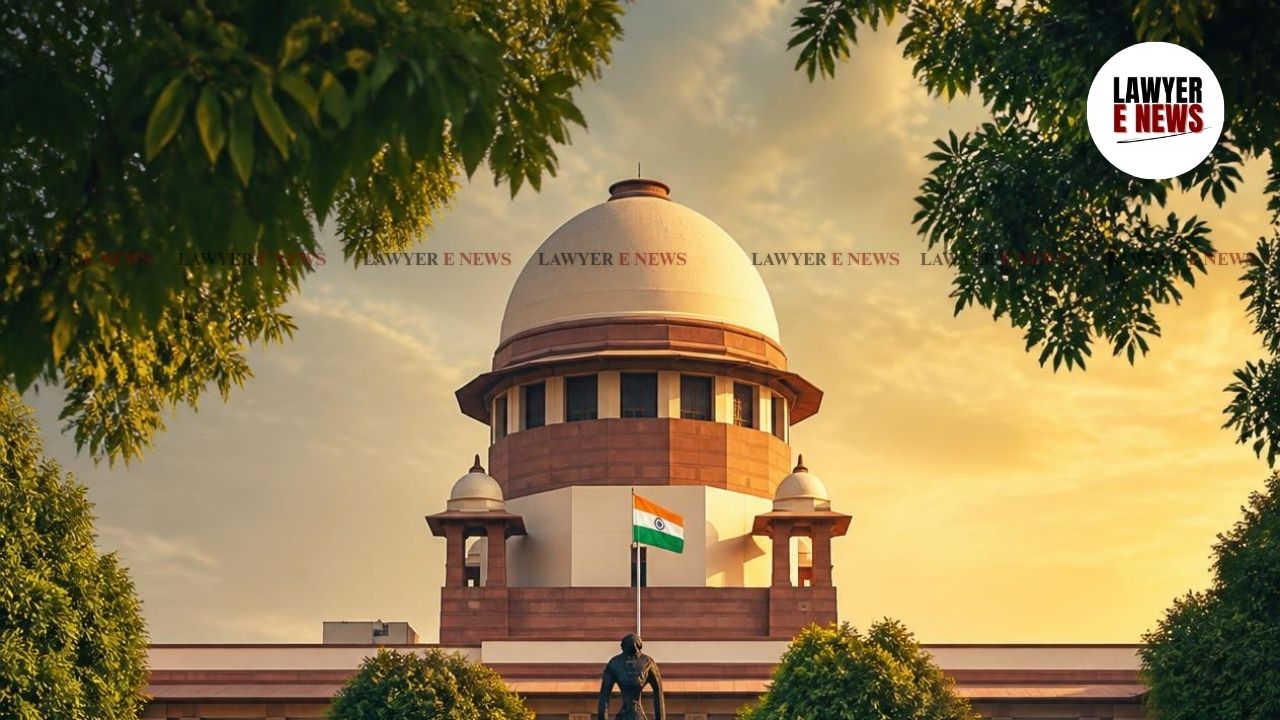
Destruction of OMR Sheets Shows Deliberate Cover-up — WBSSC Cannot Now Seek Segregation of Innocent Candidates — Supreme Court of India, through a Bench comprising Chief Justice Sanjiv Khanna and Justice Sanjay Kumar, delivered a crucial judgment in State of West Bengal vs. Baishakhi Bhattacharyya & Others, affirming the Calcutta High Court's decision to cancel the entire 2016 recruitment process of the West Bengal School Service Commission (WBSSC). The Court held that the selection process was irreparably vitiated due to "large-scale manipulation, systemic fraud, destruction of original records and administrative indiscipline," thereby justifying the mass cancellation of appointments. The Court remarked, “The credibility and legitimacy of the selection are denuded.”
The controversy arose out of the 2016 recruitment drive conducted by the WBSSC for the appointment of Assistant Teachers for Classes IX to XII and non-teaching staff for Groups C and D posts. Soon after, petitions were filed alleging rampant irregularities, including rank-jumping, unauthorized appointments, blank OMR sheets, and illegal extensions of the panel. The High Court, upon extensive fact-finding and consideration of CBI and Justice R.K. Bag Committee reports, annulled the entire process.
The appellants argued that only tainted appointments should be annulled, and the rest should be saved. The State of West Bengal, WBSSC, and several appointees who claimed innocence challenged the High Court's judgment before the Supreme Court.
The Court identified three principal legal questions:
Whether the entire recruitment process should be quashed;
Whether individual notice and hearing were mandatory under the principles of natural justice;
Whether the pleas of delay, estoppel, and laches applied.
On natural justice, the Court held, “When the recruitment process itself is shown to be wholly vitiated and segregating tainted from untainted candidates is impossible due to destruction of records, individual hearing is not obligatory.”
Further, the Court rejected the plea of the State and WBSSC that partial segregation was possible, stating, “Destruction of original OMR sheets and the failure to maintain scanned or mirror images are significant factors… We concur with the High Court’s conclusion that this renders segregation impossible.”
The Court pointedly criticized the WBSSC’s inconsistent positions:
“Though the WBSSC claimed not to retain the scanned/mirror images of the OMR sheets, vide Right to Information application response dated 12.10.2023 and 18.01.2024, they furnished the scanned/mirror images to two candidates. However, subsequently WBSSC took a stance that the said copies were obtained from data retrieved by the CBI.”
Referring to the CBI's findings, the Court noted, “The comparison of actual/genuine OMR marks with the OMR marks available in WBSSC Server shows that there is manipulation in 952 candidates of IX-X, 907 candidates of XI-XII, 3481 Group-C candidates, and 2823 Group-D candidates.”
Chief Justice Sanjiv Khanna, speaking for the Bench, remarked, “Manipulations and frauds on a large scale, coupled with the attempted cover-up, have dented the selection process beyond repair and partial redemption.”
Rejecting the argument that cancellation would prejudice innocent candidates, the Court held,
“Despite the inconvenience caused to untainted candidates, when broad and deep manipulation in the selection process is proven, due weightage has to be given to maintaining the purity of the selection process.”
On the issue of delay, the Court clarified, “Applying the defence of laches, which is not a statutory bar, would be contrary to equity and justice in these circumstances. Fraud was uncovered only in 2021 and 2022.”
The Court concluded that the appointments were not mere irregularities but products of criminal fraud.
“The cover-up itself has made the verification and ascertainment more difficult or rather impossible given the scale of camouflage and dressing up done at each stage.”
The Supreme Court upheld the High Court’s cancellation of the entire selection process but added that:
“Candidates not found to be tainted, though losing their appointments, shall not be liable to refund salaries and other benefits already drawn.”
Regarding disabled candidates, the Court allowed a limited equitable relief, stating:
“Differently abled candidates will be permitted to continue and will receive wages until the fresh selection process and appointments are completed.”
The Court also directed WBSSC to commence a fresh selection process immediately after the completion of elections and mandated: “SSC shall follow the Rules governing the selection processes in letter and spirit.”
The judgment stands as a stern warning against administrative arbitrariness and electoral fraud in recruitment processes. In the words of the Court, “We are convinced that the entire selection process was intentionally compromised due to the illegalities involved.”
The Supreme Court, through this decision, reaffirmed that fairness, transparency, and integrity are paramount in public employment.
Date of Decision: 3rd April 2025