-
by sayum
09 August 2026 1:53 PM







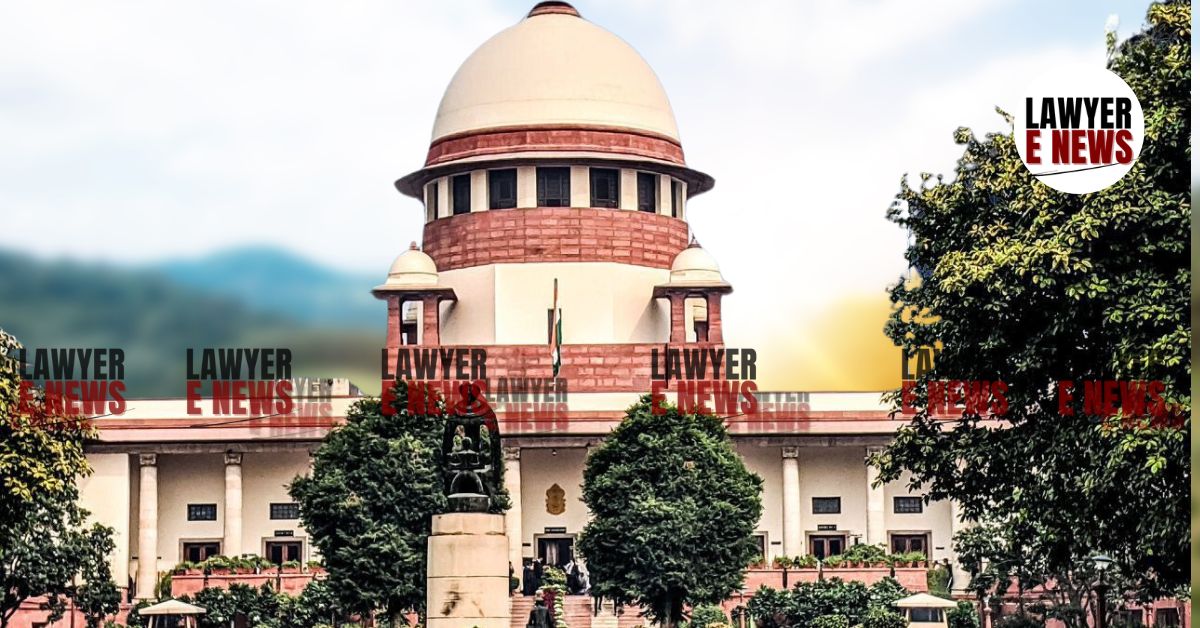
“Tenant Cannot Bypass SARFAESI Remedies by Writ Petition”, Supreme Court delivered a crucial verdict reiterating the supremacy of the SARFAESI Act over dubious tenancy claims aimed at frustrating debt recovery proceedings. In a sharp rebuke to the High Court, the bench of Justice Pamidighantam Sri Narasimha and Justice Joymalya Bagchi overturned the High Court's direction that had restored possession of a secured asset to an alleged tenant under an unregistered lease.
The Court declared: “High Courts cannot substitute themselves for Debt Recovery Tribunals where the SARFAESI Act provides a comprehensive remedy, particularly when tenancy claims are unsupported by valid documentation.”
The case stemmed from PNB Housing Finance invoking its statutory rights under Section 13(4) of the SARFAESI Act to take possession of a secured property after loan default. Manoj Saha, the first respondent, claimed tenancy since 1987 under an unregistered lease and obtained a High Court order restoring possession. The Supreme Court found this to be a blatant circumvention of the legal process and corrected the course.
Starting from the first principles, the Court emphasized that SARFAESI offers a self-contained mechanism to resolve disputes over possession, including tenant claims. The judgment noted:
“The introduction of Section 17(4A) in 2016 was a conscious legislative step to channel all such disputes through the DRT. The High Court’s reliance on pre-amendment case law was fundamentally flawed.”
Critiquing the High Court’s misplaced reliance on the precedent of Harshad Govardhan Sondagar, the Court observed:
“The High Court misapplied outdated precedent which did not account for the amended SARFAESI regime—its intervention was not merely unwarranted, it was impermissible.”
The apex court underlined the inherent limitations of tenant claims, particularly where no valid documentation exists. The bench referred to the landmark ruling in Bajarang Shyamsunder Agarwal and stated:
“Claims under unregistered tenancy, without rent receipts, tax payments or credible records prior to the issuance of demand notice, lack any legal sanctity against the rights of secured creditors.”
The Court found that the tenant’s claim was riddled with inconsistencies. Despite alleging tenancy since 1987, the respondent failed to produce any rent receipts or utility records prior to the lender’s recovery action. Pointing to this glaring omission, the Court said:
“Mere reference to tenancy in sale deeds or letters of attornment are insufficient… a tenancy must be substantiated by clear, credible, and contemporaneous records, particularly before the stringent provisions of SARFAESI.”
The Supreme Court also expressed concern over the tenant’s conduct, noting his failure to act promptly during the recovery proceedings:
“A tenant who remains dormant during symbolic possession and awakens only after physical possession is taken does not deserve equitable relief from the High Court.”
In perhaps the most telling part of the judgment, the Court addressed the misuse of rent laws to sabotage banking remedies:
“While rent laws protect legitimate tenants, they cannot be weaponized to nullify the rights of secured creditors—SARFAESI’s non-obstante clause ensures that recovery mechanisms are not held hostage to spurious tenancy claims.”
The Court decisively set aside the High Court’s judgment, ordered possession to remain with the bank, and directed the DRT to expeditiously hear the securitisation application:
“Status quo with the secured creditor is to be maintained. The DRT shall decide the dispute within two months without unnecessary delay.”
Summing up its reasoning, the Court stated:
“This case is a textbook example of why SARFAESI remedies cannot be diluted by writ jurisdiction when a comprehensive adjudicatory mechanism exists—courts must guard against the erosion of financial discipline through creative but legally untenable tenant claims.”
This ruling clarifies the limited scope of tenant protection in secured assets and firmly establishes the primacy of statutory remedies under SARFAESI, ensuring that fraudulent or collusive rent arrangements do not derail financial recoveries.
Date of Decision: 15th July 2025