-
by sayum
19 August 2026 7:06 AM







"On occasions, 2-judge Benches of this Court have modified or altered 3-judge Bench decisions, for instance: Arjun Gopal v. Union of India and All India Judges Association." Supreme Court of India, in a significant ruling dated April 2, 2026, held that a two-judge bench holds the jurisdiction to modify or alter decisions passed by a three-judge bench in appropriate circumstances.
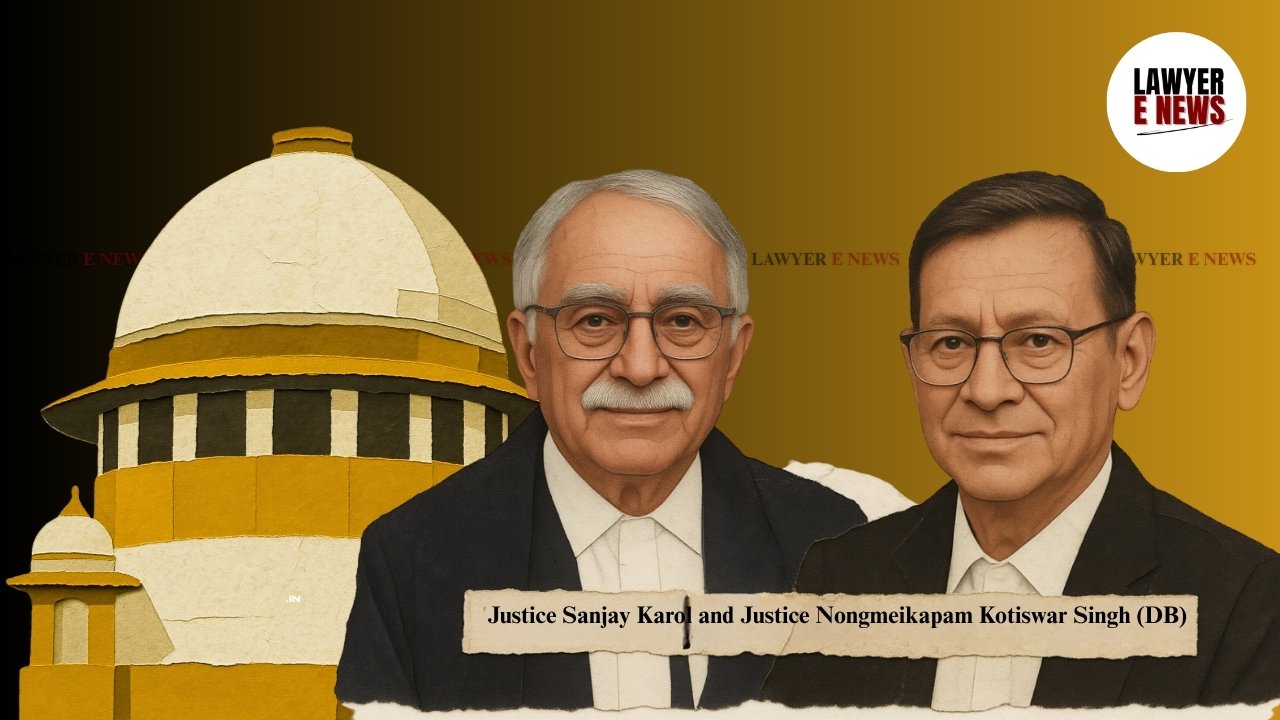
A bench of Justices Sanjay Karol and Nongmeikapam Kotiswar Singh made this crucial observation while dealing with a batch of applications seeking the cancellation of bail granted to Satinder Singh Bhasin, the promoter of the 'Grand Venice' mall and commercial project in the National Capital Region. The Court ultimately cancelled the builder's bail, noting that he had brazenly violated the conditions of his release by failing to meaningfully settle the claims of aggrieved homebuyers and investors.
The genesis of the dispute traces back to multiple FIRs registered by allottees of the 'Grand Venice' project against the petitioner for non-delivery of commercial units and siphoning of funds. The Supreme Court had granted interim bail to the petitioner in November 2019, subject to the condition that he deposits Rs. 50 crores and makes genuine efforts to settle all investor claims within six to eight months. Subsequently, aggrieved allottees approached the Supreme Court alleging that the builder had neither handed over valid possession nor refunded their money, thereby violating the core conditions of his bail order.
The primary question before the court was whether the petitioner had violated the conditions of his bail by failing to meaningfully settle the claims of the aggrieved allottees. The court was also called upon to determine whether a two-judge bench possessed the jurisdiction to alter or modify a prior order regarding the clubbing of FIRs that had been passed by a three-judge bench in this matter.
Addressing the jurisdictional challenge raised by the petitioner, the Supreme Court firmly rejected the contention that a two-judge bench lacks the authority to modify an order passed by a three-judge bench. The petitioner had argued that the earlier orders clubbing the subject FIRs were passed by a larger bench, making them immune to alteration by the current combination. However, the Court aligned with the submissions of the respondents, citing established precedents where coordinate or smaller benches have modified earlier decisions to serve the interests of justice, leaving the remedy open for parties to seek de-clubbing of FIRs.
"We find reason to agree with the submission... that on occasions, 2-judge Benches of this Court have modified or altered 3-judge Bench decisions."
Turning to the substantive bail conditions, the Court scrutinized the Rs. 50 crore deposit made by the petitioner, uncovering that the amount was unlawfully sourced as a loan from his own company, BIIPL, without a special board resolution. The bench observed that extracting an interest-free commercial benefit from the company to secure personal bail was in direct contravention of Section 185 of the Companies Act, 2013. The Court noted that not a single rupee had been invested from the personal funds of the petitioner, demonstrating a complete lack of bona fide compliance with the pre-condition for his release.
"The deposit of the amount through the purported loan taken by the petitioner from BIIPL, in the absence of any documentary approval or compliance with statutory requirements of Section 185 of the Companies Act, 2013 cannot be sustained."
Assessing the petitioner's purported efforts to settle with the homebuyers, the Court examined reports from the Uttar Pradesh State Industrial Development Authority (UPSIDA) and independent court-appointed committees. The bench noted that the project remained in a deplorable state, suffering from structural decay, non-functional elevators, and an absence of essential fire safety and pollution clearances. Consequently, the Court held that the petitioner's execution of settlement agreements was merely a cosmetic paper exercise, as he possessed full knowledge that lawful possession could not be handed over to the allottees.
"Neither has the construction been completed nor could possession of units be delivered to the allottees without fulfilling all necessary formalities in that regard after completion of the building in all respects."
The Court further took grave exception to the petitioner's financial conduct during the pendency of insolvency proceedings against his corporate entities. Relying on submissions from the Interim Resolution Professional, the bench observed that the petitioner had surreptitiously siphoned off approximately Rs. 74 crores to entities controlled by his close relatives. The Court noted that these transfers were executed while a statutory moratorium under the Insolvency and Bankruptcy Code was actively in effect, thereby violating the mandate to maintain the status quo of the corporate debtor's assets.
"The fact that these transfers were effected despite the moratorium and operating status quo prima facie lends credence to the submissions of the respondents and does not, at this stage, reflect a bonafide conduct."
Concluding its detailed analysis, the Supreme Court held that the petitioner's conduct was characterized by deliberate obfuscation, fabrication of backdated documents, and a persistent refusal to cooperate with independent committees. The bench ruled that the execution of conditional settlement agreements without subsequent implementation could never be treated as compliance with the strict conditions imposed by the Court in 2019. Consequently, the Court found the petitioner completely disentitled to the continuing equitable relief of bail.
"The cumulative result of the above discussion is that the petitioner has not complied with the conditions of bail imposed upon him vide order dated 06.11.2019."
The Supreme Court allowed the miscellaneous petitions and formally cancelled the bail granted to the petitioner, directing him to surrender within one week from the date of the judgment. Consequently, the Court invoked the default clause of the bail order and directed the forfeiture of the entire Rs. 50 crore deposited by him, allocating Rs. 5 crores to the National Legal Services Authority and transmitting the remaining amount to the Interim Resolution Professional for the ongoing insolvency proceedings.
Date of Decision: 02 April 2026