-
by sayum
29 August 2026 6:23 AM







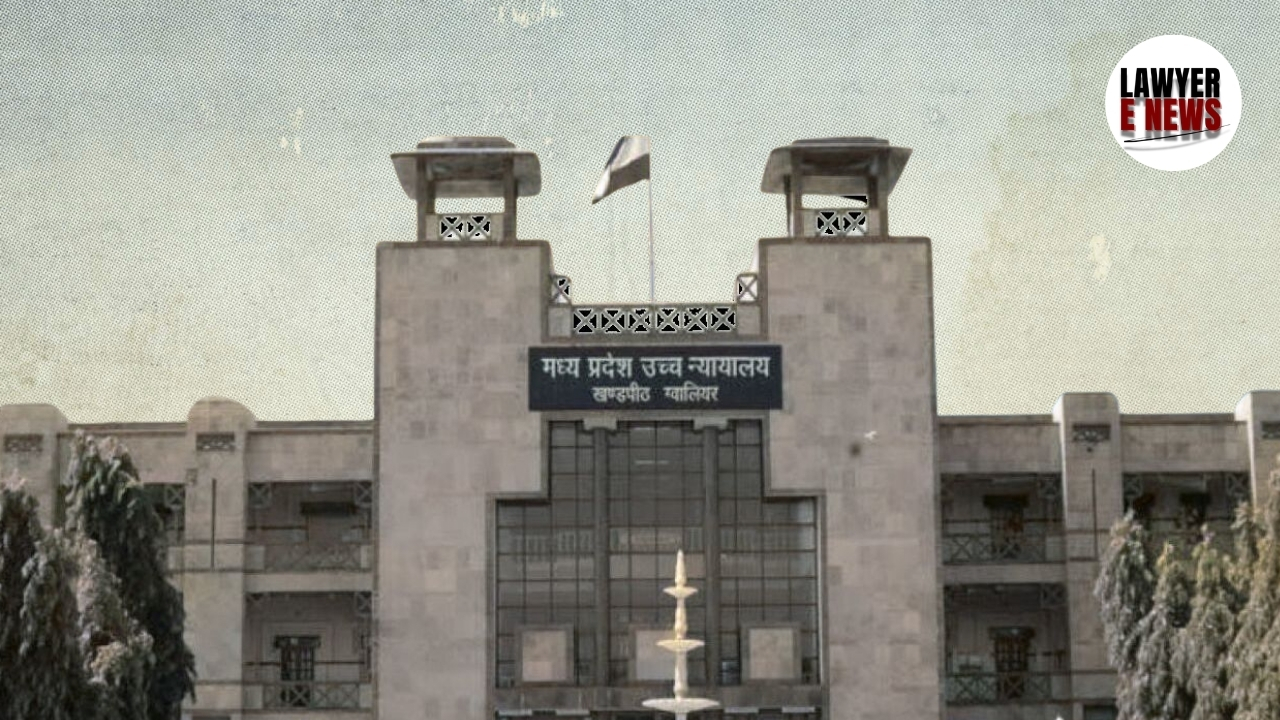
“Will Holder Has Right to Be Substituted as Plaintiff — Trial Court Cannot Demand All Heirs If No Fraud Is Alleged”, In a strongly worded judgment that not only settles the legal question of substitution of parties under a will but also calls out judicial ignorance, the High Court of Madhya Pradesh at Gwalior quashed a Trial Court order that had rejected a substitution application filed by the son of the original plaintiff, who was the sole beneficiary of a will executed by his mother.
Justice Hirdesh not only allowed the petition and restored the petitioner as plaintiff in the civil suit but also observed that the Presiding Officer of the Trial Court lacked basic procedural knowledge, recommending training at the Judicial Officers Training and Research Institute (JOTRI).
“When No Fraud is Alleged, Will Holder Can Be Substituted Without Joining All Heirs” — High Court Clarifies Order 22 Rule 3 CPC
The original plaintiff, Munni Devi, had filed a partition suit claiming 1/3rd share in ancestral agricultural land. She passed away in May 2024, leaving behind a registered Will dated 4 May 2024, bequeathing her entire share to her son Pawan Pathak, the petitioner.
After her death, Pawan filed an application under Order 22 Rule 3 read with Section 151 CPC, seeking substitution as plaintiff. However, the Trial Court rejected the application solely on the ground that the Will mentioned other legal heirs (his siblings), who were not impleaded.
Rejecting this reasoning as flawed, the High Court held: “In view of law laid down by the Division Bench of this Court as well as by Hon’ble Supreme Court… the defendants/respondents have not stated that the Will was executed by means of fraud or collusion. So, on the basis of the Will… the name of petitioner shall be substituted in place of deceased plaintiff.”
Citing Dolai Molliko v. Krushna Chandra Patnaik, AIR 1967 SC 49, the Court emphasized that: “Unless there is fraud or collusion… there is no reason why the heirs who have applied for being brought on record should not be held to represent the entire estate.”
Thus, in the absence of any such allegation, substitution of the will-holder alone was held valid, and the Trial Court's refusal to do so was set aside.
“Judge Has No Basic Knowledge of Law — Immediate Training Required”: Court Slams Trial Judge for Gross Misunderstanding
In a rare and stinging observation, Justice Hirdesh wrote: “It is crystal clear that the Presiding Officer of Trial Court, namely Ms. Varsha Bhalavi, has no basic knowledge of law and she needs training in JOTRI regarding procedural law.”
He further ordered that: “A copy of this order be forwarded to District Judge of concerned District, Director of JOTRI as well as the Registrar General of this High Court, Jabalpur.”
The High Court noted that after rejecting the substitution application, the Trial Court had nonetheless fixed the case for plaintiff's evidence, despite no plaintiff remaining on record — a procedural absurdity.
This judgment not only affirms the legal position that a sole beneficiary under a Will can be substituted as plaintiff without impleading all legal heirs, but also highlights the responsibility of trial courts to correctly apply civil procedure.
The Madhya Pradesh High Court has taken a firm step to uphold procedural integrity, while simultaneously protecting the substantive rights of parties under testamentary succession.
Date of Decision: August 29, 2025