Victim Has Locus To Request Court To Summon Witnesses Under Section 311 CrPC In State Prosecution: Allahabad High Court Order 2 Rule 2 CPC Cannot Be Ground to Reject a Plaint: Supreme Court Draws Crucial Distinction Between Bar to Sue and Bar by Law No Right to Lawyer Before Advisory Board in Preventive Detention — Unless Government Appears Through Legal Practitioner: Supreme Court Wife's Dowry Statement Cannot Be Used to Prosecute Her for 'Giving' Dowry: Supreme Court Upholds Section 7(3) Shield Husband's Loan Repayments Cannot Reduce Wife's Maintenance: Supreme Court Raises Amount to ₹25,000 From ₹15,000 Prisoners Don't Surrender Their Rights at the Prison Gate: Supreme Court Issues Binding SOP to End Delays in Legal Aid Appeals A Judgment Must Be a Self-Contained Document Even When Defendant Never Appears: Supreme Court on Ex Parte Decrees Court Cannot Dismiss Ex Parte Suit on Unpleaded, Unframed Issue: Supreme Court Sets Aside Specific Performance Decree Denied on Title Erroneous High Court Observations Cannot Be Used to Stake Property Claims: Supreme Court Steps In to Prevent Misuse of Judicial Observations No Criminal Proceedings Would Have Been Initiated Had Financial Settlement Succeeded: Supreme Court Grants Anticipatory Bail In Rape Case Directors Cannot Escape Pollution Law Prosecution by Claiming Ignorance: Allahabad High Court Refuses to Quash Summons Against Company Directors Order 7 Rule 11 CPC | Court Cannot Peek Into Defence While Rejecting Plaint: Delhi High Court Death 3½ Months After Accident Doesn't Break Causal Link If Doctors Testify Injuries Could Cause Death: Andhra Pradesh High Court LLB Intern Posed as Supreme Court Advocate, Used Fake Bar Council Card and Police Station Seals to Defraud Victims of Rs. 80 Lakhs: Gujarat High Court Rejects Anticipatory Bail Husband Who Travels to Wife's City on Leave, Cohabits With Her, Then Claims She 'Never Lived With Him' Cannot Prove Cruelty: Jharkhand High Court Liquor Licence Is a State Privilege, Not a Citizen's Right — No Vested Right of Renewal Survives a Change in Rules: Karnataka High Court Sets Aside Stay on E-Auction Policy Court Holiday Cannot Save Prosecution From Default Bail: MP High Court No Search At Your Premises, No Incriminating Document, No Case: Rajasthan HC Quashes Rs. 18 Crore Tax Assessment Under Section 153C Limitation Act | Litigant Cannot Be Punished For Court's Own Docket Load: J&K High Court

Training Period Too Short to Cause Condition: High Court Upholds AFT's Decision Denying Disability Pension

07 May 2024 8:19 AM

By: Admin


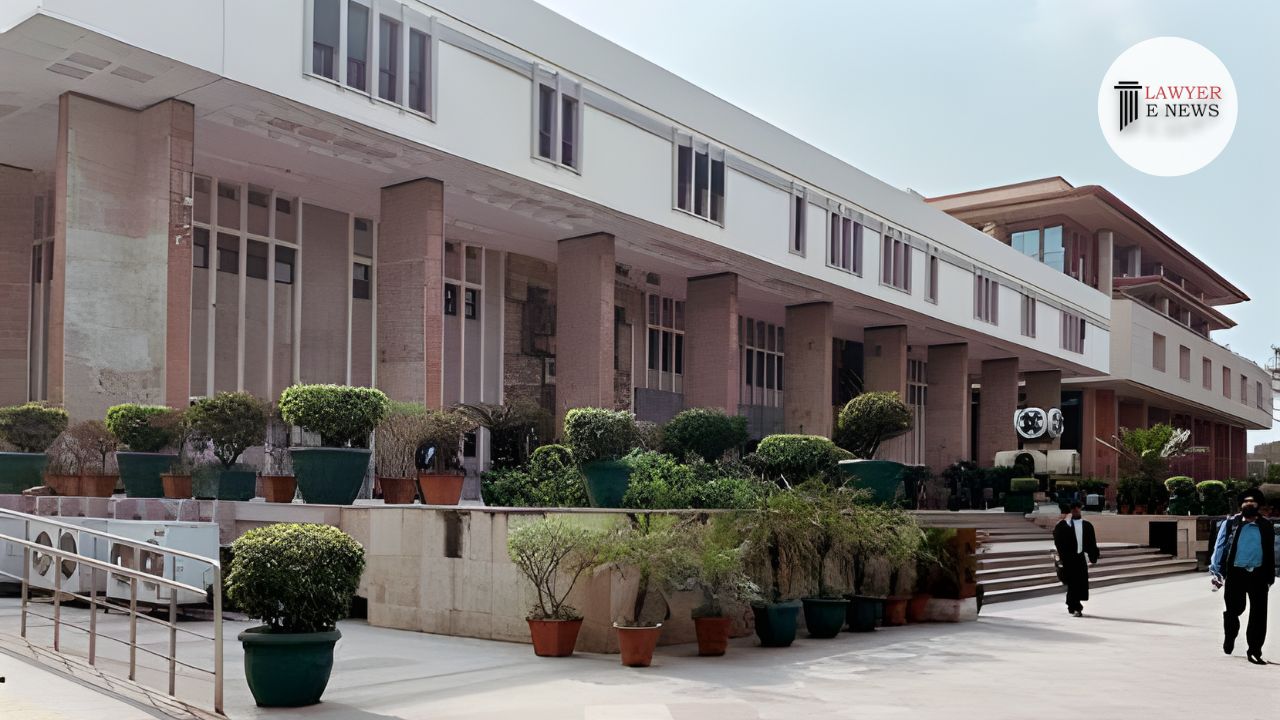
In a significant judgment, the High Court of Delhi at New Delhi has dismissed a petition challenging the denial of disability pension to a former Sepoy, Naresh Kumar, affirming the Air Force Tribunal's (AFT) decision. The bench, comprising Hon'ble Mr. Justice V. Kameswar Rao and Hon'ble Mr. Justice Saurabh Banerjee, pronounced the judgment on January 11, 2024, under W.P.(C) 15594/2023 & CM APPL. 62394/2023.

The petitioner, Naresh Kumar, sought a writ of Certiorari to quash the AFT's orders, which denied him a disability pension for his medical condition, 'Aortic Regurgitation,' diagnosed during his military training. Kumar's condition was deemed not attributable to military service, leading to his discharge in January 1992.

In their detailed judgment, the High Court observed, "The training period was too short to cause such mental and physical strain and/or stress to the petitioner so as to result in his medical condition, for consideration of granting disability pension." This statement underscores the court's stance on the non-attribution of the petitioner's medical condition to military service.

Justice Saurabh Banerjee, in his judgment, highlighted the petitioner's delayed approach in seeking legal redressal and the lack of valid justification for the delays. The court noted that there was a total unexplained and inordinate delay of over 30 years from the date of discharge of the petitioner from service, which influenced the decision.

The court's analysis leaned heavily on precedents, referencing significant cases like Union of India v. Baljit Singh (1996), Ministry of Defence v. A.V. Damodaran (2009), and Narsingh Yadav v. Union of India (2019). These cases played a crucial role in reinforcing the principle that medical conditions must be attributable to military service for disability pensions to be granted.

Delhi High Court's dismissal of the petition reaffirms the legal principle that disability pensions are not a matter of right but depend on the factual matrix of each case. The judgment serves as a precedent for similar cases involving the attribution of medical conditions to military service.

Date of Decision: 11.01.2024

EX RECT NARESH KUMAR VS UNION OF INDIA AND ORS



Latest Legal News