-
by sayum
29 August 2026 8:36 AM







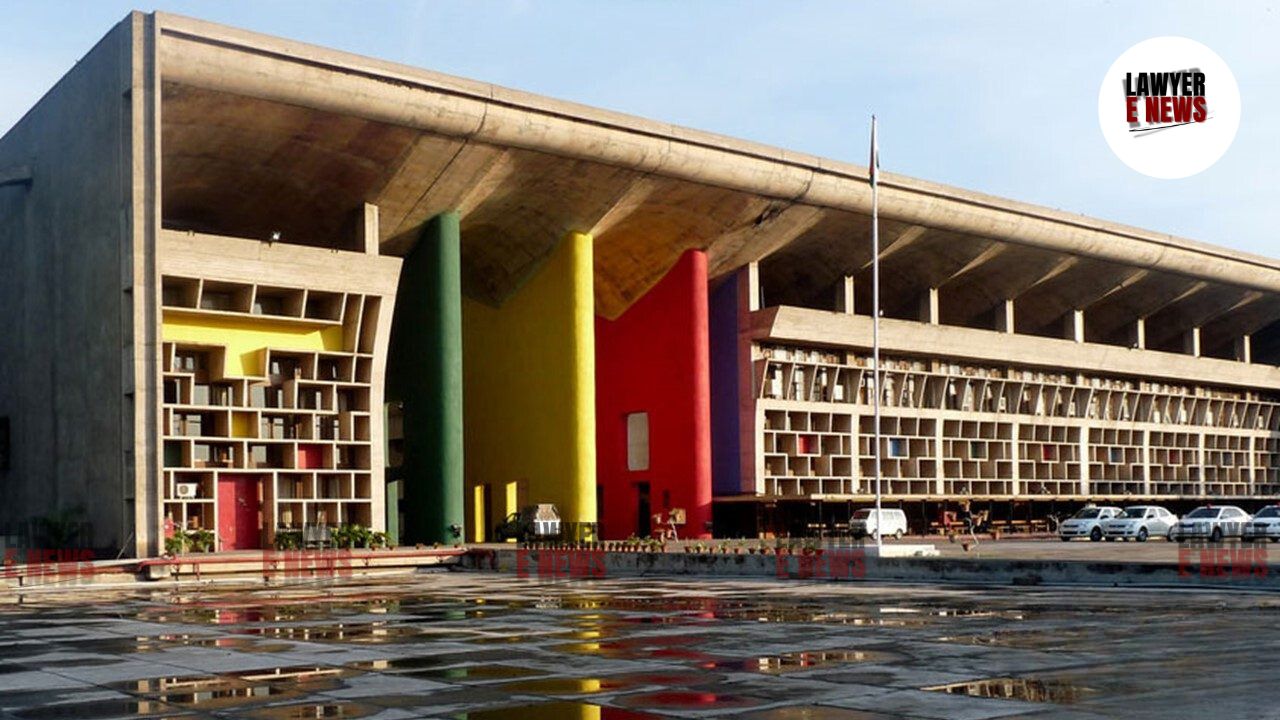
“The finest hour of justice arrives propitiously when parties, despite falling apart, bury the hatchet and weave a sense of fellowship of reunion” — In a compelling display of the judiciary’s power to rise above procedural rigidity in favour of restorative justice, the Punjab and Haryana High Court quashed the conviction of a man under Section 138 of the Negotiable Instruments Act, 1881, after a cheque bounce dispute involving ₹17 lakhs was settled amicably outside court. The Court observed that when parties arrive at a genuine compromise, the “spirit of justice” outweighs the mere letter of the law, and judicial powers must be employed to facilitate closure and peace.
In CRR-2090-2022, CRR-2061-2022, and CRR-2663-2022, arising from a common complaint case, petitioner Bhagwant Rai, convicted in 2017 by the Sub-Divisional Judicial Magistrate, Malerkotla, sought to overturn his six-month sentence and compensation order of ₹5 lakhs. The Court, after considering a mutual settlement dated 26 May 2025, recorded the matter as resolved, declared the conviction to be of no consequence, and allowed both his revision petitions.
“The Power to Do Complete Justice Is Not Subordinate to Section 320 CrPC”: High Court Affirms Broad Scope of Section 482 to End Abuse of Process
The case revolved around dishonour of cheque no. 000027 dated 29.09.2016 for ₹17,00,000 issued by Bhagwant Rai from his HDFC Bank account. On its dishonour, complainant Manmohan Singh initiated proceedings under Section 138 NI Act. The trial court convicted the petitioner and imposed a sentence of six months’ simple imprisonment and a compensation of ₹2 lakhs, which was later enhanced to ₹5 lakhs by the appellate court.
Multiple revisions were filed: Bhagwant Rai challenged both conviction and enhancement; Manmohan Singh filed for further enhancement. But during pendency of proceedings, both sides executed a detailed compromise deed on 26.05.2025 and ratified it at the Mediation and Conciliation Centre, Sangrur on 11.08.2025.
Recording this, the Court held: “There is no statutory bar under the Cr.P.C. which can affect the inherent power of this Court under Section 482… The power to do complete justice is the very essence of every judicial justice dispensation system.”
It reiterated that even though Section 138 NI Act is a non-compoundable offence under Section 320 CrPC, the Court’s inherent powers remain untouched and unfettered, and can be exercised to secure the ends of justice.
“Not All Disputes Deserve Imprisonment When Resolution Is Reached”: Court Holds Conviction Inoperative After Terms of Settlement Fulfilled
Justice Sanjay Vashisth, authoring the verdict, accepted the comprehensive terms of settlement. The complainant Manmohan Singh affirmed on record:
“The claim of the respondent qua cheque in question has been fully satisfied. Nothing is due to be payable by petitioner to respondent regarding cheque in question or otherwise.”
The Court recorded that the complainant had no objection to the quashing of the conviction or refund of ₹5 lakhs deposited in court by the petitioner. The settlement confirmed that a separate payment had already been made by Bhagwant Rai to the complainant in full satisfaction.
Referring to the landmark decisions in Narinder Singh v. State of Punjab (2014) and Ramgopal v. State of Madhya Pradesh (2021), as well as Shakuntala Sawhney v. Kaushalya Sawhney, the Court stated:
“Compromise is the sine qua non of harmony and orderly behaviour. It is the soul of justice. If the power under Section 482 is used to enhance such a compromise… then it truly is ‘the finest hour of justice’.”
Further, the Court remarked: “No embargo, be in the shape of Section 320(9) of the Cr.P.C., or any other such curtailment, can whittle down the power under Section 482 CrPC.”
Accordingly, the Court allowed both CRR-2090-2022 and CRR-2061-2022, holding that the judgment of conviction and sentence is inoperative and of no consequence.
The connected petition CRR-2663-2022, filed by the complainant for further enhancement of compensation, was dismissed as withdrawn, in view of the compromise.
Finally, the Court also ordered refund of the ₹5,00,000 deposited with the Registrar General, since that amount had not been encashed and was no longer required in light of the full satisfaction recorded by the complainant.
“Criminal Justice Must Not Be Weaponized Where Resolution Is Possible”: High Court Upholds Primacy of Mediation and Mutual Satisfaction in Financial Disputes
This judgment not only reflects a progressive and compassionate approach to cheque bounce cases, but also signals that criminal law is not meant to perpetuate punishment where peace has been restored. The High Court has reaffirmed that Section 482 CrPC is a safety valve, intended to be used liberally, not mechanically, and especially so when commercial disputes are settled in good faith.
By embracing the compromise and quashing the conviction, the Court underscored a principle more powerful than penal action — that justice, at its finest hour, lies in reconciliation.
Date of Decision: 09.09.2025