-
by sayum
14 August 2026 3:21 PM







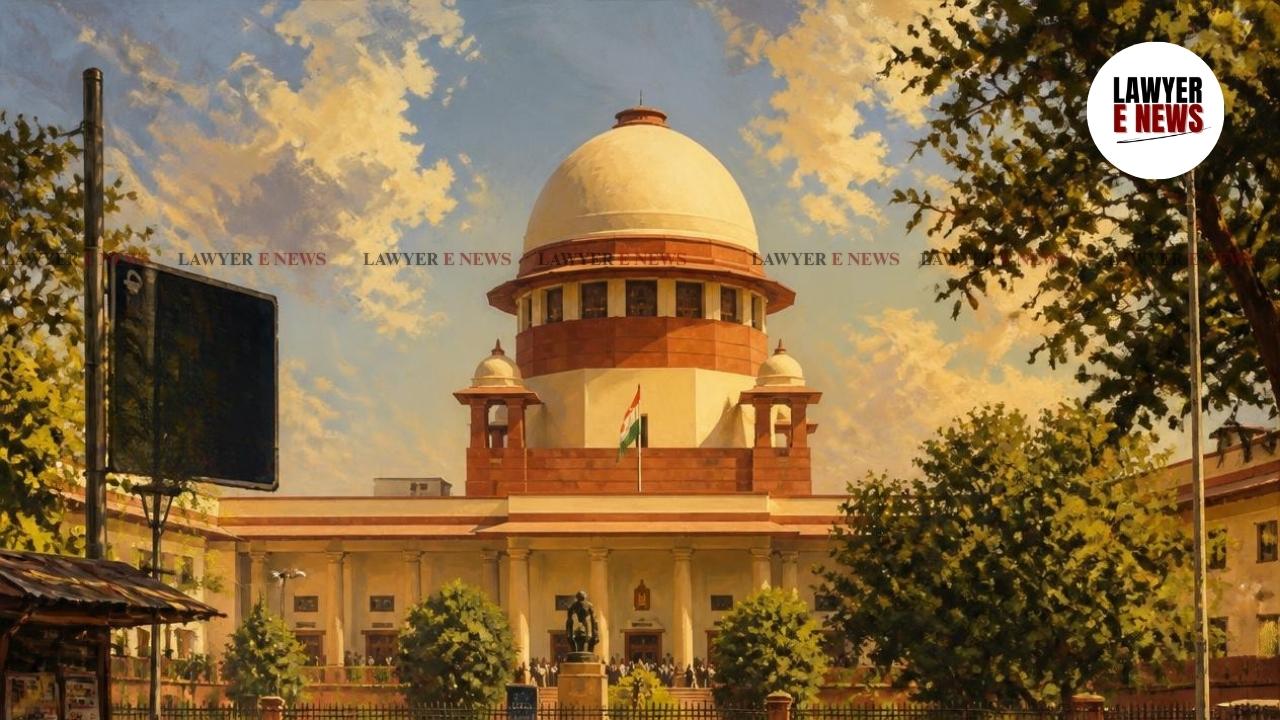
"We may suggest that the class connotation be attached to the coach and not to the passenger, in recognition of the history of class divisions in our country and the same being offensive to the spirit of the Constitution of India." Supreme Court of India, in a significant ruling dated July 17, 2026, objected to the use of the term "second class passenger" in Indian Railways manuals, observing that such nomenclature is offensive to the spirit of the Constitution.
While granting compensation to the widow of a man who died after falling from a moving train, a bench comprising Justices Sanjay Karol and Nongmeikapam Kotiswar Singh observed that class distinctions must be attached to the railway coach and not to the individual travelling in it.
The appellant approached the top court after the Railway Claims Tribunal and the Madhya Pradesh High Court concurrently dismissed her claim for statutory compensation following her husband's death. The deceased had fallen from a running train en route to Ahmedabad, dying instantaneously from his severe injuries. The lower forums denied relief on the sole ground that the deceased’s railway ticket was misplaced along with his luggage during the accident, leading to a finding that he could not be proven to be a bona fide passenger.
The primary question before the court was whether the mere absence of a physical ticket on the deceased's person negates a claim for compensation under Section 124A of the Railways Act, 1989. The court was also called upon to determine whether the initial burden of proving that a victim was a bona fide passenger can be successfully discharged merely by filing a sworn affidavit.
Term 'Second Class Passenger' Unconstitutional
Focusing on the phrasing used in the Indian Railway Commercial Manual, the court took strong exception to official documents referring to individuals as "second class passengers". The bench emphasized the historical burden of class divisions in India, noting that the country's constitutional framework strictly aims to eliminate such categorizations. The judges stressed that while fare categories might naturally reflect economic expenditure, branding a human being as "second class" runs contrary to the egalitarian ethos of the welfare state.
"While it is ostensibly linked to the expenditure incurred by the passenger to travel, we may suggest that the class connotation be attached to the coach and not to the passenger."
Technicalities Cannot Defeat Beneficial Legislation
Shifting to the merits of the compensation claim, the court reiterated that Section 124A of the Railways Act is a beneficial piece of legislation establishing a strict "no-fault liability" on the railway administration. The bench ruled that tribunals must adopt a liberal and purposive construction of such welfare statutes rather than a narrow, restrictive approach. The court clarified that the initial burden of proving that a victim was a bona fide passenger can be discharged simply by filing an affidavit stating the relevant facts, which the widow had duly done in this case.
Mere Absence Of Ticket Not Conclusive
The Supreme Court noted that insisting on the physical recovery of a ticket from a deceased victim, especially when their luggage is lost in a violent accident, creates an insurmountable hurdle for grieving families. Relying on established precedents, the court observed that technical approaches and procedural lapses should not be allowed to defeat the humanitarian objective of the statute. The governing standard in such compensation claims is the preponderance of probabilities, not the strict criminal law standard of proof beyond reasonable doubt.
Railways' Duty To Check Overcrowding
Taking judicial notice of the frequent accidents caused by overcrowding in Indian trains, the bench criticized the railway administration for the poor execution of its own safety guidelines. The court pointed out that the operating manuals cast a clear statutory duty on ticket examiners and station masters to prevent ticketless travel and ensure the safety of passengers before a train departs. The judges observed that if the railways strictly implemented these entry checks, the dispute over whether a passenger had a valid ticket would never arise in the first place.
Equal Responsibility On Passengers
However, the court also cautioned that passengers bear an equal responsibility to prioritize their own lives over practical commuting inconveniences. The bench expressed dismay at the tendency of citizens to take life-threatening risks by boarding overcrowded trains or hanging from footboards in the daily economic rat race. While acknowledging that these choices are often driven by compulsion, the court firmly noted that practical considerations must ultimately give way to the fundamental preservation of human life.
Setting aside the concurrent judgments of the High Court and the Tribunal, the Supreme Court awarded the statutory compensation of Rs 8,00,000 to the appellant widow. The court directed the Union of India to ensure that the compensation amount is paid directly into the appellant's bank account within four weeks, failing which the amount shall carry an interest of eight per cent per annum from the date of filing the claim petition.
Date of Decision: 17 July 2026