-
by sayum
09 August 2026 1:53 PM







“Statutory Cap Under CERC Regulations Controls Tariff, Not State’s Contractual Entitlement to Free Power”, On 16th July 2025, the Supreme Court of India, in a significant ruling concerning the balance between regulatory powers and sovereign contractual rights, allowed the appeal filed by the State of Himachal Pradesh against JSW Hydro Energy Ltd. In the case titled The State of Himachal Pradesh & Another v. JSW Hydro Energy Limited & Others (Civil Appeal No. 12883 of 2024), the Court categorically held that the limitation of 13% free power under Note 3 of Regulation 55 of the Central Electricity Regulatory Commission (Terms and Conditions of Tariff) Regulations, 2019 was confined to tariff computation and could not be invoked to alter a concluded Implementation Agreement between the State and the project developer.
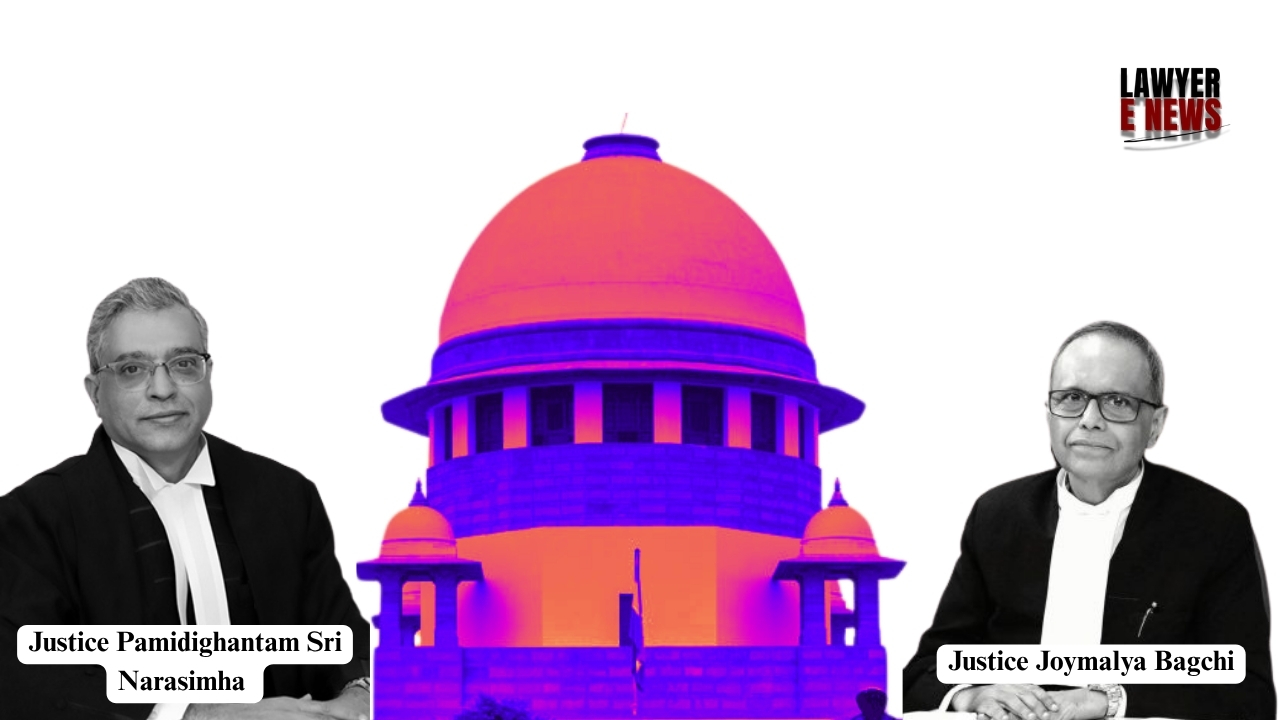
Opening the judgment with an emphatic restatement of legal boundaries, Justice Pamidighantam Sri Narasimha observed, “The Central Electricity Regulatory Commission (CERC) Regulations, 2019 govern tariff computation but do not operate to annul or modify sovereign contracts through which States have secured consideration for natural resource allocation.”
Rejecting the High Court’s approach, the Supreme Court pronounced, “The High Court fundamentally erred by invoking writ jurisdiction to rewrite contractual obligations that were concluded after negotiations in the sovereign domain of the State Government.”
The case centered around the Karcham Wangtoo Hydroelectric Project, a 1045 MW project allotted by the State of Himachal Pradesh under an Implementation Agreement in which the project developer committed to supply 18% of net generation as free power to the State from the 13th year of commercial operations. JSW Hydro Energy Limited, the project operator, had argued before the High Court that the free power obligation should be aligned to the 13% statutory cap under the 2019 CERC Regulations, citing inconsistency between contractual terms and regulatory provisions.
Supreme Court Clarifies the Scope of Tariff Regulation: “Regulatory Caps Cannot Diminish Pre-existing Contractual Obligations”
In a detailed analysis of the Electricity Act, 2003 and the CERC Regulations, the Supreme Court drew a critical distinction between tariff determinations applicable to licensees and beneficiaries, and sovereign agreements concluded by the State as consideration for resource allocation.
The Court stated, “Note 3 of Regulation 55 of the CERC Tariff Regulations, 2019 only governs the percentage of free power that will be factored into tariff calculations for determining saleable energy and charges payable by distribution licensees. It does not impose a legal embargo on a generating company supplying free power beyond 13% where such an obligation stems from a contractual commitment.”
Explaining the purpose of free power in hydroelectric agreements, the Court observed, “Such free power is a form of royalty, a negotiated non-monetary consideration payable to the State in exchange for exploitation of riverine resources and public lands, and cannot be unilaterally extinguished by a tariff regulation designed to balance consumer interests in the downstream energy market.”
The Court declared that the generating company’s duty under the Implementation Agreement, supplying 18% free power to the State Government, survived unaffected by the CERC’s 13% cap, which was applicable solely to tariff computations. “The pass-through limitation in tariff calculation does not release the generating company from its freely undertaken contractual obligation towards the State,” the judgment noted.
“High Court Cannot Usurp Regulatory Jurisdiction Nor Override Sovereign Contracts”: Supreme Court Restores Primacy of Sectoral Forums
In strong words, the Supreme Court criticized the High Court for entertaining a writ petition that effectively circumvented the statutory scheme under the Electricity Act, 2003. The Court said, “The High Court overstepped its jurisdiction by entertaining a writ petition to realign sovereign contractual obligations based on tariff regulations, especially when the Central Electricity Regulatory Commission had already declined to grant such relief within its statutory domain.”
Referring to its established jurisprudence in PTC India Ltd. v. CERC and Jaipur Vidyut Vitran Nigam Ltd. v. MB Power, the Supreme Court reiterated that “issues concerning tariff determination, including the interpretation of applicable regulations, fall squarely within the remit of expert sectoral regulators like the CERC and appellate bodies like APTEL, not constitutional courts under Article 226.”
The Court added, “Where specialized adjudicatory frameworks and appellate structures are statutorily established, constitutional courts must refrain from entertaining writ petitions which subvert these sectoral mechanisms.”
The Court was especially critical of the conduct of JSW Hydro Energy Ltd., remarking, “Respondent No. 1 did not challenge the CERC’s rejection of its tariff petition before APTEL but instead sought to undermine the sanctity of its contractual obligations via writ jurisdiction—a tactic the Court cannot endorse.”
“Sovereign Contractual Rights Remain Enforceable”: Supreme Court Emphasizes Role of Free Power as Royalty in Resource Allocation
The Supreme Court highlighted that sovereign agreements executed between State Governments and project developers are not ordinary commercial contracts but instruments of natural resource allocation intertwined with public interest and fiscal rights of the State.
The Court elaborated, “The Implementation Agreement is not a tariff arrangement but an outcome of sovereign discretion exercised by the State in allocation of natural resources. Such contracts are immune from tariff-related regulatory overrides and are enforceable in their entirety.”
Rejecting the High Court’s equating of Implementation Agreements with commercial Power Purchase Agreements (PPAs), the Supreme Court clarified, “While tariff regulations override inconsistent provisions in power purchase agreements with distribution licensees, they do not disturb royalty-like arrangements which flow from sovereign policy decisions.”
The Court specifically noted, “The 18% free power commitment was consciously undertaken after prolonged negotiations, forming part of the consideration that enabled the developer to secure the concession. The developer cannot now resile from such obligations by hiding behind downstream market tariff restrictions.”
Supreme Court Affirms Sanctity of Sovereign Agreements and Sectoral Jurisdiction
Summing up the legal position, the Supreme Court firmly ruled, “The Implementation Agreement stands untouched by the 13% cap prescribed under CERC Tariff Regulations. The High Court’s order interfering with sovereign contractual rights through writ jurisdiction is unsustainable and is accordingly set aside.”
Justice Narasimha, concluding the judgment, reiterated, “The dual objectives of the Electricity Act—securing consumer interest through rational tariffs and protecting sovereign interests through lawful contracts—must be balanced. Courts must be vigilant not to conflate tariff regulation with contractual re-engineering of sovereign resource allocation.”
Date of Decision: 16th July 2025