
-
by sayum
26 August 2026 1:49 PM







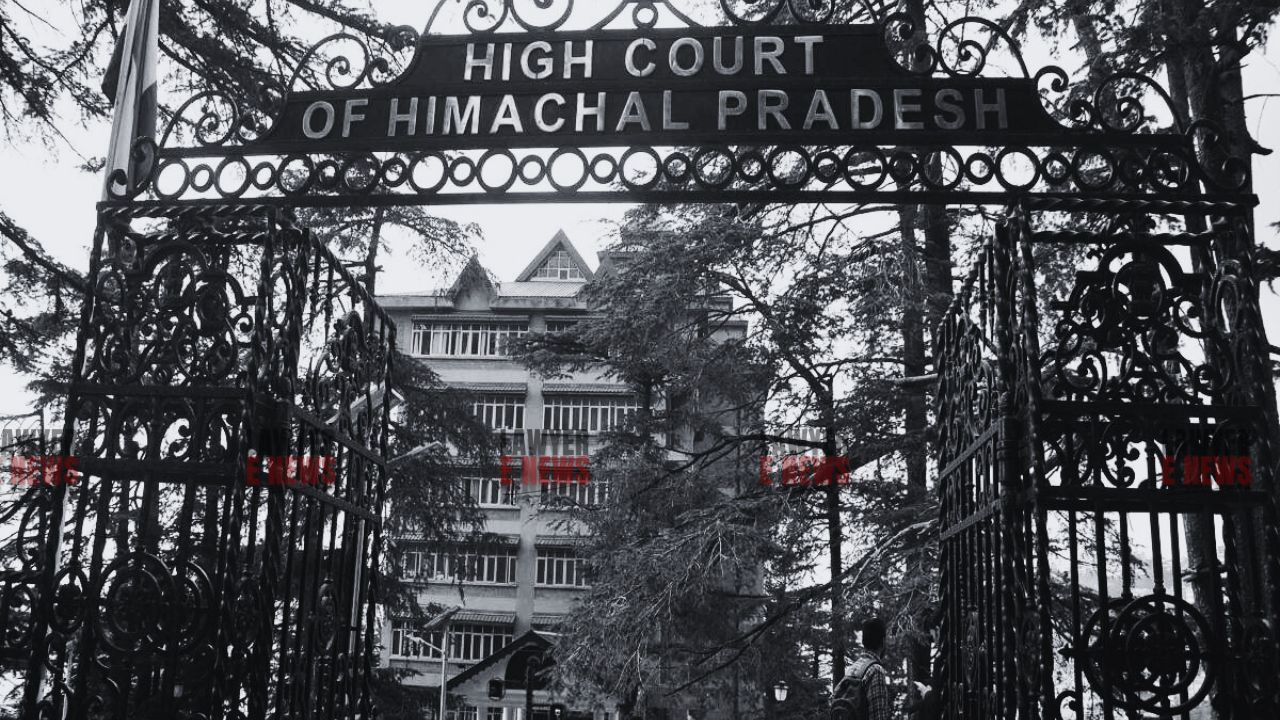
In a crucial decision reaffirming the importance of procedural fairness in regulatory actions, the Himachal Pradesh High Court, in the case of Mars Bottlers Una Private Limited vs. State of Himachal Pradesh and Others, CWP No. 8561 of 2024, quashed the orders suspending multiple excise licences of the petitioner bottling unit. The division bench of Justice Vivek Singh Thakur and Justice Sushil Kukreja held that an indefinite suspension, without any final determination, violates the statutory framework and disproportionately impacts the licensee, especially when the alleged offences are compoundable.
The Court decisively ruled that the suspension order dated 15.6.2024, and the subsequent rejection of the petitioner’s representation on 9.12.2024, were both arbitrary, unsupported by credible findings, and tainted by procedural irregularities and contradictory evidence. It held that the authorities had failed to justify the extreme measure of suspension when imposition of a compounding fee would have sufficed.
The case revolved around allegations that a truckload of liquor, allegedly undocumented, was seized from the petitioner’s premises. However, the High Court found material contradictions in the Inspection Report and the FIR that followed, casting doubt on the legitimacy of the action. The judgment lays down important principles on proportionality, procedural safeguards, and the boundaries of executive action under the Himachal Pradesh Excise Act, 2011.
“Contradictions Between Inspection Report and FIR Undermine Entire State Action”: Court Slams Procedural Gaps in Liquor Seizure Case
The core dispute began with an inspection conducted on 15–16 March 2024, at the petitioner’s bottling plant in Una, where a vehicle, bearing registration HR-39D-8993, allegedly containing a truckload of IMFL and CL, was found. The inspection team recorded that no valid documentation was provided for the liquor and the truck was detained. However, instead of being handed over to police or secured officially, custody of the truck and liquor was inexplicably given to one Krishan Kumar, who was neither on the official employee list nor an authorised plant official, but rather described by the petitioner as a construction contractor.
On the next day, the vehicle and Krishan Kumar both went missing. The FIR, registered later on 26.3.2024, introduced an entirely new version of events, stating that the truck had been recovered abandoned with a significant quantity of liquor missing and that the seized liquor was not bottled at the petitioner’s plant, contradicting the earlier Inspection Report, which had stated the opposite.
The Court noted: “From the aforesaid different story stated in the Inspection Report as well as in the FIR, it is apparent that FIR has been registered with consultation and is an afterthought to wrap the petition in a case alleging violation of provisions of the Act.”
It found no explanation as to why the seized liquor was returned to the very person from whom it was allegedly confiscated, calling it “a glaring procedural violation that vitiates the entire basis of the State’s action.”
“Admissions Cannot Be Manufactured by Misreading a Reply”: Court Rejects State’s Claim of Confession by Bottler
A key argument by the State was that the petitioner had admitted guilt in its reply to the Show Cause Notice. The Financial Commissioner relied heavily on this so-called admission to justify suspension of the licences. However, the Court rejected this submission outright.
The Court observed that the petitioner’s acceptance of responsibility was strictly limited to minor discrepancies in stock levels, such as minor variation in strength or wastage, which were within permissible norms as per the Punjab Distillery Rules, and did not relate to the alleged seizure of illicit liquor or the role of Krishan Kumar.
It held:
“There is no admission in either the replies or representations filed… regarding the alleged recovery and confiscation of illicit liquor loaded in the truck.”
Further, the Court found that none of the critical aspects forming the basis for the suspension — such as seizure, unauthorised personnel, and missing stock — were admitted by the petitioner. It concluded that the Financial Commissioner misconstrued the replies and stretched their meaning beyond what was stated, thereby acting in excess of jurisdiction.
“Suspension Is Not a Substitute for Cancellation — State Cannot Keep Licensee in Limbo”: Court Reaffirms Limits on Executive Power
The suspension order had remained effective since 16.3.2024, but no further step was taken by the authorities to either revoke or cancel the licence formally. The Court found this practice highly irregular and unfair to the licensee, who was effectively denied the right to operate without being given a final verdict.
It held: “Suspension cannot be perpetuated for indefinite time. There must be some limit for deciding further course of action. Under the garb of suspension, the petitioner is being made to suffer cancellation of licence.”
The Court also rejected the State’s argument that the licence had lapsed due to non-renewal. It noted that previous renewals had been allowed even after the prescribed timelines, and more importantly, the petitioner was prevented from applying for renewal due to the ongoing suspension and sealing of the premises.
“Minor Stock Variations Are Within Tolerance Limits Under Distillery Rules and Cannot Invite Harsh Penalties”
Addressing the discrepancies found during inspection, the Court relied on Punjab Distillery Rules, which allow tolerable levels of wastage and stock variance, especially during handling, bottling, and storage processes. The petitioner had provided records indicating that the differences were well within such limits and sought adjustment across the relevant months.
The Court observed: “Only on this count, such a harsh decision to suspend the licence in perpetuity should not have been taken.”
It concluded that the action of suspension was not only disproportionate but also legally unsustainable, as the alleged violations were compoundable under Section 66(2) of the Excise Act.
“Once a Licence is Granted, the Licensee Acquires a Right to Carry on Trade in Accordance With Law”: High Court Clarifies Scope of Fundamental Rights in Liquor Trade
The State had relied on the Supreme Court’s decision in Har Shankar v. Deputy Excise & Taxation Commissioner (1975) 1 SCC 737, to argue that there was no fundamental right to trade in liquor. However, the High Court clarified that the petitioner was not claiming a right to be granted a new licence, but rather challenging arbitrary suspension of an existing one.
The Court held: “A person having a valid licence has a legitimate guaranteed right and fundamental right to carry out such business in consonance with the provisions of law and opposition of the petition on this ground is misconceived.”
Thus, the judgment reinforces that once a licence is validly granted, the licensee is entitled to seek judicial review and cannot be deprived of business rights without just, fair, and lawful process.
Judgment and Final Direction
The Court concluded that the suspension orders dated 15.6.2024 and 9.12.2024 were passed without lawful basis, without proper application of mind, and in clear breach of statutory provisions and procedural norms. It ordered:
“Orders dated 15.6.2024 and 9.12.2024 are quashed and set aside. The Commissioner, State Taxes and Excise is directed to determine appropriate compounding fee in consonance with the relevant provisions within 15 days of passing of this order and thereafter pass an appropriate order with respect to renewal of licence of the petitioner.”
The writ petition was accordingly allowed, putting an end to a prolonged suspension that had effectively paralysed the operations of the bottling plant.
Date of Decision: 23 September 2025





