-
by sayum
04 October 2026 12:06 PM







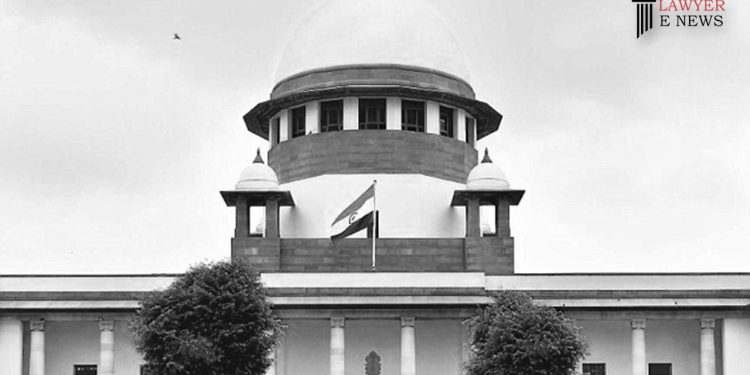
In a significant judgment, the Supreme Court of India has upheld the decision of the State of Jharkhand to annul the tender process for the grant of a mining lease for bauxite mineral. The bench, comprising Justices Sanjiv Khanna and S.V.N. Bhatti, delivered the verdict on November 20th, 2023, in the case titled “State of Jharkhand, through its Secretary, (Mines & Geology) and Another vs. Sociedade De Fomento Industrial Pvt. Ltd. And Others”.
The apex court’s decision revolved around the proper interpretation and application of the Mineral (Auction) Rules, 2015, as amended in 2017. The judgment emphasized the state’s responsibility in handling natural resources and the necessity to follow statutory procedures in tender processes.
The court observed, “Natural resources, including mines, minerals, etc., are considered national wealth for the common good and benefit of society through a systematic, scientific, and legal exploitation of the natural resources.”
The case arose from the annulment of a tender process initiated by the State of Jharkhand for a bauxite mining lease. The state had subsequently faced legal challenges on its decision to annul the tender process and initiate a fresh auction. The Supreme Court, in its analysis, delved deeply into the requirements of the Mineral (Auction) Rules and the principles governing judicial review in tender processes.
The judgment further noted, “The bottom line is public interest and maximization of value from exploitation of minerals and natural resources. Therefore, the Rules prescribe the mode and manner in which the bidding process for granting mining lease is taken up, continued, and concluded by the Appellants.”
The court underscored the principle that judicial review of administrative action is intended to prevent arbitrariness, irrationality, unreasonableness, bias, and mala fides. It stressed that in matters of tenders or award of contracts, the courts should not interfere unless the process is mala fide or so arbitrary and irrational that it could be deemed unlawful.
Justice S.V.N. Bhatti, in the judgment, stated, “Judicial review of administrative action is intended to prevent arbitrariness, irrationality, unreasonableness, bias, and mala fides. Its purpose is to check whether choice or decision is made ‘lawfully’ and not to check whether choice or decision is ‘sound’.”
The Supreme Court’s decision to set aside the impugned judgment and allow the Civil Appeal marks a significant precedent in the legal landscape surrounding tender processes and the exploitation of natural resources. This ruling is expected to guide future tendering processes, especially in the mining sector, ensuring that public interest and legal compliance remain at the forefront of administrative decision-making.
Date of Decision: 20th November 2023
State of Jharkhand, through its Secretary, (Mines & Geology) and Another vs Sociedade De Fomento Industrial Pvt. Ltd.