Part-Time Workers Serving For Decades Entitled To Regularization; 'Uma Devi' Ruling Cannot Be Weaponized To Deny Legitimate Claims: Rajasthan High Court Order Rejecting Or Allowing To Register FIR U/S Section 156(3) CrPC Application Is Not Interlocutory; Criminal Revision Is Maintainable: Punjab & Haryana High Court Default Bail | Failure To Produce Accused During Hearing For Extension Of Remand Time Is Gross Illegality, Violates Article 21: Andhra Pradesh High Court Section 138 NI Act Liability Of Directors Subsists Despite Initiation Of Liquidation Proceedings Against Company: Supreme Court Purchaser Of Property For Valuable Consideration Cannot Be Accused Of Cheating Original Owner If Title Document Is Forged: Supreme Court Appointment Of Minor To Public Post Is Per Se Illegal, Void Ab Initio: Allahabad High Court Arbitral Tribunal Cannot Abdicate Duty To Decide Limitation Objection Merely Because High Court Appointed Arbitrator: Allahabad High Court Deemed Conveyance Cannot Be Restricted To Building Footprint; Must Include Appurtenant Open Spaces Required By Planning Law: Bombay High Court Mere Discovery Of Accused's Presence At A Location Not A 'Fact Discovered' Under Section 27 Evidence Act: Delhi High Court Acquits Official In 1989 Bribe Case Section 307 IPC Is Not A 'Minor Offence' To Section 324 IPC; Accused Cannot Be Convicted For Attempt To Murder If Only Charged With Voluntarily Causing Hurt: Delhi High Court Landowners Under National Highways Act Entitled To 15% Interest On Enhanced Compensation; Denial Is Discriminatory: Punjab & Haryana HC Omission Of Village Name In Gazette Notification No Bar To Laying Transmission Lines If Area Falls 'Around' Notified Route: Orissa High Court NBFCs Cannot Use Force For Vehicle Repossession; Coercive Debt Recovery Violates Right To Livelihood Under Article 21: Uttarakhand High Court Non-Candidates Cannot Be Impleaded As Parties In Election Petitions Even If Allegations Of Impropriety Are Made: J&K&L High Court Lowest Bidder Has No Vested Right To Contract; Budgetary Constraints Valid Ground To Cancel Tender: Jharkhand High Court Confiscation Of Vehicle Under Section 49 Assam Forest Regulation Is Only Temporary; Final Confiscation Requires Conviction Under Section 51: Gauhati High Court Amendment Of Written Statement Cannot Be Allowed After Trial Commences If Facts Were Within Party's Knowledge: Delhi High Court

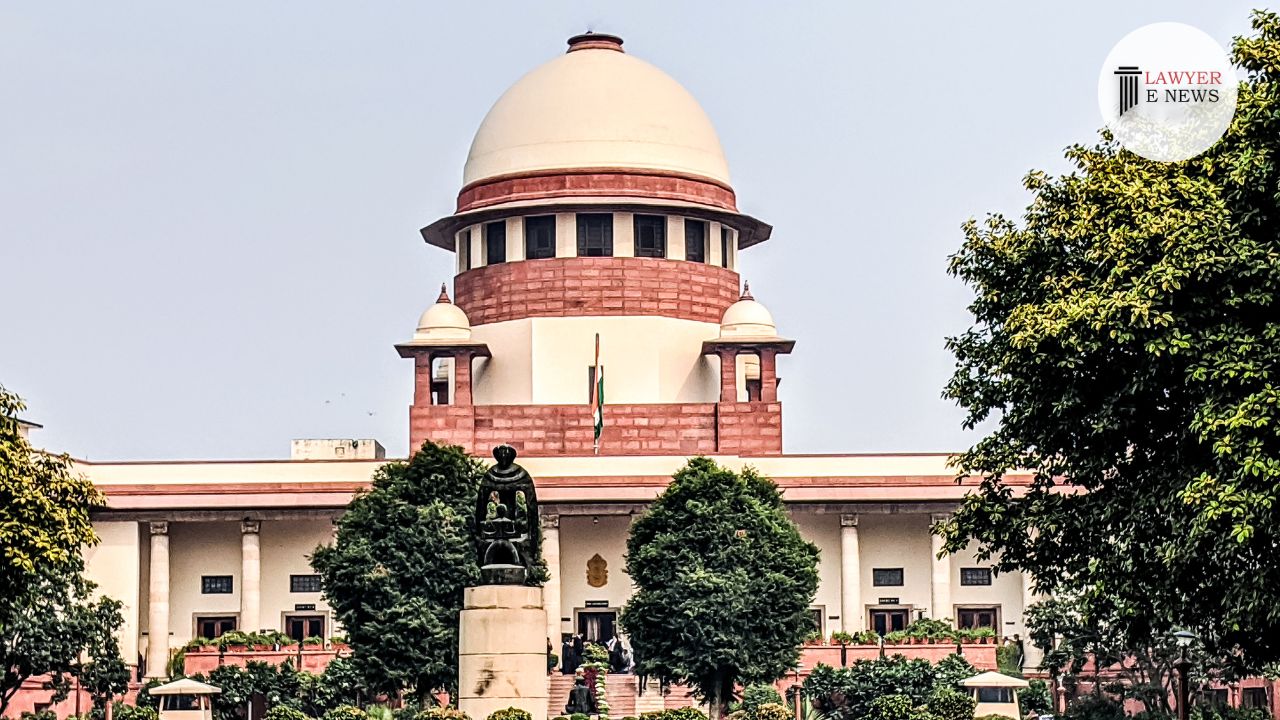
Supreme Court Upholds Cadre Merger in Education Department: "Policy Decision Generally Not to Be Interfered With"

07 May 2024 8:19 AM

By: Admin


In a significant ruling, the Supreme Court of India today upheld the merger of cadres in the Education Department, dismissing the appeals filed against the decision. The bench, comprising Justice Rajesh Bindal, delivered a judgment affirming the High Court's earlier decision, emphasizing the principle that "merger of cadres is a policy decision which cannot generally be interfered with."

The appeals, Civil Appeal Nos. 786 and 787 of 2013, challenged the order dated April 9, 1999, which merged the staff of the Adult Education Department with the Education Department and provided category-wise seniority. The appellants, who were already working in the Education Department, sought to quash this merger order.

In its judgment, the Supreme Court meticulously examined the posts, responsibilities, and pay scales involved in the merger and concluded that they were at the same level. This scrutiny led the court to dismiss the appellants' claims for a lack of substantial grounds for interference.

Justice Bindal, in his judgment, stated, "The level of posts being merged was examined and it was opined that these were at the same level. The argument raised by the writ petitioners before the High Court that there could be a better policy could not be a ground to quash the same."

The judgment also addressed concerns regarding personal liberty and seniority impacted by the merger. The court noted the significant delay in raising the issue, with many officers having been promoted or retired in the 24 years since the merger. "Other officers in the cadre who may be likely to be affected immediately with the merger, were not aggrieved with the action of the State," the judgment read.

This decision marks a pivotal moment in the legal discourse surrounding government policy decisions and their judicial review. The Supreme Court's stance reiterates the limited scope of judicial interference in policy matters, particularly when the decisions involve intricate administrative details and long-standing practices.

Date of Decision: 12 December  2023.

PRAFFUL SHUKLA AND OTHERS VS GOVERNMENT OF MADHYA PRADESH

 

Latest Legal News