-
by sayum
20 October 2026 1:07 PM







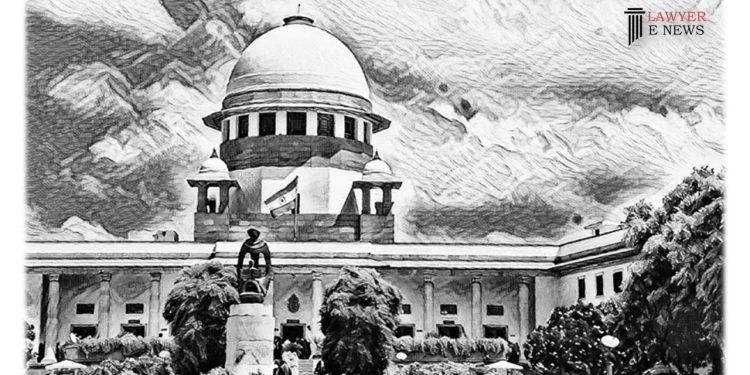
In a landmark judgment, the Supreme Court of India has exercised its powers under Article 142 of the Constitution of India read with Section 406 of the Code of Criminal Procedure, 1973, to rectify what it termed as a "lapse in providing proper legal guidance" to the appellant. The ruling came in the case of Bijoy Shankar Mishra vs. The State of Jharkhand & Anr., and it involved a jurisdictional dispute regarding dishonoured cheques amounting to Rs. 45,20,000.
Bijoy Shankar Mishra had initially filed a criminal complaint under Section 138 of the Negotiable Instruments Act, 1881. The case was dismissed by the Judicial Magistrate, First Class, who ruled they lacked territorial jurisdiction to try the case. Mishra's subsequent appeal to the High Court also resulted in a dismissal.
"We are of the opinion that this is a fit case to exercise our power under Article 142 of the Constitution of India read with Section 406 of the Code," said the bench comprising Justice Sanjiv Khanna and Justice S.V.N. Bhatti. "The Judicial Magistrate, First Class, has passed the order without realizing the legal consequences. There was a lapse and proper legal guidance, which was not provided to the appellant – Bijoy Shankar Mishra."
The Supreme Court emphasized that "procedural defect/lapse had a remedy, and was not substantial as to constitute lack of subject-matter jurisdiction." It further noted that "technical defects and irregularities should not come in the way of substantial justice," citing a recent judgment for this reasoning.
The Court clarified that its ruling was based on the "unique facts and circumstances" of the case and "should not be treated as a precedent."
The Supreme Court's decision has set aside both the order of the Judicial Magistrate, First Class, and the impugned order of the High Court, directing that the trial will continue in Jamshedpur, Jharkhand.
The case highlights the Supreme Court's commitment to ensuring that procedural shortcomings do not obstruct the course of justice, reinforcing the principle that the law exists to serve substantial justice above all.
Date of Decision: September 12, 2023
BIJOY SHANKAR MISHRA vs HE STATE OF JHARKHAND & ANR.