Limitation Act | Litigant Cannot Be Punished For Court's Own Docket Load: J&K High Court Illicit Affair Alone Cannot Make a Man Guilty of Abetting Suicide: Supreme Court Quashes Charge Under Section 306 IPC Landlord Cannot Be Punished for Slowness of Courts: Supreme Court on Bonafide Need in Eviction Suits Expect States To Enact Laws Regulating Unlicensed Money Lenders Charging Exorbitant Interest Contrary To 'Damdupat': Supreme Court Accused Who Skips Lok Adalat After Seeking It, Then Cries 'Prejudice', Cannot Claim Apprehension of Denial of Justice: Madras High Court Refuse To Transfer Case IO Cannot Act Without Prior Sanction: Gujarat High Court Grants Bail, Flags Procedural Lapse in Religious Conversion Case Electricity Board Strictly Liable For Unprotected Transformer, 7-Year-Old Cannot Be Guilty Of Contributory Negligence: Allahabad High Court POCSO Conviction Can't Stand For Offence Not Charged: Delhi High Court Member of Unlawful Assembly Cannot Escape Conviction By Claiming He Only Carried a Lathi and Struck No One: Allahabad High Court Jurisdiction Cannot Be Founded On Casual Or Incidental Facts If Not Have A Direct Nexus With The Lis: : Delhi High Court Clause Stating Disputes "Can" Be Settled By Arbitration Is Not A Binding Arbitration Agreement: Supreme Court State Cannot Plead Helplessness Against Sand Mafia; Supreme Court Warns Of Paramilitary Deployment, Complete Mining Ban In MP & Rajasthan Authority Cannot Withdraw Subsidy Citing Non-Compliance When It Ignored Repeated Requests For Inspection: Supreme Court Out-of-State SC/ST/OBC Candidates Cannot Claim Rajasthan's Reservation Benefits in NEET PG Counselling: Rajasthan High Court Supreme Court Upholds Haryana's Regularisation Of Qualified Ad Hoc Staff As 'One-Time Measure', Strikes Down Futuristic Cut-Offs

“Supreme Court Revives Writ Petition on Detention and Medical Care, Emphasizes Distinct Issues”

07 May 2024 8:19 AM

By: Admin


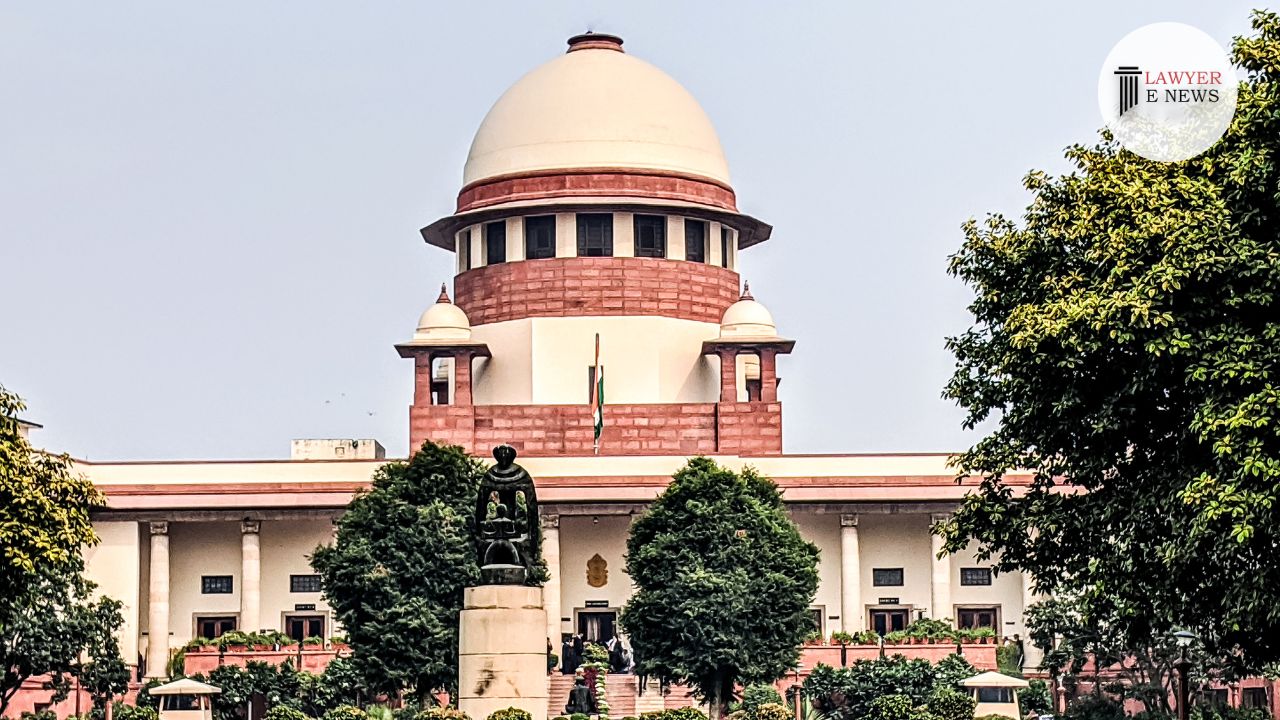
In a recent decision, the Supreme Court of India revived a writ petition that had been withdrawn by the petitioner before the Delhi High Court. The case, titled “SABERA KHATOON v. UNION OF INDIA & ORS.,” brought attention to the petitioner’s concerns about the procedure followed in her detention and the availability of medical facilities. The Supreme Court’s bench, comprising HON’BLE THE CHIEF JUSTICE, HON’BLE MR. JUSTICE J.B. PARDIWALA, and HON’BLE MR. JUSTICE MANOJ MISRA, emphasized the differentiated issues raised by the petitioner and set aside the High Court’s withdrawal order.

The Supreme Court’s observation highlighted the petitioner’s stance that her case was distinct from the one referenced in her withdrawal application. The petitioner invoked Articles 14, 19(1)(e), and 21 of the Constitution of India. Notably, the Supreme Court acknowledged the petitioner’s concerns regarding the procedure of her detention and the medical care provided to her, indicating the importance of addressing such issues individually.

The court directed that the petitioner receive essential medical treatment based on the advice of the G B Pant Institute of Post Graduate Medical Education and Research and Dr. Ram Manohar Lohia Hospital. The judgment underscored the need to consider differentiated aspects of the case and provided the petitioner the liberty to seek interim directions before the Delhi High Court.

This decision reiterates the significance of distinguishing between distinct issues, ensuring proper medical care, and allowing due legal recourse. The court’s action serves as a reminder that individual concerns must be addressed within the framework of justice and constitutional rights.

Date of Decision: 21-08-2023

SABERA KHATOON vs UNION OF INDIA & ORS.                   

 

Latest Legal News