-
by sayum
03 October 2026 9:56 AM







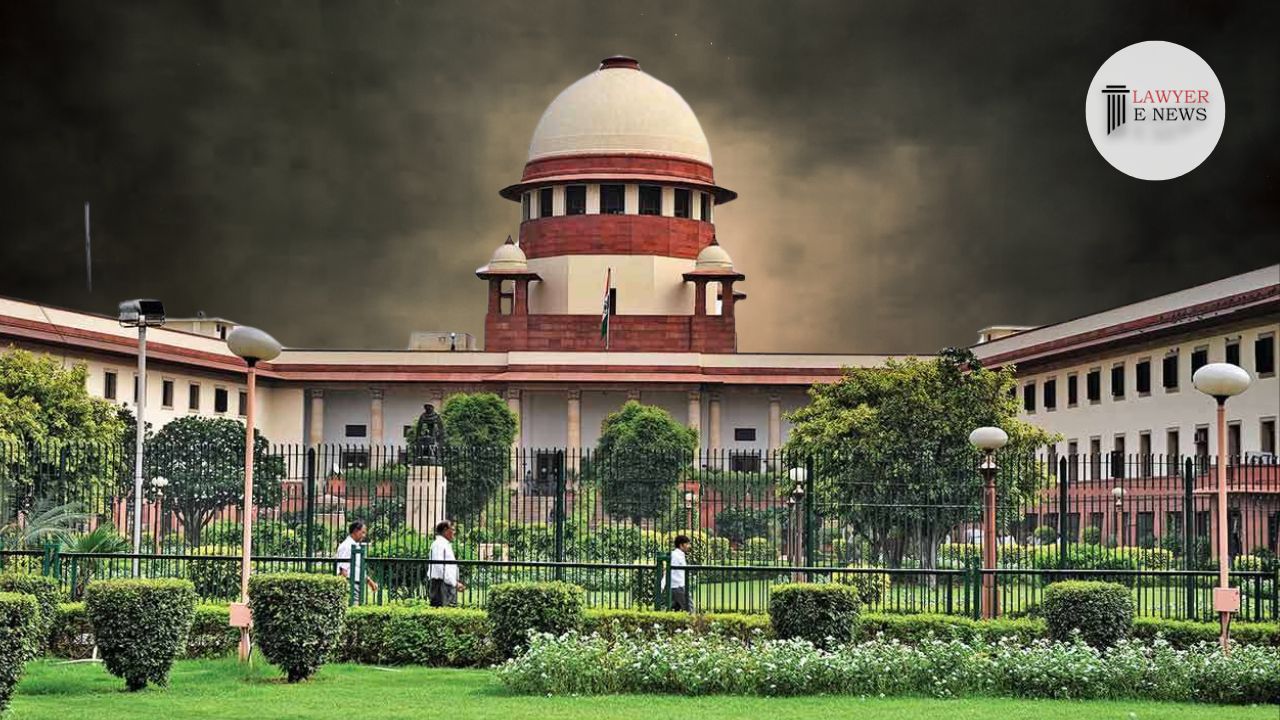
In a significant judgment, the Supreme Court of India dismissed the appeal of Afjal Ansari, a Member of Parliament, challenging the Allahabad High Court’s decision to not stay his conviction under the Uttar Pradesh Gangsters and Anti-Social Activities (Prevention) Act, 1986. The Apex Court’s bench, comprising Justices Surya Kant, Ujjal Bhuyan, and Dipankar Datta, upheld the High Court’s ruling, resulting in Ansari’s disqualification under Section 8(3) of the Representation of the People Act, 1951.
The Court emphasized the importance of upholding the rule of law in matters of parliamentary representation. Justice Surya Kant, delivering the majority opinion, stated, “The standard for suspending a conviction is contingent upon the unique facts and circumstances of each case.” He further added, “Despite being a Member of Parliament, the appellant cannot be given special treatment when in ordinary circumstances, such treatment may not be available to the common citizen.”
The judgment also addressed the appellant’s concern regarding the impact on his constituency, Ghazipur, which he claimed would go unrepresented. The Court observed that “the electorate’s right to have its elected representative voice its interests before the Parliament is a cornerstone of the system.” However, it was held that the lack of representation stemming from the vacancy could always be addressed by organizing an immediate by-election.
Regarding the developmental projects under the MPLAD Scheme, initiated by Ansari, the Court found no substantial irreversible consequences for the constituency from his disqualification.
Justice Dipankar Datta, in his dissenting opinion, stressed the sanctity of democratic processes and legal accountability. He remarked, “Allowing a convicted parliamentarian to attend parliamentary proceedings could not only be derogatory to the dignity of the Parliament but also derogatory to the good sense and wisdom of the people who elected such parliamentarian.”
The Supreme Court directed the High Court to decide the appeal on its merits at the earliest, emphasizing the need for prompt resolution in cases involving elected representatives.
Date of Decision: 14 December 2023
AFJAL ANSARI VS STATE OF UP