Delay in Test Identification & Absence of Motive Fatal to Prosecution: Allahabad High Court Acquits Man for Murder Tokre Koli or Dhor Koli – Both Stand on Same Legal Footing: Bombay High Court Slams Scrutiny Committee for Disregarding Pre-Constitutional Records Consent Is No Defence When Victim Is Under 16: Delhi High Court Upholds Rape Conviction Granting Pre-Arrest Bail in Minor Rape Cases Would Send a Harmful Societal Signal: Delhi High Court Refuses Anticipatory Bail to Accused Citing POCSO’s Rigorous Standards Void Marriage No Shield Against Cruelty Charges: Karnataka High Court Affirms Section 498A Applies Even In Deceptive and Void Marital Relationships Consolidation Authorities Cannot Confer Ownership Or Alter Scheme Post Confirmation Without Due Process: Punjab & Haryana High Court Reaffirms Civil Court’s Jurisdiction Over Void Post-Scheme Orders Litigation Policy is Not Law, Can’t Enforce Guidelines Through Courts: Rajasthan High Court Refuses to Entertain Quo Warranto Against Additional Advocate General’s Appointment Police and Lawyers Are Two Limbs of Justice System: Rajasthan High Court Takes Suo Motu Cognizance in Police Misconduct Incident Sole Testimony, Forensic Gaps, and Withheld Witness: No Conviction Possible: Delhi High Court Affirms Acquittal in Murder Trial Remand Keeps the Dispute Alive – Not Arrears: Bombay High Court Holds SVLDRS Relief Must Be Computed Under Litigation Category Daughter’s Right Extinguished When Partition Effected Prior to 2005 Amendment: Madras High Court Trial Courts Cannot Direct Filing of Challan After Conviction — Punjab & Haryana High Court Quashes Directions Against DSP Veer Singh Rule 4 Creates Parity, Not a Parallel Pension Pipeline: Rajasthan High Court Denies Dual Pension to Ex-Chief Justice Serving as SHRC Chairperson Right to Be Heard Must Be Preserved Where Claim Has a Legal Basis: Orissa High Court Upholds Impleadment of Will Beneficiary in Partition Suit Long-Term Ad Hocism Is Exploitation, Not Employment: Orissa High Court Orders Regularization Of Junior Typist After 25 Years Of Service PIL Cannot Be a Tool for Personal Grievances: Supreme Court Upholds Municipal Body’s Power to Revise Property Tax After 16 Years Omission of Accused’s Name by Eyewitness in FIR is a Fatal Lacuna: Supreme Court Acquits Man Convicted of Murder Correction In Revenue Map Under Section 30 Isn’t A Tool To Shift Plot Location After 17 Years: Supreme Court Quashes High Court’s Remand Casteist Abuses Must Be In Public View: Supreme Court Quashes SC/ST Act Proceedings Where Alleged Insults Occurred Inside Complainant’s House Resignation Bars Pension, But Not Gratuity: Supreme Court Draws Sharp Line Between Voluntary Retirement and Resignation in DTC Employee Case

Supreme Court Criticizes Hyper-Technical Approach, Orders Further Investigation in DSP Murder Case

07 May 2024 8:19 AM

By: Admin


In a significant development, the Supreme Court of India has criticized a hyper-technical approach taken by the High Court and ordered further investigation into the murder of a Deputy Superintendent of Police (DSP). The case involves the widow of the deceased DSP, Parveen Azad, seeking justice for her husband's murder, which occurred in a violent incident on March 2, 2013, in village Balipur, district Pratapgarh, Uttar Pradesh.

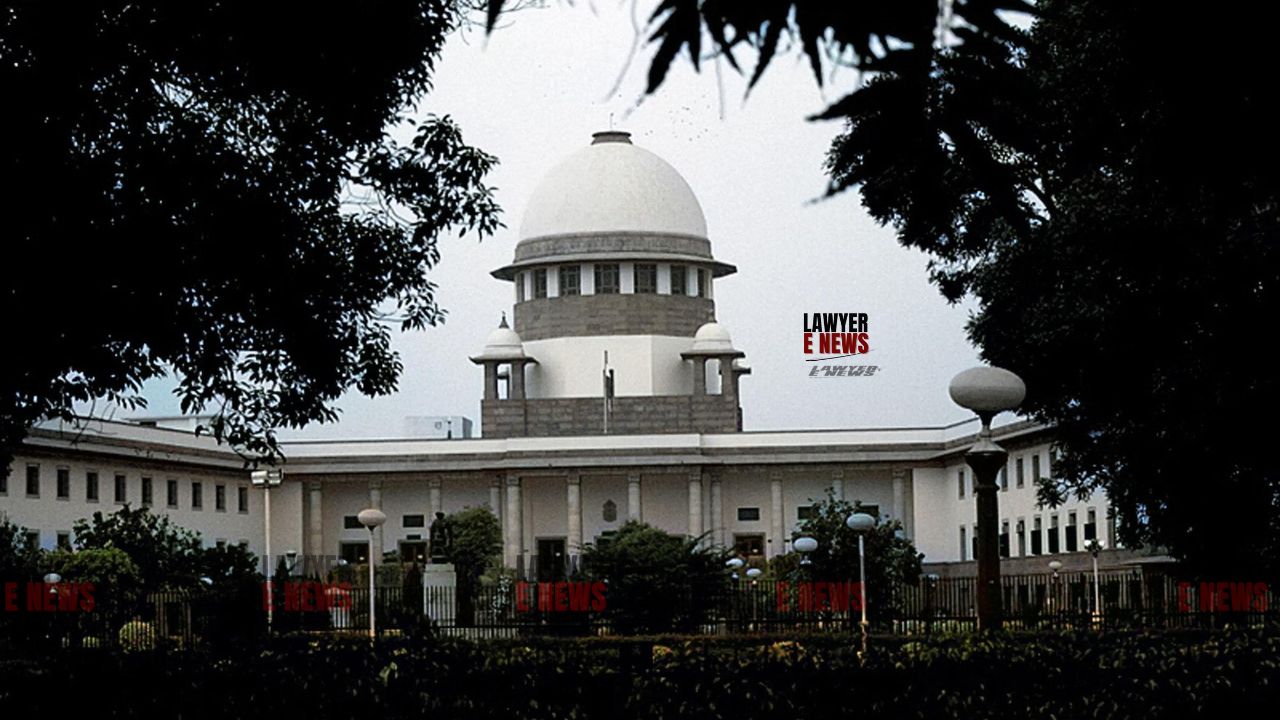
The order issued by the Supreme Court, on September 26, 2023, stems from a special leave petition (SLP) filed by Parveen Azad, challenging the High Court's decision to invalidate a directive from a Special Magistrate. The Special Magistrate had ordered further investigation into the case, citing irregularities in the initial investigation.

In its observations, the Supreme Court stated, "The High Court took a hyper-technical approach in the matter, making superfine distinction between re-investigation and further investigation. There does not appear to be any error on the part of the learned Special Magistrate in directing further investigation." The Court went on to set aside the High Court's order and upheld the Special Magistrate's directive for further investigation.

The case revolves around allegations made by Parveen Azad, who named several individuals as involved or complicit in her husband's murder. She also raised concerns about the police team abandoning her husband during the attack. The Central Bureau of Investigation (CBI) had submitted a charge sheet against several accused, but Azad's grievance was about the exoneration of five individuals she had named in her complaint.

The Supreme Court's decision directs the completion of further investigation within a period of three months and allows the trial proceedings to continue. It also emphasizes the importance of a comprehensive and unbiased investigation in cases of this nature.

This ruling is seen as a significant step towards ensuring justice in a high-profile case that has been closely watched by legal experts and the public. The Court's decision underscores the need for a fair and thorough investigation, irrespective of the circumstances, to uphold the principles of justice and rule of law.

DATE OF DECISION: September 26, 2023

PARVEEN AZAD vs CENTRAL BUREAU OF INVESTIGATION & ANR.

[gview file="https://lawyerenews.com/wp-content/uploads/2023/10/Parveen_Azad_vs_Central_Bureau_Of_Investigation_on_26_September_2023.pdf"]

Latest Legal News