
-
by sayum
26 August 2026 1:49 PM







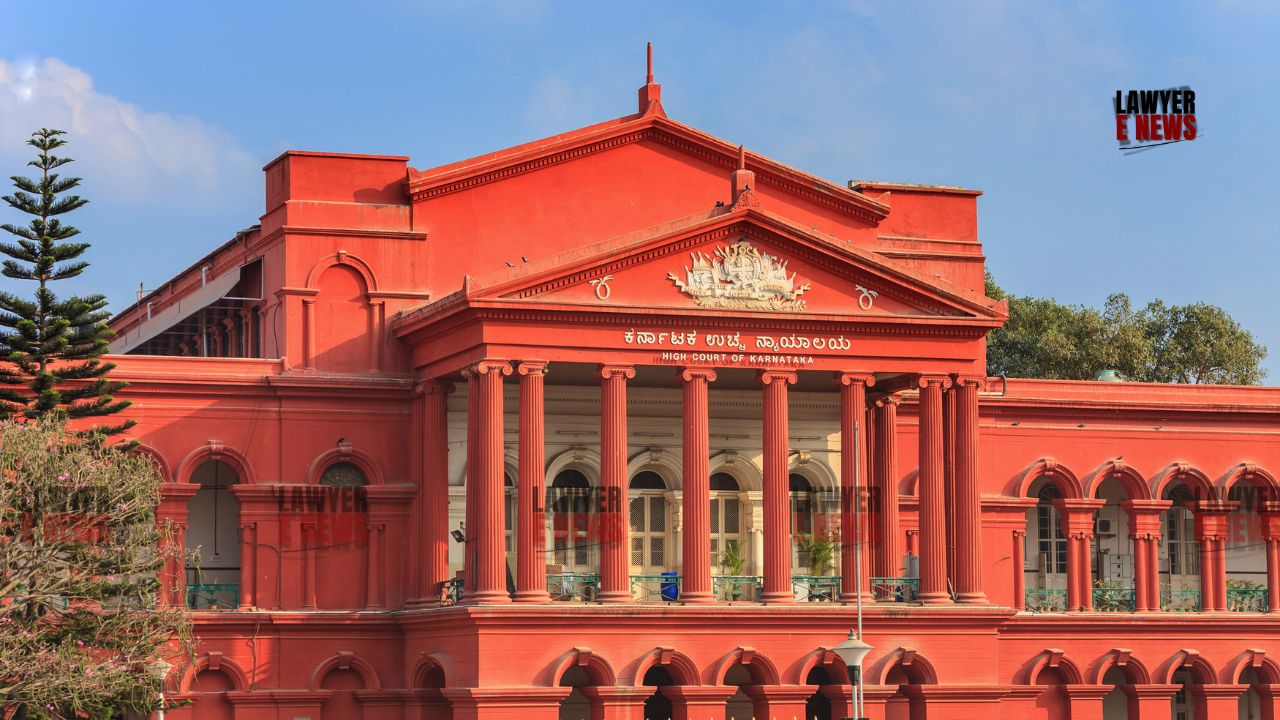
“Once plaintiffs abandon the prayer for declaration and fail to prove possession, a suit for bare injunction must fail”— Karnataka High Court dismissed a Regular Second Appeal filed under Section 100 of the Code of Civil Procedure, 1908, challenging concurrent findings of the trial and first appellate courts. The appellants—legal heirs of a person who had originally mortgaged the property to the Excise Department—sought permanent injunction against the Town Municipal Council (TMC), Malavalli, from interfering with their alleged possession over the mortgaged lands.
The High Court rejected the appeal, holding that plaintiffs, having abandoned their prayer for declaration of title and failed to establish lawful possession, could not maintain a suit for bare injunction. The Court emphasized that "where possession is not established and title is lost in public auction, courts cannot grant injunctions based on speculative or stale claims."
“Title Follows Possession in Vacant Land—Without Possession or Challenge to Auction, Plaintiff's Injunction Claim is Legally Unsustainable”
Auction Sale Post Mortgage Default
The origin of the dispute traces back to 1958, when M.V. Venkatappa (original plaintiff) mortgaged two agricultural properties in Sy. Nos. 595/2 and 596, measuring over 3 acres in total, to the Excise Department for securing payment of his liquor license bid. Upon default in 1960, the properties were sold in public auction on 29.11.1960 to the Town Municipal Council (TMC), Malavalli. The sale was confirmed by the Deputy Commissioner in 1961 and reaffirmed in 1965 after remand proceedings.
Despite this, the plaintiffs claimed that possession was never delivered to TMC and that the auction was procedurally defective. They relied on their continued mutation entries and tax payments to assert possession, seeking permanent injunction without pressing for declaration of title.
Initially filed as a comprehensive suit seeking declaration of ownership, permanent injunction, and mutation in revenue records, the plaintiffs narrowed the relief to bare injunction during trial. The trial court dismissed the suit on the ground that plaintiffs had failed to prove possession. The appellate court concurred. The plaintiffs then approached the High Court under Section 100 CPC.
“Abandonment of Declaration Bars Attack on Auction Validity in Suit for Injunction”—High Court Interprets Procedural Choices as Estoppel
The central issue before the High Court was whether the plaintiffs could maintain a suit for injunction without asserting or proving lawful title or possession, and in absence of any challenge to the decades-old auction.
Justice Ravi V. Hosmani held:
“Once plaintiffs abandoned plea for declaration and failed to establish possession, suit for bare injunction was rightly dismissed. Courts cannot test title or validity of auction proceedings in such suit unless appropriate pleadings and relief are sought.” [Para 52]
Further, the Court reiterated the principle that:
“In case of vacant land, where there is no physical assertion of possession, possession follows title. And when title is lost in a public auction, mere mutation entries or tax payments cannot resurrect rights.” [Para 85]
The Court held that mere documentary references such as correspondence, tax receipts, or mutation entries made unilaterally or fraudulently, could not prove lawful possession, particularly when auction sale had been confirmed twice and entered in official records.
“Auction Sale Confirmed Twice; Mutation in TMC’s Name—Plaintiffs’ Possession Entries Fraudulent, Acquired Without Notice”
No Possession, No Title, No Injunction
The Court meticulously examined the chain of events and statutory background:
The properties were mortgaged via a Hypothecation Deed dated 18.12.1958 (Ex.P3), admitting that in case of default, the government could auction the property.
The auction held on 29.11.1960 was confirmed twice by the Deputy Commissioner—in 1961 and again in 1965.
Plaintiffs did not challenge the auction or confirmation orders at any stage, despite full knowledge, as evidenced by their participation in various related proceedings.
Plaintiffs later manipulated revenue entries without notifying TMC, which were subsequently set aside by the Special Deputy Commissioner, who also initiated disciplinary action against colluding revenue officials.
The Court noted:
“The order passed by the Special Deputy Commissioner setting aside mutation of plaintiffs' names in the revenue records was never reversed. Plaintiffs failed to challenge the auction proceedings or sale confirmation in any meaningful legal manner.” [Para 68]
It also observed that letters written by the TMC to the Deputy Commissioner (Ex.P44 and P45), which the plaintiffs relied on to suggest TMC’s lack of possession, actually reflected TMC's effort to regularize and safeguard its existing title, not absence of ownership.
Justice Hosmani concluded:
“Plaintiffs relied on weak entries and correspondences to claim possession, but could not establish settled, lawful, or de jure possession. In vacant lands, possession is presumed to follow valid title, and TMC’s title stands established through auction and revenue records.” [Paras 66–68, 85]
“Doctrine of Acquiescence Bars Plaintiffs from Attacking Auction After Five Decades of Inaction”—No Relief for Litigative Delay
The High Court condemned the plaintiffs’ passive conduct over more than five decades, finding that they had full knowledge of the auction and confirmation process but chose not to challenge it in time. It held that the plaintiffs had acquiesced to the auction.
“Plaintiffs, through plaintiff no.1, participated in multiple litigations, including writ proceedings and revisions, where the auction sale was a central issue. Yet, they never sought to set aside the auction. Silence over decades becomes acquiescence.” [Para 79]
The Court cited the Supreme Court's decision in Anathula Sudhakar v. P. Buchi Reddy, (2008) 4 SCC 594 to hold that when title is in dispute and plaintiff is not in possession, a suit for injunction is not maintainable without a declaration of title. The Court also referred to Nagar Parishad, Ratnagiri v. Gangaram Narayan Ambekar, (2020) 7 SCC 275, reiterating that the weakness of the defendant’s title cannot strengthen the plaintiff’s claim.
“Findings of Courts Below Based on Evidence—No Perversity Justifying Interference Under Section 100 CPC”
The Court reaffirmed the limits of its jurisdiction under Section 100 CPC:
“Interference in second appeal is warranted only when findings are perverse, based on no evidence, or involve substantial questions of law. Concurrent findings in this case are based on ample material—oral and documentary—and thus do not call for interference.” [Para 47]
It dismissed the appellant's claim that documentary evidence, such as tax receipts or letters written by the TMC, amounted to proof of possession. It held that these were either self-serving or contradicted by official revenue records showing TMC’s name consistently since 1979.
“Courts below correctly rejected Exs.P4 to P30 as insufficient to prove possession. Mere mutation or tax payments do not amount to proof of settled possession, especially when title has already passed.” [Paras 72, 75]
Substantial Question of Law Answered Against Plaintiffs—Appeal Dismissed
Answering the substantial question of law in the affirmative—“Whether the courts below were justified in denying injunction when auction was not followed by delivery of possession but revenue entries and evidence showed TMC’s title and possession”—the Karnataka High Court upheld the dismissal of the suit and appeal.
“In absence of title and in absence of proof of possession, a suit for bare injunction is not maintainable. Plaintiffs, who admit mortgage and auction, cannot now assert possession without legal foundation.” [Para 86]
The appeal was dismissed. A subsequent oral request by the plaintiffs' counsel for stay was also rejected.
Date of Judgment: 10 October 2025





