State Can’t Block SARFAESI Sale by Late Revenue Entries: Secured Creditor’s Charge Prevails Over Tax Dues: Punjab & Haryana High Court Slams Sub-Registrar’s Refusal Providing SIM Card Without Knowledge of Its Criminal Use Does Not Imply Criminal Conspiracy: P&H High Court Grants Bail in UAPA & Murder Case Importer Who Accepts Enhanced Valuation Cannot Later Contest Confiscation and Penalty for Undervaluation: Madras High Court Upholds Strict Liability under Customs Act "Allegations Are Not Proof: Madras High Court Refuses Divorce Without Substantiated Cruelty or Desertion" When FIR Is Filed After Consulting Political Leaders, the Possibility of Coloured Version Cannot Be Ruled Out: Kerala High Court Mere Allegations of Antecedents Without Conviction Can't Defeat Right to Anticipatory Bail: Kerala High Court Section 106 Of Evidence Act Cannot Be Invoked In Vacuum – Prosecution Must First Lay Foundational Facts: Karnataka High Court Acquits Wife And Co-Accused In Husband’s Murder Case Parity Cannot Be Claimed When Roles Are Different: Karnataka High Court Refuses Bail to Youth Accused of Brutal Killing Injured Wife Would Not Falsely Implicate Her Husband: Gauhati High Court Upholds Conviction in Domestic Stabbing Case Disputed Bids, Missing Evidence and No Prejudice: Delhi High Court Refuses to Intervene in Tender Challenge under Article 226 License Fee on Hoardings is Regulatory, Not Tax; GST Does Not Bar Municipal Levy: Bombay High Court Filing Forged Bank Statement to Mislead Court in Maintenance Case Is Prima Facie Offence Under Section 466 IPC: Allahabad High Court Upholds Summoning Continued Cruelty and Concealment of Infertility Justify Divorce: Chhattisgarh High Court Upholds Divorce Disguising Punishment as Simplicity Is Abuse of Power: Delhi High Court Quashes Dismissals of Civil Defence Volunteers for Being Stigmatic, Not Simpliciter Marriage Cannot Be Perpetuated on Paper When Cohabitation Has Ceased for Decades: Supreme Court Invokes Article 142 to Grant Divorce Despite Wife’s Opposition Ownership of Trucks Does Not Mean Windfall Compensation: Supreme Court Slashes Inflated Motor Accident Award in Absence of Documentary Proof Concealment of Mortgage Is Fraud, Not a Technical Omission: Supreme Court Restores Refund Decree, Slams High Court’s Remand State Reorganization Does Not Automatically Convert Cooperative Societies into Multi-State Entities: Supreme Court Rejects Blanket Interpretation of Section 103 Indian Courts Cannot Invalidate Foreign Arbitral Awards Passed Under Foreign Law: Madhya Pradesh High Court Enforces Texas-Based Award Despite Commercial Court’s Contrary Decree Sudden Quarrel over Mound of Earth — Not Murder but Culpable Homicide: Allahabad High Court Eligibility Flows from Birth, Not a Certificate Date: Delhi High Court Strikes Down Rule Fixing Arbitrary Cut-Off for OBC-NCL Certificates in CAPF (AC) Recruitment Bar Under Order II Rule 2 CPC Cannot Be Invoked Where Specific Performance Was Legally Premature Due To Statutory Impediments: P&H High Court Once a Court Declares a Department an Industry Under Section 2(j), State Cannot Raise the Same Objection Again: Gujarat High Court Slams Repetitive Litigation by Irrigation Department “How Could Cheques Issued in 2020 Be Mentioned in a 2019 Contract?”: Delhi High Court Grants Injunction in Forged MOA Case, Slams Prima Facie Fabrication Calling Wife by Her Caste Name in Public Just Before Suicide is Immediate Cause of Self-Immolation: Madras High Court Upholds Husband’s Conviction Under Section 306 IPC Sole Testimony of Prosecutrix, If Credible, Is Enough to Convict: Delhi High Court Upholds Rape Conviction Cheque Issued as Security Still Attracts Section 138 NI Act If Liability Exists on Date of Presentation: Himachal Pradesh High Court After Admitting Lease, Defendant Cannot Turn Around and Call It Forged—Contradictory Stand at Advanced Trial Stage Impermissible: Punjab & Haryana High Court Dismisses Revision Against Rejection of Amendment Plea Dismissed Employee Has No Right to Leave Encashment Under Statutory Rules: Punjab and Haryana High Court Section 13 of Gambling Act Is Cognizable — Magistrate Can Take Cognizance on Police Report: Allahabad High Court Clarifies Surveyor’s Report Not Sacrosanct, Arbitral Tribunal Has Jurisdiction to Apply Mind Independently: Bombay High Court Dismisses Insurer’s Challenge to Award in Fire Damage Dispute Auction Purchaser Has No Vested Right Without Sale Confirmation: Calcutta HC Upholds Borrower’s Redemption Right Under Pre-Amendment SARFAESI Law Mere Breach of Promise to Marry Doesn’t Amount to Rape: Delhi High Court Acquits Man in False Rape Case Father Is the Natural Guardian After Mother’s Death, Mere Technicalities Cannot Override Welfare of Child: Orissa High Court Restores Custody to Biological Father Assets of Wife and Father-in-Law Can Be Considered in Disproportionate Assets Case Against Public Servant: Kerala High Court Refuses Discharge

Statutory Provisions Must Prevail Over Executive Orders: High Court Rules Against State in Employee Strike Case

22 December 2024 11:58 AM

By: Deepak Kumar


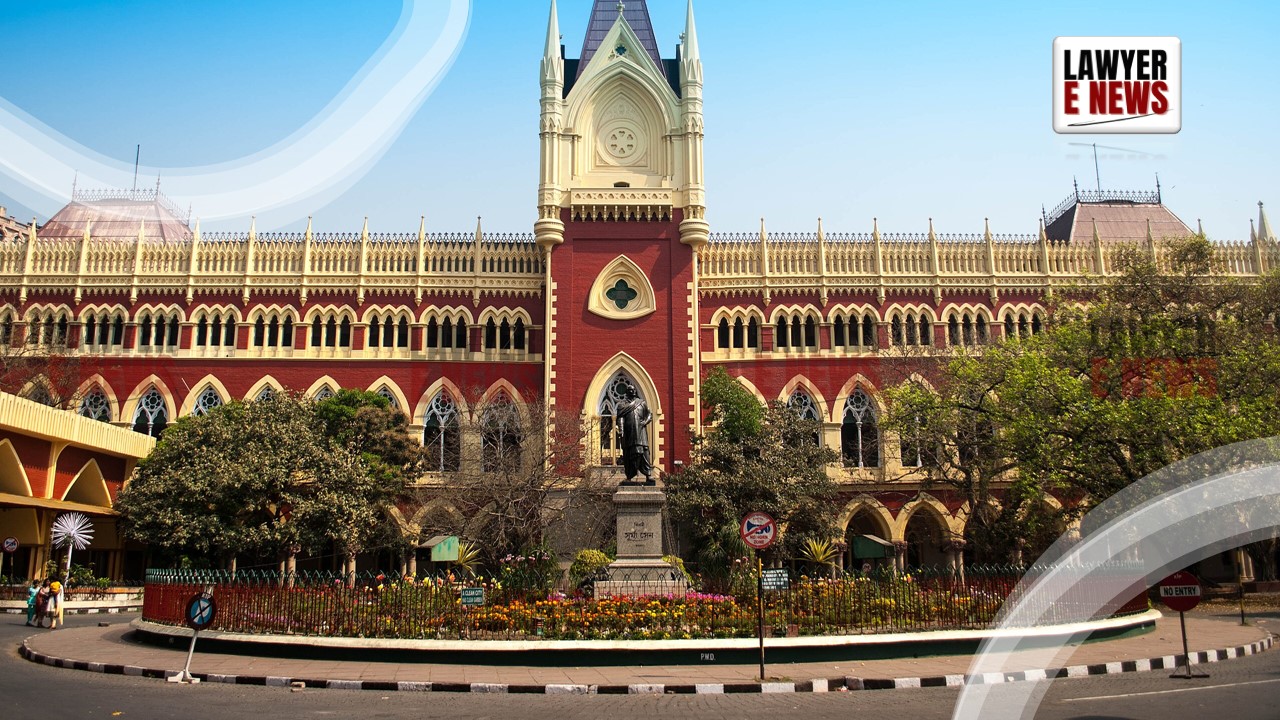
Calcutta High Court sets aside memoranda penalizing Dr. Silpa Bandyopadhyay for strike participation, citing violations of natural justice and constitutional rights.

In a significant judgment, the Calcutta High Court has ruled in favor of Dr. Silpa Bandyopadhyay, an upper division clerk penalized for participating in a strike on September 2, 2015. The court set aside the administrative orders and disciplinary actions taken against her, emphasizing that statutory provisions and regulations must supersede conflicting executive orders. This ruling highlights the judiciary’s stance on upholding constitutional rights and principles of natural justice.


Dr. Silpa Bandyopadhyay, employed by the West Bengal Board of Madrasah Education, faced disciplinary actions for her absence during a strike. Despite her explanation, her employer treated her absence as “dies non” (non-duty day) and imposed penalties without conducting a proper hearing. The administrative memoranda that led to these actions were challenged in court, arguing they violated her rights under Article 14 of the Constitution and the principles laid out in the West Bengal Board of Madrasah Education Act, 1994, and the corresponding regulations of 2015.


The court emphasized the primacy of statutory provisions over executive orders. Justice Rai Chattopadhyay stated, “Statutory provisions and regulations must prevail over executive orders. Any administrative order conflicting with statutory law and regulations is ultra vires and must be set aside.” The court referenced multiple precedents, including Sk. Nausad Rahman & Ors. Vs. Union of India, underscoring that executive instructions cannot override established laws.


The court found that Dr. Bandyopadhyay was penalized without being afforded an opportunity to be heard, thus violating the principles of natural justice. “Disciplinary actions must follow due process prescribed by relevant statutes and regulations, ensuring fair treatment,” Justice Chattopadhyay noted. The absence of a formal inquiry before imposing penalties was deemed a critical oversight.


Addressing the issue of discrimination, the court observed that granting special casual leave to employees who attended work during the strike, while penalizing those who participated in it, was discriminatory and violated Article 14 of the Constitution. The judgment stated, “Such dissimilar treatment offends the guarantee of equality as envisaged under the Constitution.”


Justice Rai Chattopadhyay remarked, “In the context of Article 21, an invasion of privacy must be justified on the basis of a law that stipulates a procedure which is fair, just, and reasonable. The law and the procedure must also be valid concerning the encroachment on life and personal liberty.” This quote underlines the necessity for legal frameworks to respect fundamental rights.

The High Court’s decision to set aside the impugned memoranda and disciplinary actions against Dr. Bandyopadhyay reinforces the supremacy of statutory provisions over executive orders and underscores the importance of adhering to principles of natural justice. This ruling is expected to have a significant impact on how similar cases are handled in the future, ensuring that employees’ constitutional rights are protected against arbitrary administrative actions.


Date of Decision: July 05, 2024

 

Latest Legal News