-
by sayum
14 August 2026 3:21 PM







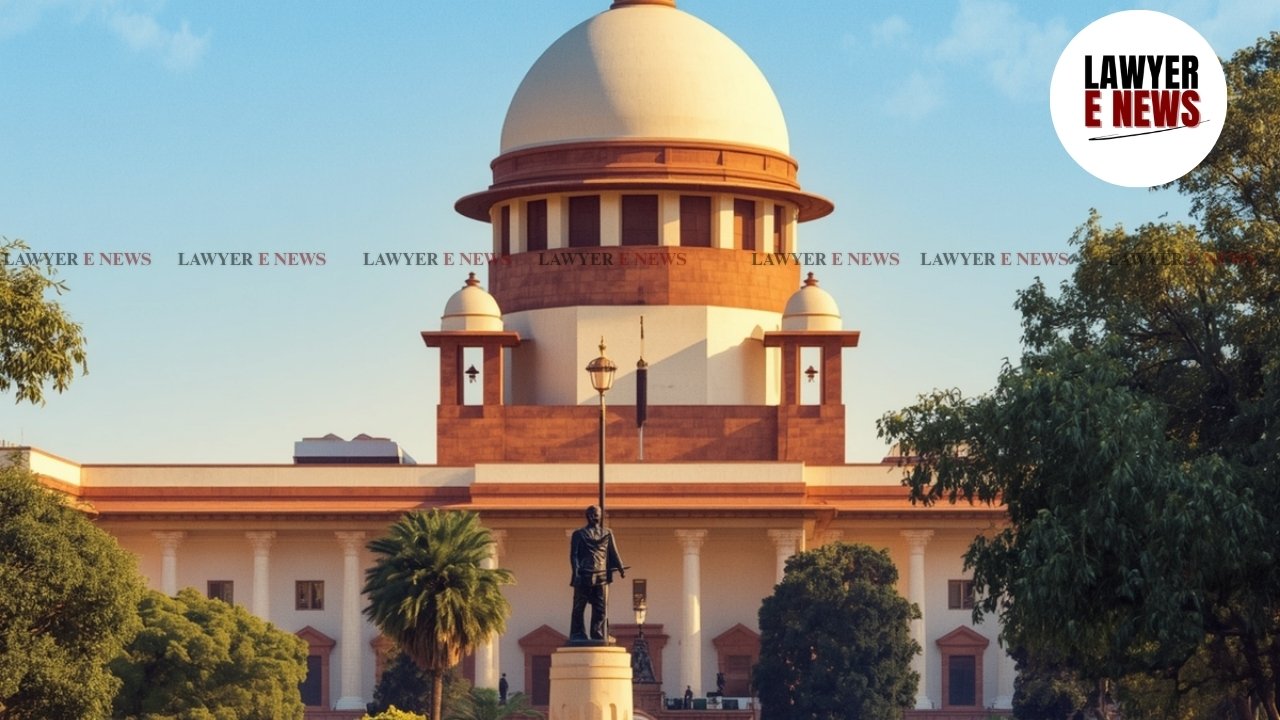
"The distinction sought to be drawn by the authorities between a case of unutilized additional FSI for educational institutions, medical institutions, institutional buildings and star category hotels as opposed to unutilized additional FSI for residential/group housing projects is bereft of rationale." Supreme Court, in a significant ruling dated July 13, 2026, has held that the State cannot arbitrarily retain premiums paid by developers for additional Floor Space Index (FSI) when such privileges remain unutilized.
A bench comprising Justice Sanjay Kumar and Justice K. Vinod Chandran observed that the refusal to refund such amounts, while allowing refunds for other sectors like hospitality and healthcare, constitutes a violation of the guarantee of equality under Article 14 of the Constitution of India.
The case arose from a dispute where the appellants had paid a premium of ₹30,46,290/- for extra FSI to develop a group housing project in Pune. After abandoning the construction plan in favor of plotting the land, they sought a refund of the premium since the additional FSI was never used. The Bombay High Court had previously dismissed their writ petition, concluding that the statutory scheme under the Maharashtra Regional and Town Planning Act, 1966 (MRTP Act) contained no express provision for such a refund.
The primary questions before the Court were whether the State could justify the retention of premiums for unutilized privileges in the absence of a specific statutory bar. The Court was also called upon to determine if the Government’s policy of allowing refunds for specific categories like hospitals and hotels, while denying them to residential projects, was discriminatory and arbitrary.
Inaction of Authorities Cannot Be Attributed to Citizens as Delay
The Court first addressed the High Court’s finding that the appellants were guilty of delay. The Bench noted that the appellants had sought the refund within three years of the payment, and any subsequent delay was due to the inaction of the authorities who sat on recommendations for the refund.
"The inaction of the authorities upon their request cannot be attributed to them as delay on their part," the Court observed. It highlighted that the Sub-Divisional Officer had recommended the refund as early as 2015, yet the authorities failed to act, forcing the appellants into protracted litigation.
Refusal to Refund Unutilized Premium is Unjust and Unfair
The Bench emphasized that when no tangible benefit has accrued to a citizen from a paid privilege, the State has no moral or legal justification to retain the consideration. Since the appellants changed their plan from construction to plotting, the additional FSI granted to them became redundant.
"When it is not in dispute that the appellants did not utilize the additional FSI granted to them upon payment of premium... it was not just and fair on the part of the authorities to retain the premium paid by them," the judgment stated. The Court rejected the State's "ostensible justification" that the statutory scheme lacked a specific refund provision.
Discriminatory Distinction Between Residential and Commercial Sectors
The Court took sharp aim at the State's policy which permitted refunds for unutilized FSI in educational, medical, and hotel projects but denied it for residential constructions. The Assistant Director of Town Planning had argued that the Government Resolutions (GRs) permitting refunds were limited to specific sectors and geographical areas like Mumbai.
"The distinction... is at variance with the policy underlying the directives issued by the Government of Maharashtra," the Bench noted. It further observed that the "verbal jugglery" used to distinguish between additional FSI and exemptions from FSI computation was "ludicrous," as the ultimate effect of both was the grant of extra FSI.
State Action Must Be Informed by Reason and Non-Arbitrariness
Invoking the landmark precedent of E.P. Royappa vs. State of Tamil Nadu, the Court reiterated that equality is antithetical to arbitrariness. The Bench held that Articles 14 and 16 of the Constitution of India strike at arbitrary State action to ensure fairness and equality of treatment.
"The decision not to manifest any reason as to why such benefit should be limited only to those identified buildings and to no other... suffers from sheer arbitrariness," the Court held. It emphasized that the philosophy of the Constitution does not permit unfairness or unreasonableness in any sphere of State activity, including contractual or regulatory matters.
Residential Projects Deserve Higher Consideration for Refunds
The Court observed that if the logic of fairness applies to commercial or semi-commercial buildings like hotels, it applies with greater force to residential projects. The Bench noted that any premium paid for residential FSI eventually impacts individual homebuyers when developers pass on the costs.
"Logic and fairness demand that premium paid for unutilized additional FSI for a residential/group housing project... should stand on a higher footing when compared to premium paid for unutilized additional FSI for commercial buildings," the Bench observed. The refusal to acknowledge this was termed "clearly whimsical" by the Court.
Final Directions and Entitlement to Interest
Setting aside the Bombay High Court judgment and the rejection order of the Town Planning authority, the Supreme Court directed the refund of the premium. However, it permitted the State to deduct 10% towards administrative charges, consistent with existing policies for other sectors.
"Interest shall also be payable to the appellants upon the amount that is refundable to them, which was retained by the authorities for more than a decade and a half," the Court ordered. It fixed the rate of interest at 7% per annum from the date of deposit until the date of actual payment.
In conclusion, the Supreme Court reinforced that the State cannot hide behind the absence of specific regulations to retain money paid for a privilege that was never exercised. The ruling establishes that non-arbitrariness and fairness are intrinsic to Article 14 and must guide the State’s handling of statutory premiums and refunds.
Date of Decision: July 13, 2026