-
by sayum
24 August 2026 3:22 PM







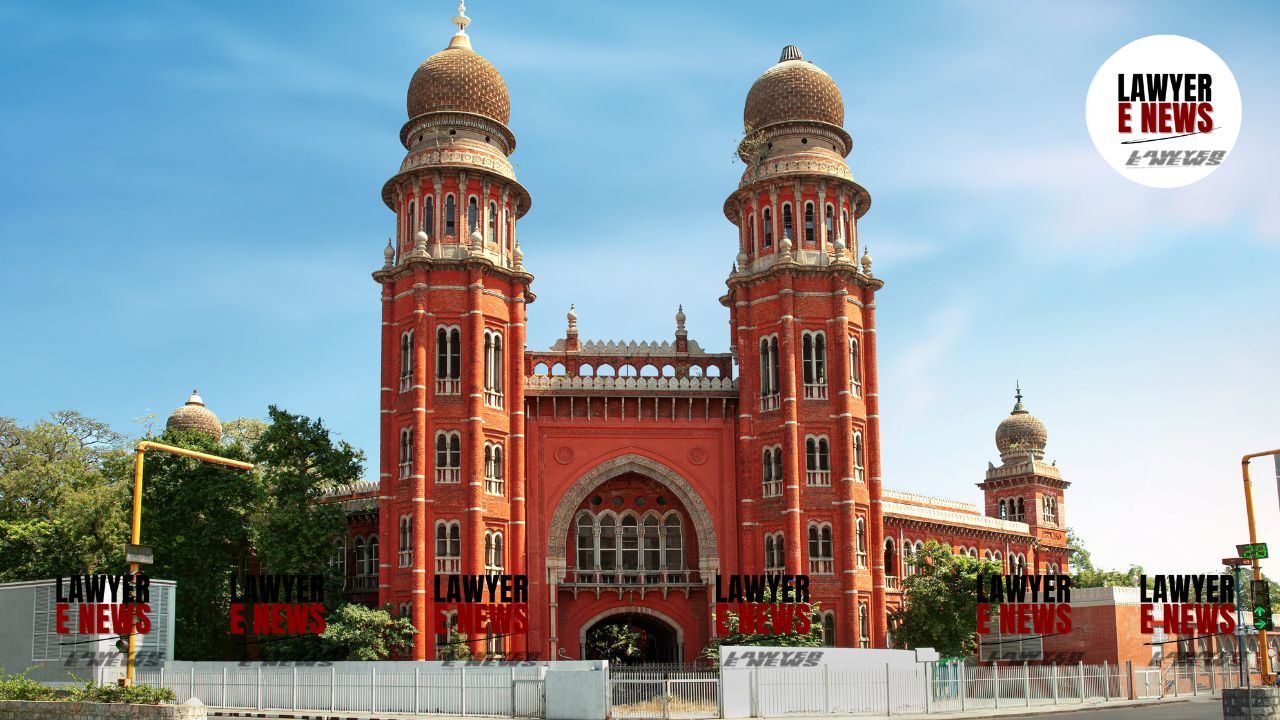
“Materials were never required, never reached, and were never used — Yet they were issued under official seal. That is criminal misconduct.” Madras High Court, through a detailed and reasoned judgment by Justice D. Bharatha Chakravarthy, upheld the conviction of multiple Telecom Department officials in a sensational corruption case involving the misappropriation of public property worth ₹1.95 crore. The case, which exposed a widespread conspiracy within the Department of Telecommunications during 1997–1999, ended with confirmed convictions for criminal conspiracy, cheating, and corruption, but saw reduced sentences considering the age of the convicts and the long passage of time.
“Signing blank indents, allowing unauthorised issue of materials, and directing consignments to private scrap yards—this Court finds sufficient evidence of collusion and criminal intent.”
The appellants, all officials of the Telecom Department, had challenged their convictions under Sections 120-B and 420 of IPC, and Section 13(1)(d) read with 13(2) of the Prevention of Corruption Act, 1988. The charges pertained to a carefully orchestrated conspiracy to raise false indents and illegally divert telecom materials from Chennai to scrap dealers, primarily in Tiruvannamalai, rather than to the intended destinations like Mysore and Bangalore.
"Prosecution Proved That Official Machinery Was Misused to Facilitate Criminal Diversion of Public Resources"
The central finding of the court was that A1 (Chandrasekar), A5 (Amar Singh), A7 (Kumararaj) and the now-deceased A6 (P. Mani) conspired to create a false system of indents, transport vouchers, and gate passes to siphon valuable telecom materials, including telephone cables and poles, to private parties.
The court noted that 170 telephone calls were made between A1 and A6, and that several false indents were signed in blank and handed over to A6. The materials were then issued under official orders and delivered not to the telecom depots but instead to private scrap dealers.
“PW-46, a lorry owner, and PW-47, a scrap dealer, together confirmed the movement of more than 35 truckloads of telecom materials to scrap markets — not to official stores,” observed the Court. “This is not negligence; it is intentional diversion.”
In confirming the conviction of A1, the Court rejected his defence that he was merely issuing indents in the course of his duties. “He signed blank indents, failed to verify material necessity, and engaged in consistent communication with the private transporter. This establishes his active involvement in the conspiracy.”
"Sanction Valid, Evidence Convincing, Conspiracy Complete": High Court Dismisses Technical Objections
A key argument raised on behalf of A1 and A12 was that the sanction for prosecution was not accorded by the proper authority, and hence the entire proceeding was vitiated. The Court, however, upheld the validity of the sanction:
“PW-2 clearly stated that the Minister, being the competent authority, accorded sanction, and it was communicated through official hierarchy. No prejudice was caused. The sanction order withstands legal scrutiny.”
“Materials Were Issued Without Allotment or Verification — Official Machinery Was Hijacked by Insiders”
The Court dealt extensively with the procedural violations. Materials were issued based on indents that were neither routed through the Chief General Manager of Telecom Stores, Calcutta, nor countersigned by competent Divisional Engineers. Gate passes were issued on verbal orders. Issue vouchers were fabricated or post-dated. None of the 26 indents examined matched the actual work estimates on the ground.
“PW-16 to PW-32—all field officials—categorically stated that the materials in question were not relevant to the works executed, and most of them were never even received,” the Court noted.
"A6 Collected, A1 Directed, A5 Transported, A7 Issued Orders—Together, They Looted the Public Exchequer"
The role of each convicted accused was traced with precision.
A1 Chandrashekar, as Sub-Divisional Engineer in Mysore, initiated the conspiracy by signing blank indents, which were then completed by others with fraudulent details.
A5 Amar Singh, a phone mechanic, was the link between the documents and the transport, signing for materials, collecting them, and directing them into lorries managed by the private contractor A6.
A7 G. Kumararaj, as Director of Telecom Stores, signed off on material issue orders without verifying the authority or necessity. Evidence showed he allowed dispatch of materials without vouchers, and that he received a car from A6, raising further suspicions of quid pro quo.
The Court said, “While A7 claims he purchased the car lawfully, the fact that it came from A6, who was unauthorised to lift materials, only strengthens the suspicion.”
"Benefit of Doubt Cannot Be Denied Where Prosecution Fails to Connect the Final Dots"
On the other hand, the Court acquitted A8, A9, and A12, observing that the evidence fell short of proving their direct involvement in the conspiracy.
“There is no credible proof that A8 and A9 signed the indents relied on by the prosecution. Even handwriting expert opinions were inconclusive. There is no other material establishing that they handed over any documents or received any benefit.”
Similarly, for A12, who made a single endorsement in the absence of the Divisional Engineer, the Court noted that no criminal intent or procedural breach was established. “At best, he performed a routine act of verification, with no knowledge or participation in the fraud.”
“Time Passed, But Offence Proven—Sentence Reduced, Conviction Confirmed”
While confirming the convictions of A1, A5, and A7, the High Court took note of the fact that more than 25 years had passed since the offence, and that the accused were now aged and ailing. Consequently, the sentence of 2 years rigorous imprisonment was reduced to 1 year simple imprisonment, with a direction that they surrender within 8 weeks.
“The guilt stands proven beyond reasonable doubt. However, keeping in view the delay and circumstances, the sentence shall be reduced,” held the Court.
The Madras High Court's ruling in this case sends a stern message: Government machinery is not for private gain, and even technical employees will be held accountable if they participate in fraudulent systems. The case sets a precedent in understanding how conspiracy can be proven through circumstantial evidence, telephone records, procedural violations, and linkages between documents and transport.
The Court has clarified that bureaucratic processes are not mere formalities—when bypassed with intent, they constitute criminal misconduct. By upholding the core findings of the trial court, the High Court has reiterated the judiciary’s commitment to safeguarding public resources.
Date of Decision: October 15, 2025