-
by sayum
29 August 2026 3:15 PM







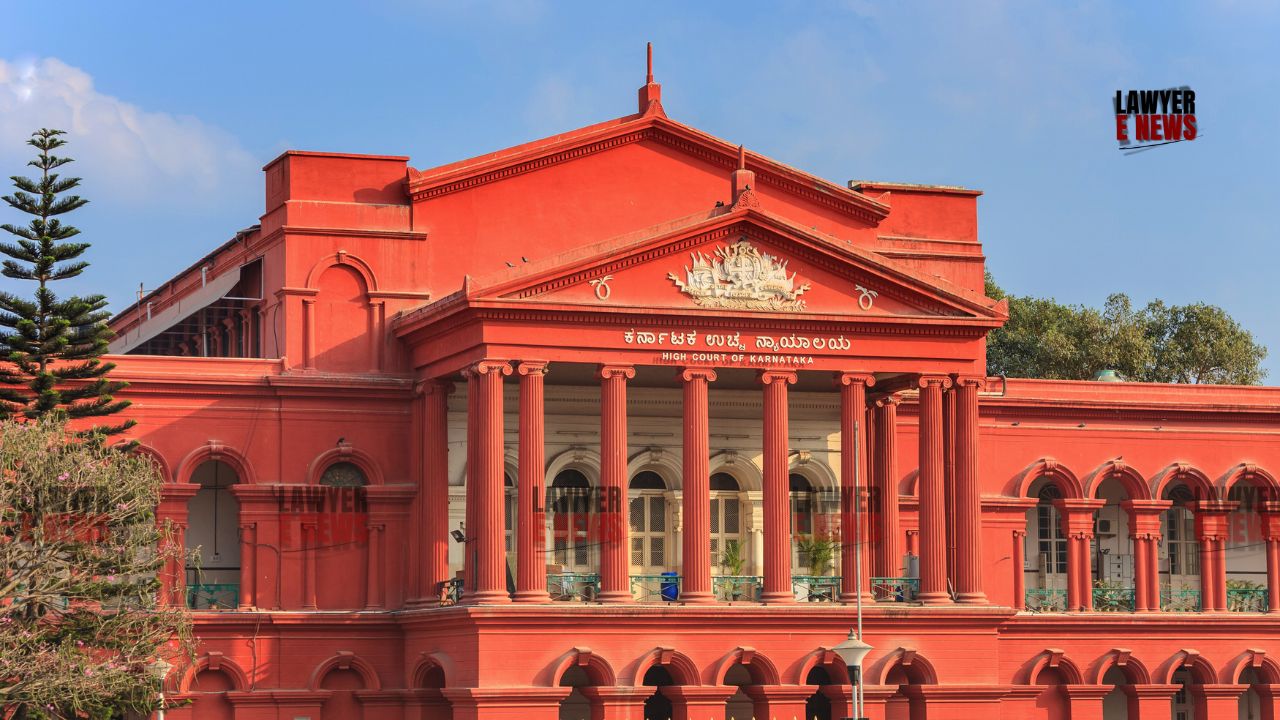
"It is a settled principle of law that when a statute confers a specific power upon a designated class of officers, the same cannot be exercised by any other person who is not expressly authorised." Karnataka High Court, in a significant ruling, held that the seizure of a motor vehicle by a transport department official lacking specific statutory authorization is illegal and unsustainable in law. While directing the release of a high-end Mercedes-AMG G 63, a single bench of Justice Jyoti M severely deprecated the transport authorities for cancelling the vehicle's registration during the pendency of the litigation, observing that any precipitative action affecting the subject matter of a pending writ petition is "wholly unwarranted."
Background of the Case
The petitioner, Neeraj Kumar Sharma, purchased a Mercedes-AMG G 63 vehicle following a bank auction and secured its registration in Karnataka. The transport department subsequently seized the vehicle, alleging that the petitioner had altered the vehicle's records to reflect a cheaper model to evade taxes. Aggrieved by the seizure by an allegedly unauthorized officer, the petitioner approached the High Court, during the pendency of which the authorities proceeded to cancel the vehicle's registration altogether.
Legal Issues
The primary question before the court was whether an official assigned merely to investigate and submit a report possesses the statutory authority to seize a motor vehicle. The court was also called upon to determine the legality of the transport authorities cancelling the vehicle's registration while the writ petition challenging its seizure was sub judice.
Court's Observations and Judgment
The court examined the provisions of Section 11A of the Karnataka Motor Vehicles Taxation Act, 1957, and Section 207 of the Motor Vehicles Act, 1988. Relying on the Supreme Court's precedent in Bishwajit Dey vs. State of Assam, the bench noted that the power to seize or detain a motor vehicle is strictly vested in officers of the Motor Vehicles Department not below the rank of Inspector, or Police officers not below the rank of Inspector. The court emphasized that these restrictions exist to ensure that coercive powers affecting citizens' property are exercised only by officials vested with proper statutory responsibility. "It is a settled principle of law that when a statute confers a specific power upon a designated class of officers, the same cannot be exercised by any other person who is not expressly authorised."
Assessing the facts of the seizure, the court observed that the seizing officer was merely part of a Special Checking Squad and was only assigned the limited duty of submitting a report under the supervision of the Regional Transport Officer, Mysore West. The bench rejected the State's reliance on an official memorandum, noting that it did not confer independent statutory powers of seizure upon the official. The court firmly held that the officer acted beyond the scope of his authority as though he himself were the Regional Transport Officer. "The scope of such an assignment was limited to investigation and reporting. However, contrary to the limited mandate entrusted to him, the officer proceeded to seize the vehicle. Such action clearly exceeded the scope of his authority and amounts to an exercise of power without jurisdiction."
"The action taken by the Government appears to be a flagrant disregard for Court proceedings, taking the law into its own hands..."
Turning to the subsequent cancellation of the vehicle's registration on January 16, 2026, the court expressed shock at the conduct of the respondent authorities. The bench strongly condemned the government for proceeding with the cancellation while the writ petition was pending adjudication before the High Court. The court ruled that such precipitative actions affecting a sub judice matter are arbitrary, highly improper, and legally untenable. "Once this Court seizes of the matter and is pending adjudication, any precipitative action taken by the authorities affecting the subject matter of the writ petition is wholly unwarranted."
Before concluding, the bench issued a strong reminder regarding the public duty of transport officials. The court observed that officials of the Regional Transport Office are not merely enforcers of statutory provisions but act as representatives of the State in their dealings with citizens. The bench stressed that the conduct of these officials directly impacts public confidence in governance. "They are, therefore, expected to act with fairness, transparency, empathy, and a high sense of public duty."
Consequently, the court allowed the writ petition and quashed both the impugned investigation report leading to the seizure and the subsequent order cancelling the registration certificate. The bench directed the Regional Transport Officer to restore the vehicle's registration forthwith and ordered the respondent authorities to release and hand over the vehicle to the petitioner without any delay.
The High Court allowed the writ petition, setting aside the illegal seizure and the arbitrary cancellation of the registration. The judgment reinforces the strict boundaries of statutory delegation and serves as a stern warning to state authorities against taking precipitative actions while a matter remains pending before a constitutional court.
Date of Decision: 24 March 2026