
-
by sayum
26 August 2026 1:49 PM







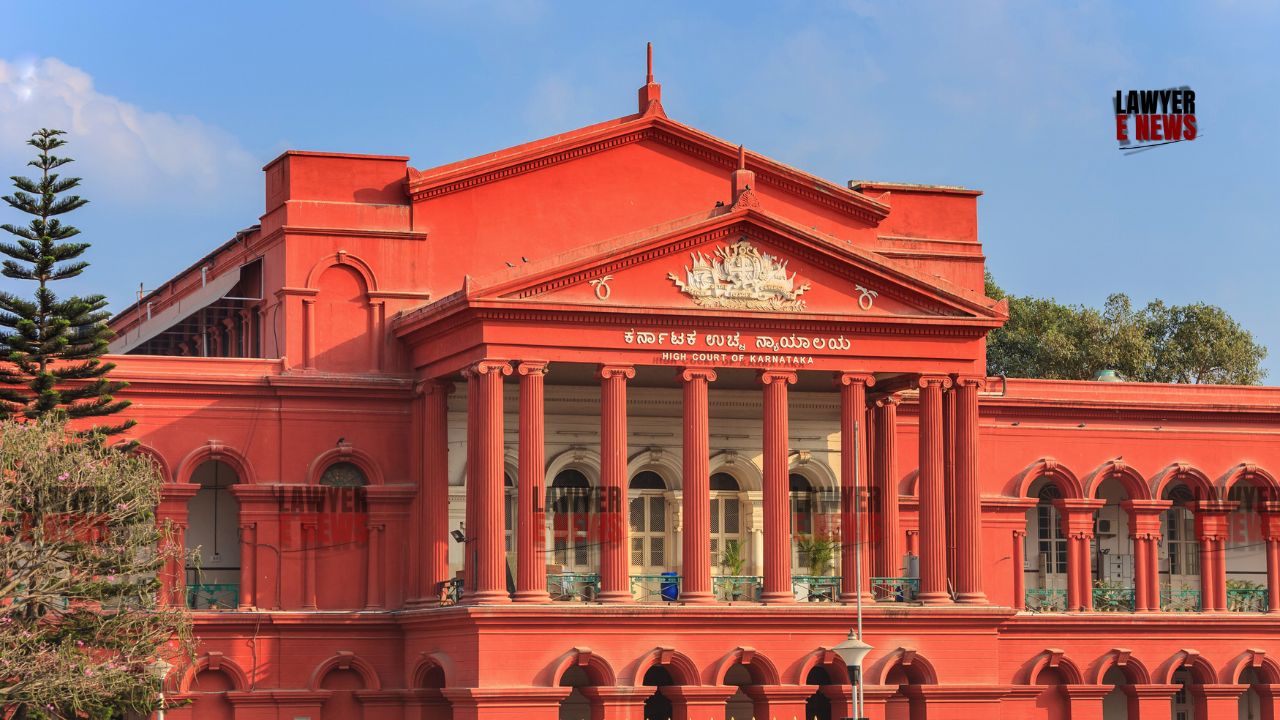
Court reaffirms acquisition by Mysore Stoneware Pipes and Potteries Ltd. under 1938 notifications, denies regrant and occupancy claims - The High Court of Karnataka has dismissed a writ petition challenging the validity of land acquisition by the Mysore Stoneware Pipes and Potteries Ltd. in 1938. The court upheld the Deputy Commissioner's orders, rejecting claims by legal heirs of the original landowners who sought to alter revenue entries in their favor. The judgment emphasizes the binding nature of historical acquisition notifications and the limitations of revenue authorities in addressing disputes over land titles.
Justice R. Devdas, in his order dated May 28, 2024, dismissed the writ petition filed by Smt. T A Jagadamba. The petitioner contested the Deputy Commissioner’s orders that affirmed the acquisition of 118 acres of land in Soladevanahalli and Chikkabanavara Villages for industrial purposes by Mysore Stoneware Pipes and Potteries Ltd. The acquisition, notified on June 24, 1938, aimed to establish a manufacturing unit for stoneware pipes used in sewage and sanitary lines in Mysore State.
The court referenced multiple previous judgments, including those in W.P.No.5271/1995 and W.P.No.30999/2009, which upheld the acquisition process and rejected claims for regrant and occupancy rights. "The competent authority held an enquiry and concluded that since the lands were acquired for industrial use, the provisions of the Karnataka Village Offices Abolition Act, 1961, did not apply," the judgment noted.
Justice Devdas criticized the Tahsildar for entertaining applications to alter land records in favor of the legal heirs of the original landowners. "The Tahsildar had no jurisdiction to entertain such applications, and such challenges should be raised before the Assistant Commissioner under Section 136(2) of the Karnataka Land Revenue Act, 1964," the court asserted. The court further highlighted the erroneous jurisdiction exercised by the Tahsildar in setting aside mutation entries made in favor of the industrial entity.
The judgment underscored the principle that disputes over land titles cannot be adjudicated by revenue authorities, reaffirming the legal precedent set by the Full Bench in Smt. Jayamma vs. State of Karnataka. "Disputed questions of title are beyond the scope of revenue authorities and must be resolved through appropriate judicial forums," the court reiterated.
Justice Devdas remarked, "This Court does not find any infirmity in the impugned orders passed by the Deputy Commissioner. The challenge to the acquisition proceedings has been consistently rejected by this Court in multiple writ petitions, negating the claims of the landowners and their legal heirs."
The High Court's dismissal of the writ petition fortifies the legal standing of historical land acquisitions for industrial purposes. By affirming the Deputy Commissioner’s orders, the judgment reinforces the boundaries of jurisdiction for revenue authorities and underscores the necessity of addressing land title disputes through proper judicial channels. This decision is expected to influence future cases involving similar land acquisition disputes, ensuring adherence to established legal frameworks.
Date of Decision: May 28, 2024
Smt T A Jagadamba vs. The Deputy Commissioner, Bangalore District & Others





