-
by sayum
27 August 2026 7:40 AM







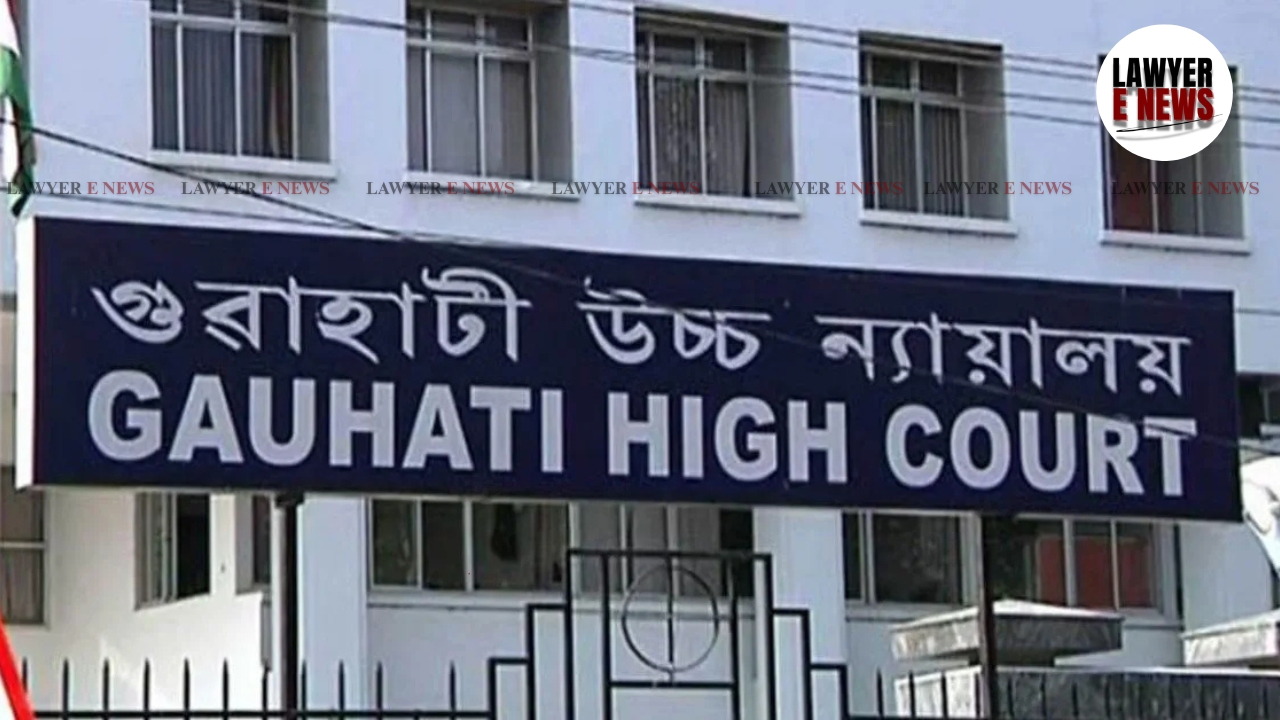
"If there is some evidence on record which is acceptable and which could be relied upon, howsoever compendious it may be, the conclusion would not be treated as perverse and the finding would not be interfered with." Gauhati High Court, in a significant ruling, held that the unilateral rescission of a contract without affording the contractor a reasonable opportunity of hearing or verifying the extent of work completed is illegal.
A single-judge bench of Justice Mridul Kumar Kalita observed that when a civil court's findings are based on uncontroverted documentary evidence, such findings cannot be termed "perverse" or interfered with under Section 100 of the Code of Civil Procedure merely because a different appellate view is theoretically possible.
BACKGROUND OF THE CASE
The Oil and Natural Gas Corporation (ONGC) had awarded a civil contract to the respondent in September 1995, which was abruptly rescinded by ONGC in November 1995 on the allegation that work had not commenced, leading to the forfeiture of the contractor's earnest money. The contractor, contending that he had already completed 97% of the work and had sent letters intimating the same, filed a civil suit which was initially dismissed by the trial court. However, the First Appellate Court reversed the trial court's decision and decreed the suit in favour of the contractor, prompting ONGC to approach the High Court via a regular second appeal.
LEGAL ISSUES
The primary question before the court was whether the First Appellate Court committed perversity by holding that the contractor had completed 97% of the work, allegedly ignoring the strict time stipulations provided in the original work order. The court was also called upon to determine whether challenges regarding the probative value of admitted documents constitute a substantial question of law warranting interference in a second appeal.
COURT'S OBSERVATIONS
Delving into the merits of the rescission, the court noted that ONGC failed to conduct any joint inspection or inquiry to verify the contractor's claim of having completed 97% of the work before terminating the agreement. The bench observed that the public sector undertaking could not produce any evidence to show when the termination notice was actually served, effectively denying the contractor a fair chance to explain the circumstances regarding the project's timeline. "The contract work was rescinded without affording reasonable opportunity of hearing to the plaintiff and without giving him opportunity of explaining the circumstances as to why he could not complete the work within the stipulated time."
The court placed heavy reliance on the legal principle of adverse inference, observing that ONGC completely failed to adduce any oral evidence or put a witness in the box to contradict the contractor's highly documented claims. Relying on the Supreme Court's mandate in Vidyadhar v. Manikrao, the bench emphasised that when a party avoids the witness box and refuses to state its case on oath or face cross-examination, an adverse presumption must naturally follow against that party. "When a party to the suit does not appear into the witness box and state his own case on oath and does not offer himself to be cross-examined by the other side, a presumption may be drawn that the case set up by him is not correct."
Addressing the core jurisdictional bounds of Section 100 of the Code of Civil Procedure, the court clarified the strict threshold required to label a lower court's finding as "perverse." Citing the Supreme Court's jurisprudence in Associate Builders v. Delhi Development Authority and Kuldeep Singh v. Commissioner of Police, the bench ruled that a decision is perverse only if it is based on absolutely no evidence or on thoroughly unreliable material. Since the First Appellate Court relied on hundreds of uncontroverted exhibits, the High Court held that the threshold for perversity was simply not met. "Though, on the basis of same evidence, a different view may also be taken by this court from the view taken by the First Appellate Court. However, merely for that reason, the impugned judgment of the First Appellate Court does not become perverse."
Rejecting ONGC's argument that the contractor's documents, such as wage registers and royalty receipts, lacked probative value because they were merely exhibited, the court firmly held that such evidentiary disputes belong exclusively to the domain of the First Appellate Court. The bench reiterated that the First Appellate Court is the final court of facts, and disputes over the weight or probative value of admitted documents do not give rise to a substantial question of law. "Questions raised by the learned counsel of the appellants regarding probative value of the documents which were admitted in evidence need not to be gone into in this regular second appeal as the appropriate stage of agitating the said question is the First Appellate Court only."
Ultimately, the High Court dismissed the second appeal filed by ONGC with costs, confirming the judgment and decree passed by the First Appellate Court in favour of the contractor. The ruling reinforces the strict limitations placed on High Courts in second appeals, ensuring that factual findings based on uncontroverted evidence remain protected from appellate interference.
Date of Decision: 24 March 2026