-
by sayum
09 August 2026 1:53 PM







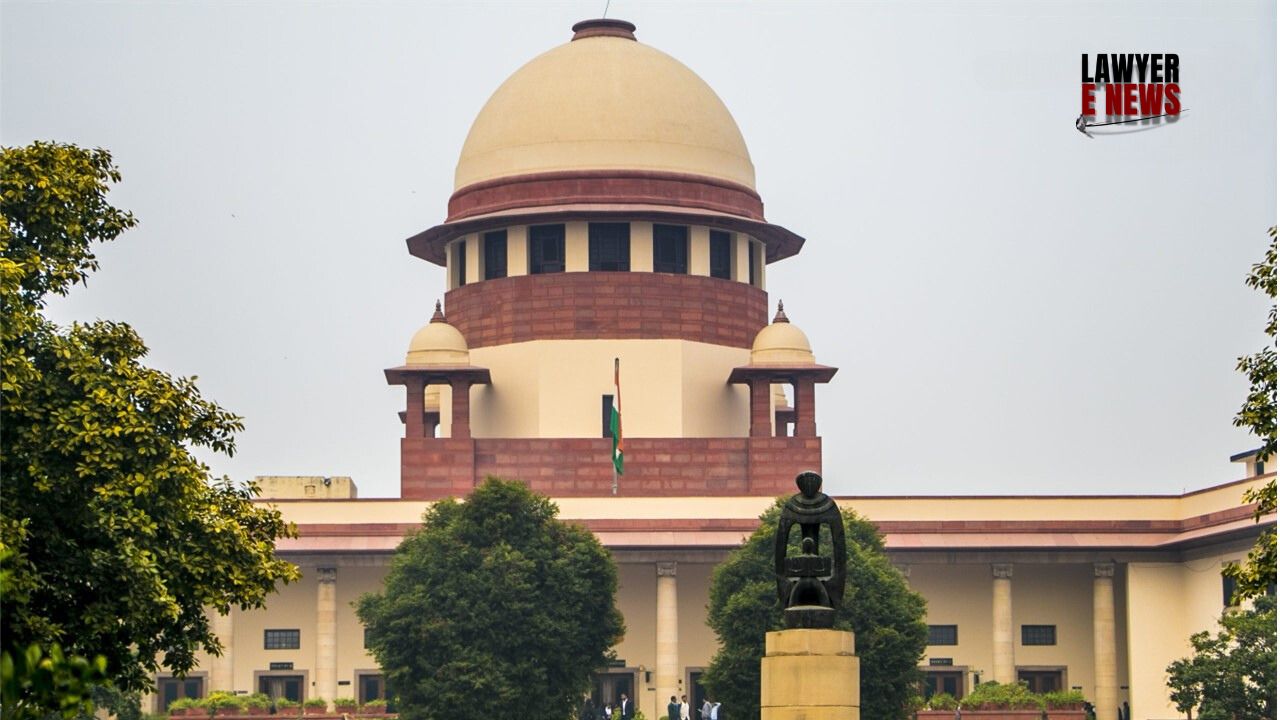
“No Facade of Legality Can Erase Criminal Conspiracy”, in a significant judgment upholding the primacy of anti-corruption jurisprudence, the Supreme Court refused to quash criminal proceedings against G. Mohandas, a private builder accused of conspiring with municipal officials to illegally construct a commercial building in a prohibited zone. The Division Bench of Justice Vikram Nath and Justice Sandeep Mehta categorically held that “the existence of a regularisation demand does not erase the criminality of an illegal act committed in conspiracy with public officials.”
The case arose from a prosecution initiated on the complaint of a whistleblower businessman, Dr. Biju Ramesh, alleging that the appellant, in collusion with municipal officials, secured a renovation permit—where none was needed under the Kerala Municipality Building Rules, 1999—and fraudulently used it to demolish an existing structure and erect a four-storeyed commercial building in a strictly prohibited zone.
Refusing to interfere with the Kerala High Court’s dismissal of the appellant’s quashing petition under Section 482 CrPC, the Supreme Court made it clear that the prima facie material established the necessary ingredients of criminal conspiracy under Section 120B IPC and criminal misconduct under Section 13(1)(d) read with Section 13(2) of the Prevention of Corruption Act, 1988.
Observing the clear misuse of building regulations, the Court remarked:
“It is evident from the start that the appellant, in conspiracy with municipal officials, created a false facade of legality to facilitate the raising of an illegal commercial structure in a prohibited zone.”
Rejecting the appellant’s claim that regularisation proceedings erased the criminal offence, the Court firmly held:
“The existence of a regularisation application, especially when raised in furtherance of a conspiracy, cannot sanctify illegal construction nor extinguish the element of criminal misconduct under the Prevention of Corruption Act.”
The Court took note of the glaring defiance of authority: even after a stop memo was issued by the Vigilance Department in 2006, the appellant continued construction unabated. The Court concluded:
“The brazen disregard for lawful orders and subsequent attempts to legalise the criminal act through compounding proceedings only amplifies the culpability.”
Addressing the plea of parity with the architect (A7), whose prosecution was quashed by the High Court, the Bench drew a sharp distinction:
“Parity with the architect is untenable; the architect merely prepared professional drawings without criminal intent or collusion. The appellant was the primary conspirator and direct beneficiary of the illegal construction.”
The Court also observed that the co-accused municipal officials had not challenged their prosecution, which signified acknowledgment of serious wrongdoing:
“The silence of co-accused officials on the continuance of proceedings underscores the gravity and prima facie truth in the allegations of conspiracy and corruption.”
Dismissing the appeal, the Court gave a clear direction to authorities to proceed against the illegal structure uninfluenced by external pressures:
“We direct the authorities to take appropriate administrative action against the illegal construction uninfluenced by any extraneous factors.”
Imposing costs of ₹50,000 on the appellant, the Court reiterated its disapproval of frivolous attempts to derail anti-corruption prosecutions through procedural tactics:
“This Court will not be a refuge for those seeking to escape criminal liability through the pretext of administrative regularisation of manifestly illegal acts.”
This ruling reinforces that regularisation cannot operate as a cloak for criminality and that courts will not shield those who attempt to distort municipal processes through corrupt collusion.
Date of Decision: 15th July 2025