-
by sayum
25 August 2026 9:55 AM







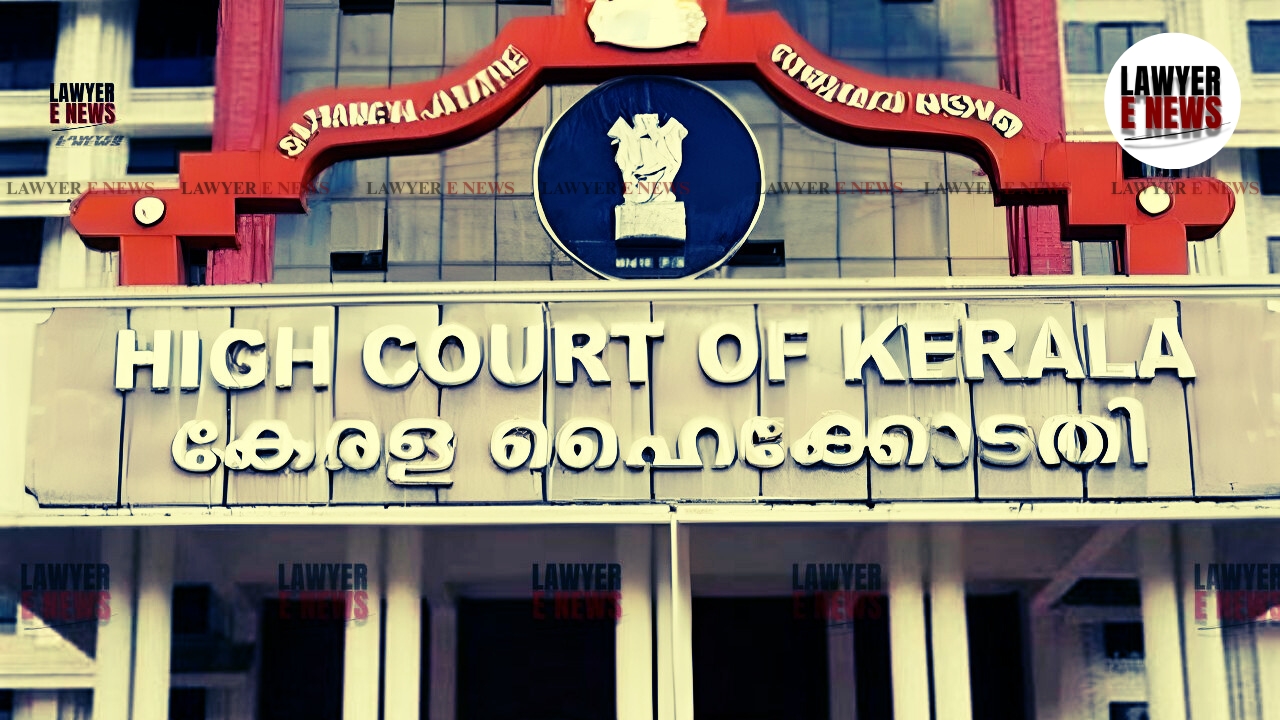
"An adjudicating authority cannot be an aggrieved person merely because its order was interfered with by a superior court", In a decision with wide-reaching implications for administrative law and statutory tribunals, the Kerala High Court on January 6, 2026, dismissed Writ Appeal No. 1550 of 2025, filed by the Admission Supervisory Committee for Medical Education in Kerala, holding that a quasi-judicial authority cannot maintain an appeal to defend its own decision that has been set aside by a court of law.
The judgment came from a Division Bench comprising Justice Anil K. Narendran and Justice Muralee Krishna S., who categorically held that, “the Admission Supervisory Committee is an adjudicating body under the statute and not an aggrieved person capable of maintaining a writ appeal against a judgment that invalidates its own decision.”
The case arose from the Committee's decision to cancel the OBC-category admission of a student, Karthik Dev R, to the BAMS course at Santhigiri Ayurveda Medical College, which the learned Single Judge had quashed. The Committee, dissatisfied with that ruling, approached the Division Bench in appeal—a move the Court found legally impermissible.
"Judicial Discipline Will Be Undermined If Adjudicators Start Appealing Against Their Own Orders"
At the heart of the controversy was whether a statutory body exercising quasi-judicial powers—such as the Admission Supervisory Committee constituted under Section 3 of the Kerala Medical Education Act, 2017 (Act 15 of 2017)—can lodge a writ appeal as if it were an aggrieved litigant when a superior court intervenes in its decision.
The Court’s answer was unequivocal:
“When the decision of the appellant is set aside in the writ petition, the appellant cannot be the aggrieved. It is the person or official respondents benefited by the aforesaid cancelled decision of the appellant who can only be the aggrieved.”
The Bench ruled that the Committee's powers under Section 8 of the Act, which include conducting inquiries, invalidating admissions, and recommending penalties, are adjudicatory in nature, with the authority to exercise powers of a Civil Court under Section 8(3). Once such quasi-judicial decisions are passed, the Committee’s role is akin to that of a court—and like any court, it cannot litigate to uphold its own decisions once they are reversed by a superior forum.
A Student’s Admission Cancelled, But Legally Justified Documents Produced
The facts that led to the writ appeal were rooted in a dispute over caste status verification. The student, Karthik Dev R, had secured admission under the OBC category for the BAMS course in the academic year 2023-24 through a stray vacancy allotment. He belonged to the Chakkala Nair community, recognized as an OBC category by virtue of a Government Order dated 11.09.2023.
He submitted the required community, caste, and non-creamy layer certificates, supported by a Tahsildar’s clarification and a Kerala Gazette notification correcting his community description. However, the Admission Supervisory Committee issued Ext.P7 and Ext.P10 orders—first withholding and later cancelling his admission, citing doubts over the legitimacy of the caste claim.
Aggrieved, the student filed W.P.(C) No. 31971 of 2024, in which the learned Single Judge, after examining the official records, declared that the petitioner was entitled to OBC-category admission and quashed the Committee’s orders.
The Committee then sought to overturn the Single Judge’s verdict via this writ appeal, claiming a duty to preserve fairness in admissions.
“Committee’s Role Ends with Adjudication, Not with Pursuing Appeals”
The Division Bench rejected the Committee’s argument that being a respondent in the writ petition gave it the right to file an appeal. The Court clarified that being a proper party does not make the Committee an aggrieved party under the law.
“The appellant Committee is only a proper party to the writ petition. That does not mean that it has a duty to see that the decision taken by it is sustained in a court of law.”
Referring to landmark rulings, including State of Kerala v. M. Noushad, Mohamed Oomer v. Noorudin (AIR 1952 Bom 165), and Regional Provident Fund Commissioner (2015), the Court emphasized that an adjudicator is not interested in the outcome of the dispute—only in conducting a fair inquiry and delivering a legally sound decision.
The Division Bench particularly quoted the Bombay High Court’s caution:
“I have never heard of a Judge of first instance briefing counsel in a Court of appeal in order to point out that the judgment of the lower appellate Court was wrong and his judgment was right.”
This, the Court said, applies squarely to the Committee's conduct in this case.
“Creating a Precedent Allowing Adjudicators to Appeal Would Lead to Anomalies”
The Court also raised concerns about the systemic consequences of allowing such appeals by quasi-judicial bodies:
“If a quasi-judicial body statutorily empowered to take a decision in a dispute between third parties starts to challenge the adverse orders against the decision taken by it before the court of law, then it will create an anomalous situation.”
Such a practice, the Court warned, would open the floodgates for every adjudicating authority to file appeals whenever their decisions are interfered with by a superior court—thus “undermining judicial discipline.”
Writ Petition Maintainable Despite Lack of Procedural Rules for Statutory Appeal
Addressing a subsidiary issue, the Court observed that though Section 12 of Act 15 of 2017 provides for a statutory appeal against orders of the Committee, in practice, writ petitions are still being filed due to the absence of procedural rules for the appeal process.
Despite the 2021 Rules framed under the Act, the High Court Registry continues to treat such challenges as writ petitions, assigned to Single Benches under the education subject code.
The Court clarified:
“The practice of filing writ petitions instead of statutory appeals does not confer a right on the Committee to maintain an appeal against a judgment which has interfered with its own adjudicatory decision.”
Committee Has No Right to Litigate Against Its Own Set-Aside Orders
In conclusion, the High Court dismissed the Committee’s writ appeal as not maintainable, reiterating that a statutory adjudicator like the Admission Supervisory Committee has no legal standing to challenge the setting aside of its own orders.
“The Committee is not the aggrieved person under Section 12 of the Act. The appeal is therefore liable to be dismissed on the question of maintainability.”
With this ruling, the Court has drawn a clear constitutional boundary around the role of quasi-judicial bodies, reinforcing that they must accept judicial scrutiny with neutrality, not adversarial defiance.
Date of Decision: January 6, 2026