-
by sayum
12 August 2026 10:17 AM







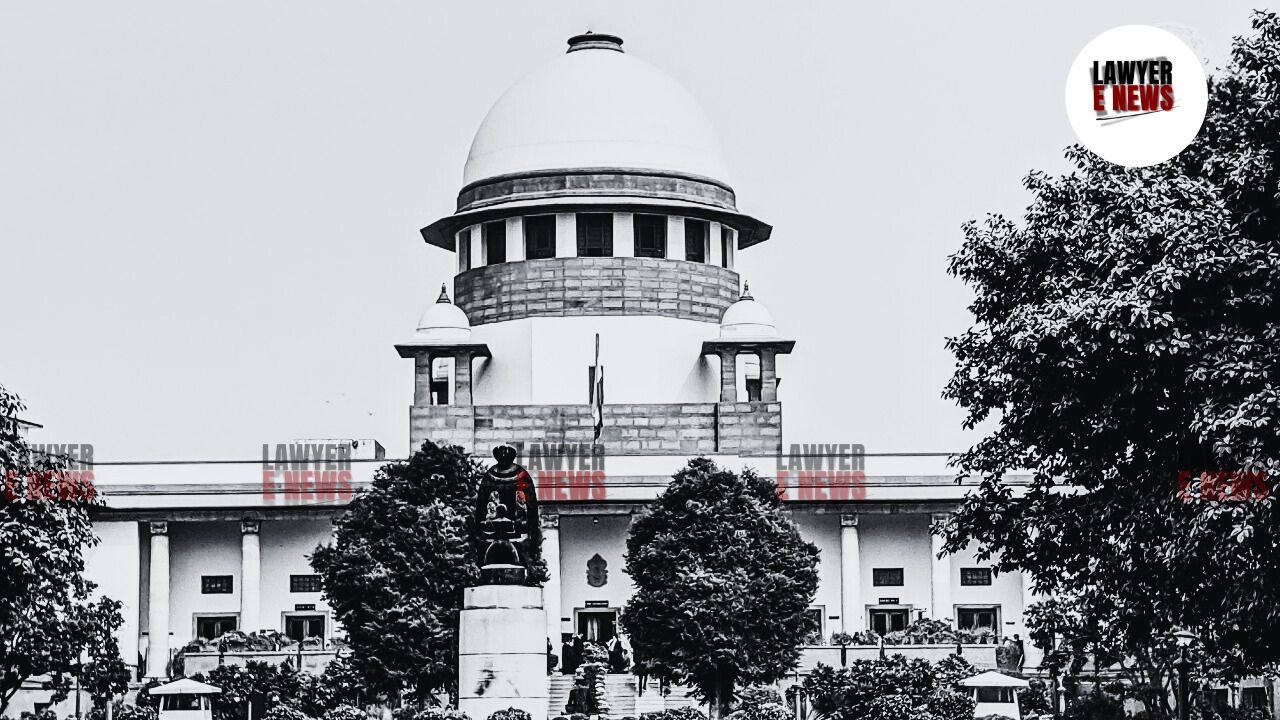
“There Is No Absolute Rule That Section 482 Cannot Be Invoked Merely Because Investigation Is At Preliminary Stage” - Supreme Court of India decisively intervened to correct the High Court’s refusal to consider the petition for quashing of the First Information Report (FIR). The Court observed that there is no universal rule preventing quashing merely because the investigation is in its initial phase and criticized the High Court for adopting an "unheard of" approach by deferring decision to the investigating agency.
The appellants, Kulandaisamy and another, were aggrieved by the registration of an FIR against them and approached the Madras High Court under Section 482 CrPC seeking quashing of the FIR. The High Court, while acknowledging that the issue involved appeared to be of a civil nature, still refused to interfere, merely stating that the investigation was at an "infancy stage." Instead, it directed the petitioners to produce documents before the law enforcement agency to prove their innocence and left it to the agency to treat the matter as a "mistake of fact" if convinced.
The Supreme Court disapproved the High Court's refusal to consider the merits of the quashing petition, remarking: “There is no absolute rule that even if the investigation is at a preliminary stage, the Court exercising jurisdiction under Section 482 of the Code of Criminal Procedure, 1973 cannot interfere.” [Order p.2]
The Court termed the High Court's approach "unheard of": “While dealing with a petition under Section 482 of the CrPC, such approach, as can be seen in paragraph 7 above, on the part of the High Court is unheard of.” [Order p.2]
The Court also stressed that merely because the investigation was at an early stage does not preclude the High Court from examining whether the FIR deserves to be quashed.
The Supreme Court specifically highlighted the fact that the High Court avoided dealing with the core issue: “All that we can see from the impugned judgment is that the High Court has not considered the plea of the appellants for quashing the First Information Report on merits.” [Order p.2]
Setting aside the impugned order, the Supreme Court directed: “We quash and set aside the impugned order dated 1st April, 2024 and restore Criminal O.P. No. 7963 of 2024 to the file of the High Court of Judicature at Madras.” [Order p.2]
The Court also fixed the date for the listing: “The restored petition shall be listed on 24th March, 2025 in the morning before the roster Bench. The parties represented today shall be under an obligation to appear before the High Court on that day and no further notice shall be served.” [Order p.2]
The Supreme Court reaffirmed that courts are duty-bound to consider quashing petitions under Section 482 CrPC even at the initial stage of investigation when allegations are of a civil nature or prima facie do not disclose any offence. This judgment once again reasserts the principle that criminal law should not be used to unnecessarily harass individuals in civil disputes and that High Courts cannot shy away from their responsibility merely because an FIR has been freshly registered.
Date of Decision: 07 March 2025