-
by sayum
07 October 2026 2:59 PM







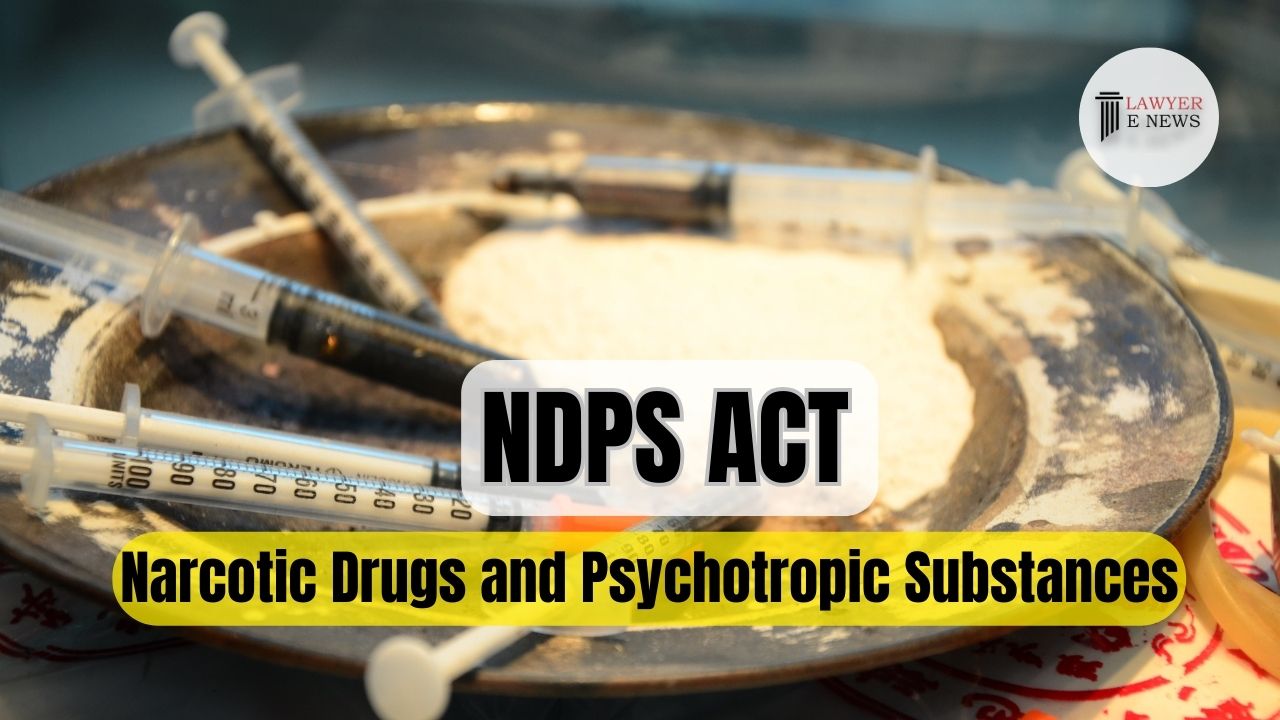
In a significant judgment, the High Court of Judicature at Allahabad's Lucknow Bench acquitted Khagendra Acharaya on charges of possessing narcotic substances, highlighting critical procedural lapses in compliance with the NDPS Act.
The High Court of Judicature at Allahabad, Lucknow Bench, in its ruling dated May 22, 2024, in Criminal Appeal No. 2455 of 2019, acquitted Khagendra Acharaya, who was convicted by the trial court for offenses under the Narcotic Drugs and Psychotropic Substances Act, 1985 (NDPS Act). The judgment, delivered by Hon'ble Justice Mohd. Faiz Alam Khan, underscored the failure of law enforcement to adhere to mandatory procedural requirements, ultimately leading to Acharaya's acquittal.
Background: Khagendra Acharaya was arrested on November 4, 2015, for allegedly possessing 7 kg of 'charas,' which was later identified as 'opium' by forensic examination. The trial court convicted Acharaya on July 31, 2019, sentencing him to 10 years of imprisonment and imposing a fine of Rs. 1,00,000, with an additional year of imprisonment in case of default. Acharaya's appeal challenged the conviction, citing non-compliance with Sections 50 and 52A of the NDPS Act, discrepancies in forensic examination, and lack of safe custody of the samples.
Key Points of the Judgment:
The High Court's decision hinged on several critical observations:
Non-Compliance with Section 50 of the NDPS Act: The court found that Acharaya was not properly informed of his right to be searched before a magistrate or gazetted officer. The seizure and arrest memos did not reflect this communication, and the witnesses' statements before the trial court were found to be inconsistent and unreliable.
Violation of Section 52A of the NDPS Act: Samples were not drawn in the presence of a magistrate as required. The court noted the absence of link evidence for the safe custody of the samples and discrepancies in the forensic examination results, which identified the contraband as 'opium' rather than 'charas.'
Discrepancies in Forensic Examination: The court emphasized the reasonable doubt raised by the inconsistent identification of the contraband and the lack of proper chain of custody, which undermined the prosecution's case.
Court Observations and Analysis
Justice Khan meticulously analyzed the legal principles and procedural safeguards mandated by the NDPS Act. The judgment referenced several Supreme Court rulings, including K. Mohanan vs. State of Kerala, State of Punjab vs. Baldev Singh, and Vijaysinh Chandubha Jadeja vs. State of Gujarat, underscoring the mandatory nature of informing the accused of their right to be searched before a magistrate or gazetted officer. The court reiterated that any laxity in complying with these procedural safeguards vitiates the prosecution's case.
The judgment also highlighted the significance of Section 52A of the NDPS Act, emphasizing the necessity of drawing samples in the presence of a magistrate to ensure the integrity of the evidence. The court found that the procedural lapses, including the delayed and unexplained handling of the samples, further weakened the prosecution's case.
Conclusion In conclusion, the High Court allowed Khagendra Acharaya's appeal, setting aside his conviction and sentence. The court ordered his immediate release, provided he is not wanted in any other case. Acharaya was directed to furnish a personal bond and sureties as per Section 437-A of the Cr.P.C. within 30 days of his release to ensure his presence before the Supreme Court if any appeal is filed.
Date of Decision: May 22, 2024
Khagendra Acharaya vs. State of U.P.