-
by sayum
25 August 2026 12:32 PM







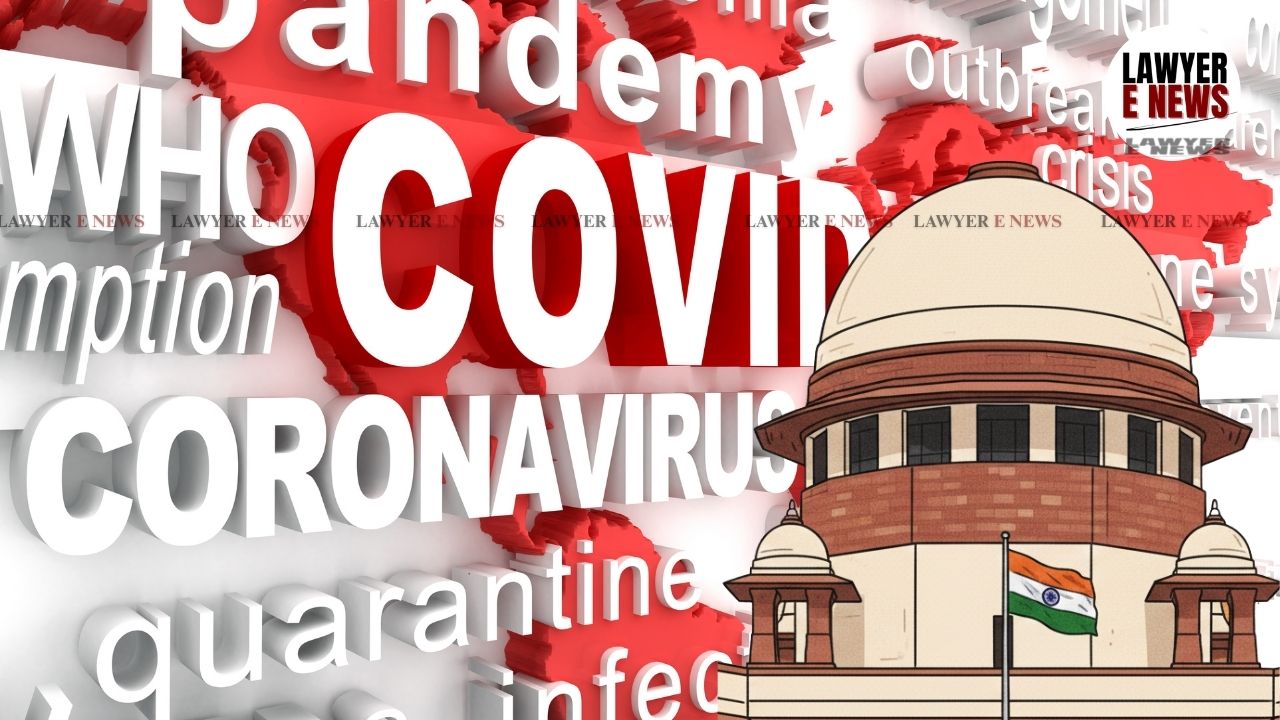
“In a Pandemic, Compulsion by Law is Enough—No Need for Formal Requisition Letters”. In a landmark interpretation of executive authority during public health emergencies, the Supreme Court of India ruled that a municipal direction compelling private medical professionals to keep their clinics open during the COVID-19 lockdown, under threat of prosecution, amounts to a ‘requisition’ of services within the meaning of the Epidemic Diseases Act, 1897 and the PMGKY Insurance Scheme.
The decision came in the appeal titled Pradeep Arora & Ors. v. Director, Health Department, Government of Maharashtra & Ors., where a claim under the Pradhan Mantri Garib Kalyan Yojana (PMGKY) Insurance Scheme was rejected on the ground that the deceased private doctor, Dr. Bhaskar Surgade, was never formally requisitioned for COVID-19 duty.
Refusing to accept this reasoning, the bench of Justices Pamidighantam Sri Narasimha and R. Mahadevan held:
“Taking into account the live situation that existed as on March 2020… we have no hesitation in holding that there was a ‘requisition’ of doctors and other medical professionals.”
“Requisition is Not a Ritual—It is a Reality Recognised by the Law”: Supreme Court Gives Contextual Interpretation to Emergency Powers
The core legal issue before the Court was whether a notice issued by Navi Mumbai Municipal Corporation (NMMC) on 31.03.2020, directing private doctors to keep their clinics open or face action under Section 188 IPC, could be treated as a “requisition” of services under the PMGKY insurance scheme, which provided ₹50 lakh cover to healthcare workers who died in the line of COVID-19 duty.
The High Court had earlier ruled against the claim, holding that the NMMC’s notice was merely a direction—not a requisition for COVID-related responsibilities. The Supreme Court rejected this formalistic approach, stating:
“We are not inclined to take a narrow view of the intent and application of the Regulation dated 14.03.2020 and the NMMC notice dated 31.03.2020 to conclude, as the High Court did, that there was no requisition.”
The Court emphasised that the invocation of the Epidemic Diseases Act and the threat of criminal prosecution for non-compliance were not administrative suggestions—they were binding legal commands amounting to requisition.
“It is not difficult to conceive the situation in which individual letters of appointment or requisitioning would not have been possible… That is exactly the reason for invoking the Epidemic Diseases Act and the 2020 Regulations for implementing immediate measures.”
“The State Cannot Rely on Doctors in Crisis and Deny Them Recognition in Peace”: Supreme Court Reminds Government of Its Promise
Highlighting the contextual necessity of interpreting law in times of public emergency, the Court observed:
“The country has not forgotten the situation that prevailed at the onset of COVID-19… Invocation of laws and Regulations were intended to leave no stone unturned in requisitioning doctors.”
The Court further declared:
“The insurance scheme was equally intended to assure doctors and health professionals in the front line that the country is with them.”
It held that the insurance benefits under the PMGKY Scheme were not confined only to doctors employed in designated COVID hospitals. If a private doctor was compelled to keep their dispensary open during lockdown, under law, that alone satisfies the condition of requisition.
“True Requisition Lies in the Compulsion of Law, Not the Format of Letters”: SC Sends Back Claim for Factual Determination
Though the Court recognised that requisition had taken place in law, it did not issue a blanket direction for payment under the insurance policy. The bench clarified that individual claims must still be proved on facts, and the onus lies on the claimant to establish that the deceased doctor was indeed engaged in COVID-related duties at the time of death.
“Whether the doctor or healthcare professional, in fact, presented and offered his or her services in furtherance of COVID-19-related responsibilities is a matter of evidence.”
However, it firmly rejected the reasoning that absence of formal requisition disqualified a healthcare worker, stating:
“We are not inclined to accept the rather simplistic submission that there was no specific requisition and therefore the claim for insurance must fail on this ground alone.”
A Historic Recognition of Unseen Frontline Workers in the Legal Landscape of Pandemic Governance
This judgment marks a significant shift in the jurisprudence of administrative law and insurance benefits in public health crises. By refusing to let technicalities override the lived reality of frontline workers, the Supreme Court has acknowledged that legal requisition can take the form of coercive directives issued during emergency, even in absence of individual appointment letters.
“The courage and sacrifice of our doctors remain indelible,” the Court noted, adding that five years after the crisis, the judiciary is now called upon “to interpret the laws and regulations enacted for urgent requisition of doctors.”
In doing so, the Court has restored dignity, recognition, and a legal voice to private healthcare professionals who answered the State’s call during one of the gravest public health challenges in Indian history.
Date of Decision: December 11, 2025