-
by sayum
05 August 2026 6:43 AM







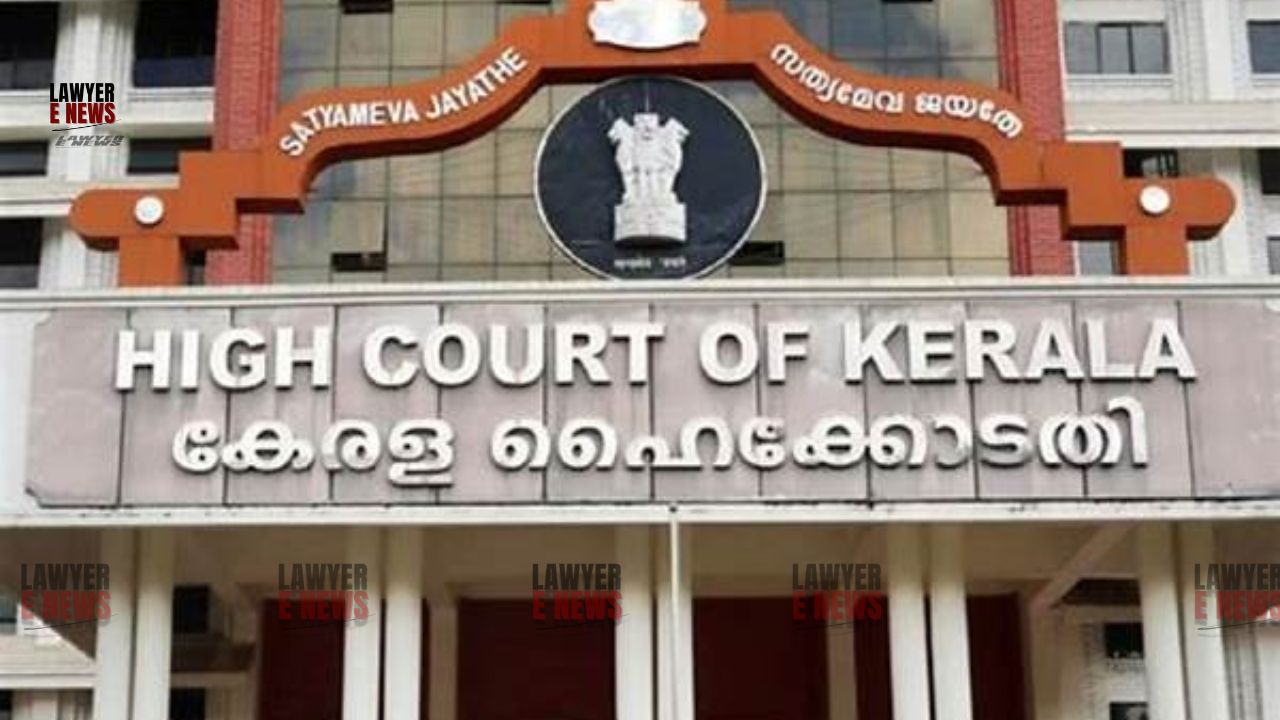
“No Criminal Antecedents, No Clear Caste-Based Intent — Anticipatory Bail Granted with Conditions Despite Serious Allegations” — In a significant decision Kerala High Court granted anticipatory bail to an accused in a criminal case involving alleged caste-based assault, observing that prima facie the ingredients of offences under the Scheduled Castes and Scheduled Tribes (Prevention of Atrocities) Act, 1989, were not clearly established.
Justice Gopinath P., while allowing the criminal appeal, set aside the Special Court’s order dated 25 March 2025, which had rejected the appellant’s plea for anticipatory bail under Section 438 CrPC.
“The allegations are serious, but in the absence of criminal antecedents and considering the facts as presented, I find merit in the contention that even if all allegations are accepted, the offence under the SC/ST Act may not be attracted,” the Court held. [Para 6]
Caste-Based Slur and Assault Alleged in Grievous Injury Complaint
The FIR, registered as Crime No. 475/2025 at Sasthamcotta Police Station, invoked offences under the Bharatiya Nyaya Sanhita, 2023 — including Sections 296(a), 118(1), 351, and 3(5) — as well as Sections 3(1)(s) and 3(2)(va) of the SC/ST Act. The de facto complainant, a member of a Scheduled Caste, alleged that the appellant assaulted him with a stick and used a caste-based slur, resulting in serious head injuries and seven days of unconsciousness.
The Special Judge had rejected the appellant’s plea for anticipatory bail citing the seriousness of the injuries and pending recovery.
Allegations Exaggerated and Fabricated
The appellant contended that the FIR was exaggerated and motivated, claiming that the incident stemmed from a minor altercation when the complainant tried to intervene in a dispute. Counsel argued that:
“There may have been a push and pull and some verbal exchange, but no assault took place. The injuries might have been due to a fall.” [Para 3]
It was also submitted that even if the entire allegation is accepted, the complaint fails to establish the essential ingredients of the SC/ST Act — namely, that the caste-based insult or assault was committed “on the ground of” caste identity, and in public view, as required under Section 3(1)(s).
Offence Under SC/ST Act Requires Specific Allegations of Caste-Based Intent
The Court acknowledged that the injuries suffered were serious, but drew a clear distinction between the gravity of injury and the legal threshold for offences under the SC/ST Act, stating:
“Prima facie, even accepting all allegations, there is nothing to indicate that the offence under the SC/ST Act had been committed in the manner that satisfies its statutory ingredients.” [Para 6]
Citing the absence of criminal antecedents and lack of any clear evidence of caste-based motivation, the Court found that the appellant's conduct, though possibly culpable under other penal provisions, did not automatically attract the stringent bar to anticipatory bail under the SC/ST Act.
Recovery Not a Bar to Bail — Deemed Custody Protection
The Public Prosecutor had objected to anticipatory bail on the ground that recovery of the weapon (stick) used in the alleged assault was still pending. However, the Court clarified that:
“This Court can direct that the appellant shall be deemed to be in custody for the purposes of any recovery.” [Para 6]
This legal position prevents misuse of the recovery process to indefinitely delay bail.
Bail Rejection Set Aside, Appeal Allowed in Light of Legal Thresholds and Clean Record
The Kerala High Court’s ruling reaffirms that anticipatory bail under the SC/ST Act must not be mechanically denied in every case where such allegations are raised. The Court's analysis emphasized substantive compliance with statutory conditions, rather than mere invocation of caste in an FIR, as the guiding principle.
“Allegations of caste-based offences carry serious legal implications. However, a mechanical application of the SC/ST Act without satisfying its specific legal ingredients cannot justify denial of anticipatory bail.”
Date of Decision: 09 June 2025