Registrar Has No Power To Cancel Registered Sale Deeds: Madras High Court Reaffirms Civil Court’s Exclusive Jurisdiction MP High Court Refuses to Quash FIR Against Principal of Sacred Heart Convent High School in Forced Conversion Case Employees Of Registered Societies Cannot Claim Article 311 Protection: Delhi High Court Clarifies Limits Of Constitutional Safeguards In Private Employment Maintenance Cannot Be Doubled Without Cogent Reasons, Wife's Education And Earning Capacity Relevant Factors: Gujarat High Court A Foreign Award Must First Be "Recognised" Before It Becomes A Decree: Bombay High Court A Registered Will Does Not Become Genuine Merely Because It Is Registered: Andhra Pradesh High Court Rejects Suspicious Testament Compensation Under Railways Act Requires Proof of Bona Fide Passenger – Mere GRP Entry and Medical Records Cannot Establish ‘Untoward Incident’: Delhi High Court Tenancy Rights Cannot Be Bequeathed By Will: Himachal Pradesh High Court Declares Mutation Based On Tenant’s Will Void Preventive Detention Cannot Be Based On Mere Apprehension of Bail: Delhi High Court Quashes PITNDPS Detention Order Probate Court Alone Has Exclusive Jurisdiction To Decide Validity Of Will – Probate Petition Cannot Be Rejected Merely Because A Civil Suit Is Pending: Allahabad High Court PwD Candidates Cannot Be Denied Appointment After Selection; Authorities Must Accommodate Them In Suitable Posts: Supreme Court Directs SSC And CAG To Appoint Candidates With Disabilities When Registered Partition Deed Exists, Plea Of Prior Oral Partition Cannot Override It:  Madras High Court Dismisses Second Appeal Municipal Bodies Cannot Demand Character Verification Of Residents: Calcutta High Court Strikes Down Surveillance Condition In Building Sanction State Cannot Exploit Contractual Workers For Perennial Work: Punjab & Haryana High Court Grants Pay Parity To PUNBUS Drivers And Conductors Police Inputs Cannot Create New Building Laws: Calcutta High Court Strikes Down Security-Based Conditions Near Nabanna 'Raising A Child As Daughter Does Not Make Her An Adopted Child': Punjab & Haryana High Court Once Leave Under Section 80(2) CPC Is Granted, Prior Notice to Government Is Not Mandatory: Orissa High Court Restores Trial Court Decree State Cannot Use Article 226 To Evade Compliance With Court Orders: Gauhati High Court Dismisses Union’s Petition With Costs ED Officers Accused Of Assault By ₹23-Crore Scam Accused – FIR Survives But Probe Shifted To CBI: Jharkhand High Court High Courts Should Not Interfere In Academic Integrity Proceedings At Preliminary Stage: Kerala High Court Power Of Attorney Holder With Personal Knowledge Can Depose In Cheque Bounce Cases: Kerala High Court Sets Aside Acquittal Agreement Cannot Dissolve Hindu Marriage, But Can Prove Mutual Separation”: J&K & Ladakh High Court Denies Maintenance

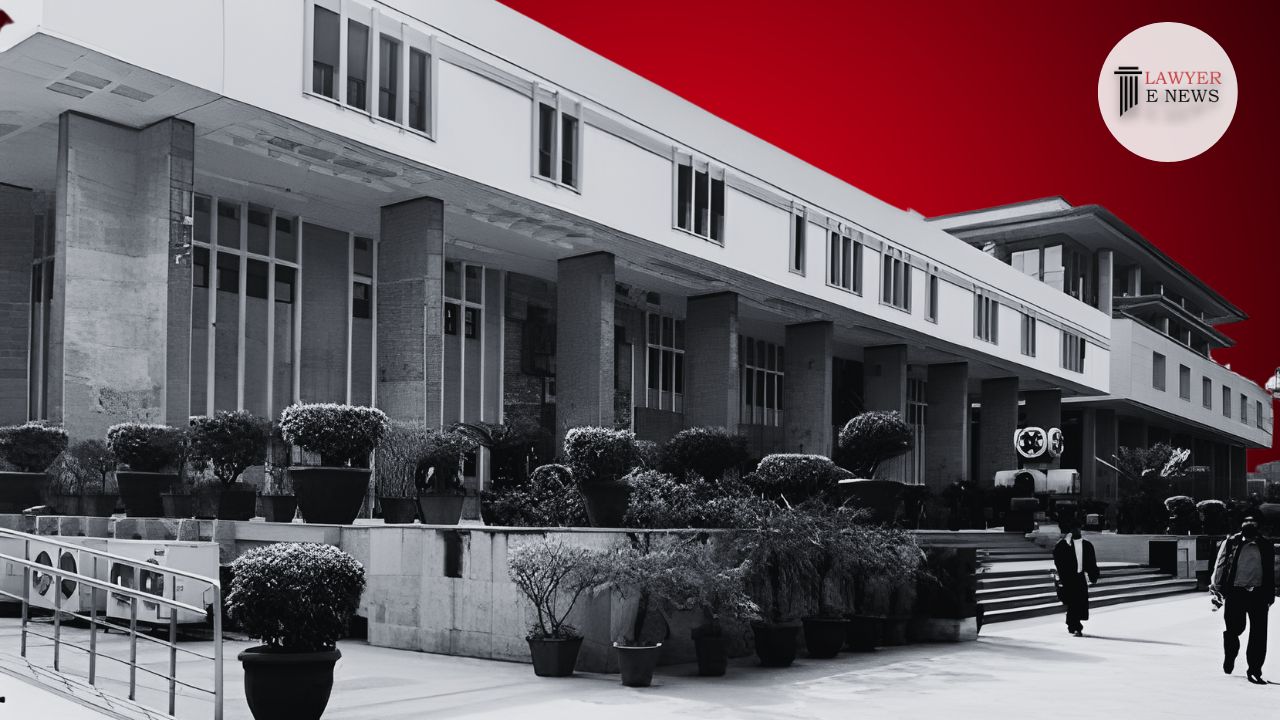
Prima Facie No Intent to Cause Death: Delhi High Court Grants Bail in Asphyxiation Case

07 May 2024 8:19 AM

By: Admin


In a recent judgment Delhi High Court granted bail to the petitioner in a case involving asphyxiation. The judgment, delivered by Hon'ble Mr. Justice Vikas Mahajan, emphasized the absence of prima facie intent to cause death and highlighted the possibility of altering the charges.

The case, registered under Sections 302 and 304 Part II of the Indian Penal Code (IPC), pertained to the death of an individual due to manual strangulation. The accused and the deceased were known to each other and were habitual consumers of liquor.

The Court's observations revolved around the nature of the offense and the gravity of the charges. It noted that the prosecution's case did not prima facie establish an intent to cause death or grievous injury. The judgment raised the possibility of altering the charges to Section 304 Part II, which carries a maximum punishment of 10 years with no minimum sentence.

Highlighting the presumption of innocence at the pre-conviction stage, the Court also took into account the delay in the commencement and conclusion of the trial. The accused had been in continuous incarceration for almost four years.

Additionally, the judgment mentioned that the accused had no criminal record. The Court granted bail with certain conditions, including the accused not leaving the city without prior permission, appearing before the Court when required, providing working mobile numbers to the Investigating Officer, and refraining from criminal activities or contacting witnesses.

This decision aligns with the principle that pre-trial detention should not be punitive or preventive, and it should ensure the accused's availability for trial and potential sentencing.

The case highlights the importance of considering the nature of the offense, the strength of the prima facie case, and the length of pre-trial detention when assessing bail applications in serious criminal cases.

"It is not the case of the prosecution that the petitioner / accused was carrying or used any dangerous or deadly weapon during the fight with the deceased Dadhi Bahadur...Therefore, the possibility of alteration of charge from 302 IPC to Section 304 Part II during the course of trial cannot be completely negated at this stage."

Date of Decision: October 04, 2023

TEK RAJ SAUD  vs STATE, GOVT. OF NCT OF DELHI   

Latest Legal News