-
by sayum
19 August 2026 8:35 AM







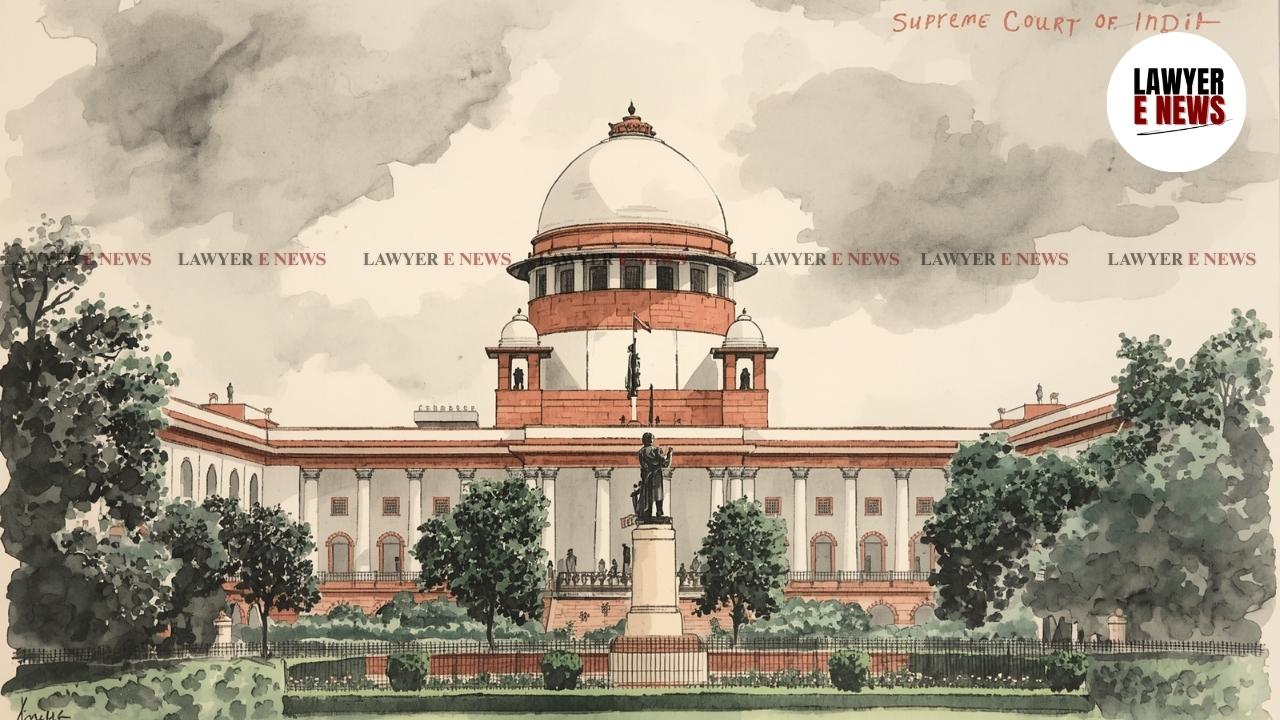
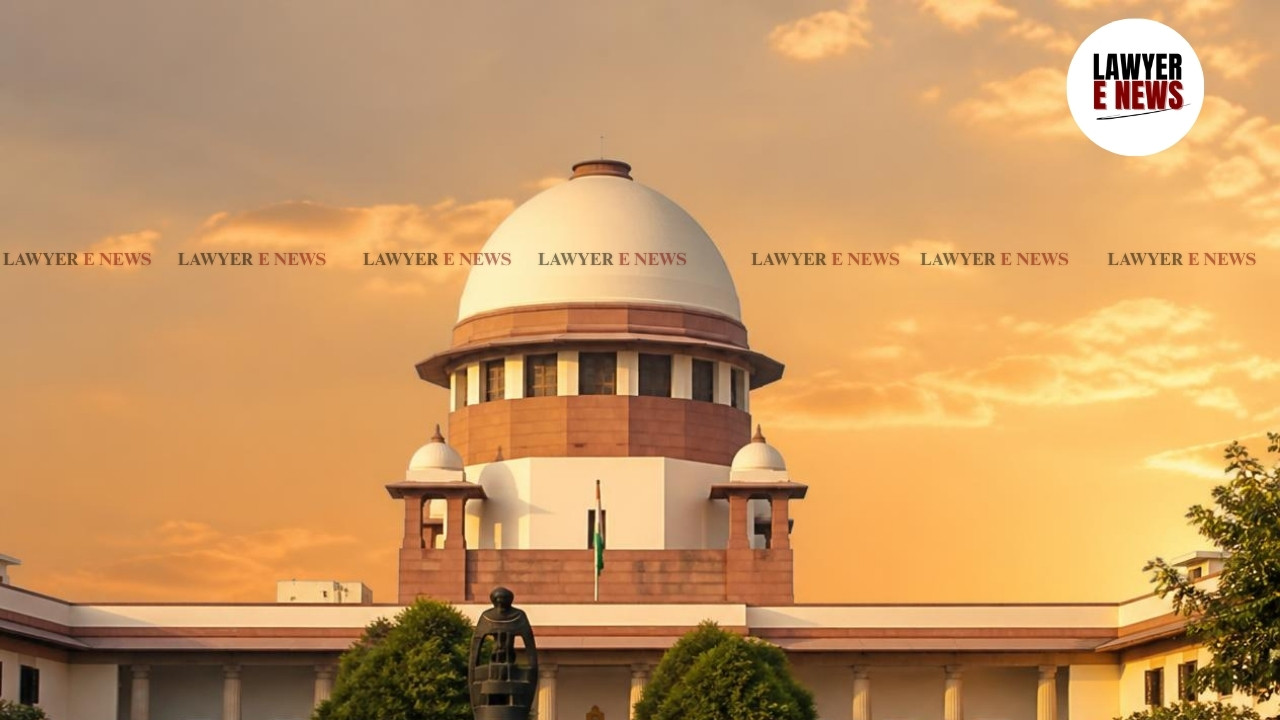
"A power of attorney creates only an agency relationship and does not transfer title or confer independent rights... Consequently, a power of attorney cannot operate as a mode of succession to a religious office." Supreme Court of India, in a significant ruling dated April 2, 2026, held that a General Power of Attorney cannot be used as an instrument to claim succession to a religious and spiritual office. A bench comprising Justice M.M. Sundresh and Justice Vipul M. Pancholi observed that a power of attorney merely creates an agency relationship and cannot operate as a mode of succession, while dismissing an appeal concerning the Sajjadanashin of a Dargah in Karnataka.
The dispute arose over the succession to the office of Sajjadanashin of the Hazarath Mardane-e-Gaib Dargah in Shivasamudram. Following the death of the original Sajjadanashin, Peer Pasha Khadri, his grandson claimed succession based on a Khilafatnama executed during a religious ceremony in 1981. Conversely, the youngest son of the deceased Sajjadanashin asserted a rival claim relying on a General Power of Attorney and an affidavit. The trial court and the first appellate court concurrently ruled in favour of the grandson, a decision later affirmed by the Karnataka High Court.
The primary question before the court was whether the execution of a Khilafatnama constituted a valid nomination to the spiritual office of Sajjadanashin. The court was also called upon to determine whether a General Power of Attorney or a sworn affidavit could legally confer succession rights to a religious and hereditary office.
Nature Of The Sajjadanashin Office
The Supreme Court first examined the legal and religious character of the Sajjadanashin. Relying upon established precedents like Syed Mohd. Salie Labbai v. Mohd. Hanifa, the bench noted that the office occupies a distinctive position in Islamic religious institutions. The court observed that the Sajjadanashin is not merely an administrative manager of Wakf property but is fundamentally the spiritual head of the shrine. The primary responsibilities include preserving the spiritual lineage, guiding disciples, and conducting religious ceremonies such as Urs and Sandal.
Custom And Nomination Govern Succession
Addressing the rules of succession, the bench clarified that such religious offices do not strictly follow conventional statutory rules of inheritance. Succession is ordinarily determined by custom, usage, or nomination by the incumbent. The court rejected the appellant's argument that only a living son could succeed to the office under Mohammadan law. The bench observed that the prevailing practice of this specific Dargah recognised nomination by the incumbent Sajjadanashin as a valid mode of succession, with no rigid rule mandating devolution only to the eldest living son.
"Succession to such religious offices is ordinarily determined by custom, usage, or nomination by the incumbent, depending upon the particular traditions governing the institution."
Khilafatnama Proves Valid Nomination
The court upheld the validity of the Khilafatnama executed by the original Sajjadanashin in favour of his grandson. The bench noted that the document was accepted through a religious ceremony attended by members of the fraternity and other spiritual heads. Although the document did not expressly use the term "Sajjadanashin", the court held that when read as a whole, it clearly conveyed the incumbent's intention to confer his spiritual authority upon the respondent. The execution was further corroborated by credible attesting witnesses during the trial.
Mere Suspicion Cannot Displace Proved Documents
The appellant had alleged that the word "Jan-Nasheen" was later interpolated into the Khilafatnama to unlawfully favour the grandson. The court dismissed this claim, noting that once the existence of a document is admitted, the burden shifts entirely to the party alleging forgery. Citing H. Venkatachala Iyengar v. B.N. Thimmaiamma, the bench observed that mere suspicion cannot displace a duly proved document. Since the appellant failed to cross-examine witnesses effectively or seek a handwriting expert's opinion during the trial, the court refused to entertain the plea for forensic examination at the appellate stage.
Power Of Attorney Creates Only Agency
Turning to the documents relied upon by the appellant, the court firmly rejected the premise that a General Power of Attorney could transfer religious succession. Relying on the principles laid down in Suraj Lamp & Industries (P) Ltd. v. State of Haryana, the bench clarified that such a document merely authorises another person to act on behalf of the executant. The authority granted under such an instrument is co-terminus with the life of the principal, and therefore, it absolutely cannot confer independent rights or act as an instrument of succession to a spiritual office.
"A document which merely authorises another person to act on behalf of the executant cannot be construed as conferring succession to a spiritual office such as that of a Sajjadanashin."
Participation In Management Does Not Confer Succession
The appellant had produced correspondence and photographs to show he managed the Dargah's affairs for several years. The court held that while this evidence might indicate participation in managerial or ceremonial activities, such participation by itself cannot establish succession to the office of Sajjadanashin. Furthermore, the court dismissed the appellant's reliance on a sworn affidavit, noting that an act as significant as appointing a successor must be performed through a clear and formal act consistent with institutional traditions.
Rights Of Other Wakf Stakeholders Protected
The court addressed the concern that recognising the grandson as Sajjadanashin might extinguish the rights of other family members in the Wakf property. The bench clarified that the present litigation only concerned succession to the spiritual office, not proprietary rights. The court observed that the recognition of one individual as Sajjadanashin does not determine or extinguish the independent legal rights of other beneficiaries under Wakf law regarding shared property, collections, or income.
Scope Of Section 100 CPC Clarified
Finally, the bench upheld the High Court's refusal to interfere with the lower courts' verdicts under Section 100 of the Code of Civil Procedure, 1908. The court reiterated that second appeals must be confined to substantial questions of law. Concurrent findings of fact regarding the hereditary nature of the office and the valid nomination of the grandson cannot be interfered with unless shown to be entirely perverse or based on a grave miscarriage of justice, which was absent in this case.
The Supreme Court dismissed the civil appeals and affirmed the concurrent judgments of the trial court, the first appellate court, and the High Court. The ruling cements the legal principle that spiritual offices must devolve through established customs or formal nominations, firmly rejecting the use of secular agency documents like a power of attorney to claim religious succession.
Date of Decision: 02 April 2026