-
by sayum
03 November 2026 11:25 AM







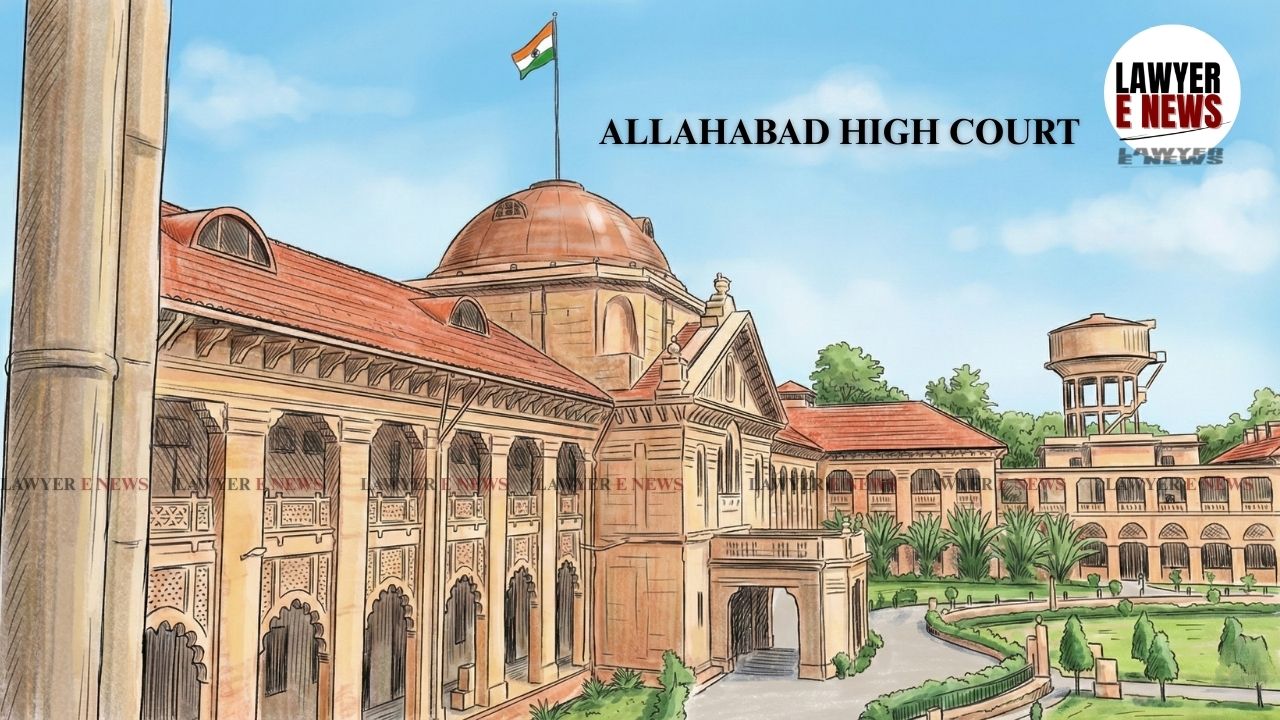
"The continuous employment of the petitioners on contractual basis for years together without any step by the State to create posts, absorb the teachers or provide pay scales equivalent to those of regularly appointed teachers, is nothing but a form of forced labour prohibited by Article 23." Allahabad High Court, in a significant ruling delivered on October 29, 2026, held that keeping teachers in centrally sponsored educational schemes on perpetual contractual terms with a meagre stipend violates fundamental rights and amounts to prohibited forced labour under Article 23 of the Constitution of India.
A single bench of Justice Pankaj Bhatia observed that paying teachers less than even semi-skilled wages under the nomenclature of an honorarium is a "cruel joke", directing the State of Uttar Pradesh to sanction permanent posts, formulate service rules at par with regular teachers, and consider long-serving contractual teachers for regularisation.
The petitioners, serving as full-time and part-time teachers in Kasturba Gandhi Balika Vidyalayas across Uttar Pradesh for periods ranging between two to over fifteen years, approached the High Court seeking regularisation and parity of pay with regular State school teachers. Having been initially recruited through an open selection process pursuant to advertisements issued under the Centrally sponsored Sarva Shiksha Abhiyan and Samagra Shiksha Scheme, they were continuously subjected to artificial renewals of eleven months and twenty-nine days with nominal monthly stipends. The State opposed their absorption, contending that the scheme was funded concurrently with the Centre, no sanctioned cadre existed, and their engagements were co-terminus with the scheme itself.
The primary questions before the court were whether long-serving teachers under a Centrally sponsored scheme can be denied regularisation and equal remuneration merely because their engagement is contractual; whether the absence of sanctioned posts and the Centre-State financial sharing arrangement can be pleaded by the State in defence; and what relief such teachers are entitled to under Part III of the Constitution and the Right of Children to Free and Compulsory Education Act, 2009.
Contractual Labels Cannot Defeat Substantive Rights Under Article 14
Examining the contractual arrangement, the High Court held that the State cannot exploit the vulnerable position of teachers by imposing unconscionable standard-form contracts. Relying on the Supreme Court’s rulings in Bhola Nath v. State of Jharkhand and Central Inland Water Transport Corpn. v. Brojo Nath Ganguly, the court observed that where the State contracts as a metaphorical "lion" with an employee positioned as a "lamb", the structural inequality obliges constitutional courts to intervene and strike down oppressive terms.
The bench stressed that accepting standard-form contracts does not constitute a waiver of fundamental rights, as settled by the Constitution Bench in Basheshar Nath v. Commissioner of Income Tax. Justice Bhatia held that the practice of employing teachers for eleven months and twenty-nine days with artificial breaks of one day is an arbitrary device to defeat claims of permanence, emphasizing that a model employer cannot take shelter behind technical contractual clauses to deny security of tenure.
"Constitutional Courts are dutybound to act to safeguard those who are vulnerable to exploitation, so that employees are not compelled to meekly submit to the demands of a vastly dominant contracting party like the State."
Meagre Honorarium For Perennial Teaching Roles Amounts To 'Begar' Under Article 23
Evaluating the remuneration, the High Court held that paying teachers an honorarium below the statutory minimum standards admissible to workers violates Article 23 of the Constitution. Following the apex court's decisions in People's Union for Democratic Rights v. Union of India and U.P. Junior High School Council Instructor Welfare Association v. State of U.P., the bench ruled that economic compulsion forcing individuals to accept depressed wages amounts to forced labour.
The court noted that part-time instructors are barred by contract from taking up any external employment, which creates a coercive cage wherein teachers are completely deprived of choice. Justice Bhatia remarked that compensating professionally qualified educators with a paltry sum of under ten thousand rupees in hand while expecting them to discharge full-time academic and warden duties in remote rural areas constitutes gross exploitation by the State machinery.
Absence Of Sanctioned Posts No Defence; Posts Deemed To Be Created
The court outrightly rejected the State's defence that no sanctioned posts exist to absorb the petitioners. The bench held that where an educational institution has functioned for over two decades under statutory mandates, the need for teaching staff is of a perennial and continuing nature. Under such circumstances, substantive posts stand deemed to be created automatically, and the State cannot plead administrative inaction to deny absorption.
Citing Umadevi (3) as explained in Vinod Kumar v. Union of India and Shripal v. Nagar Nigam, the court warned against the mechanical invocation of precedents to perpetuate ad-hocism. The bench clarified that where appointments were made after open advertisements and selection processes, such appointments cannot be classified as illegal, but are at best irregular, making the incumbents fully eligible for regularization against deemed substantive vacancies.
"The scheme has continued for over two decades, the work of the petitioners is perennial in nature, and the State is under a statutory obligation to provide teaching staff."
State Bears Primary Duty Under RTE Act; Principle Of 'Pay And Recover' Applies
Construing Sections 7 and 8 of the RTE Act, 2009 alongside Rule 20 of the Uttar Pradesh Right of Children to Free and Compulsory Education Rules, 2010, the court held that providing adequate infrastructure and qualified teaching staff is the concurrent and non-delegable duty of the appropriate Government. The bench observed that paying substandard remuneration to KGBV teachers while providing full scales to teachers in regular government schools constitutes impermissible discrimination against disadvantaged girl students enrolled in KGBVs under Section 8(c) of the Act.
Addressing the Centre-State financial sharing mechanism, the High Court held that the State Government cannot delay implementation by citing the non-release of Central funds. Invoking the principle of "pay and recover" formulated by the Supreme Court, the bench ruled that the State has an onerous, independent obligation to disburse rightful emoluments to teachers and can subsequently recover the Central share from the Union Government.
Doctrine Of Purity Of Means Mandates Compliance With Part III
Relying on the constitutional vision articulated in Minerva Mills Ltd. v. Union of India and Chief Justice John Marshall’s classic doctrine in McCulloch v. Maryland, the bench emphasized that a noble end cannot justify unconstitutional means. While the KGBV scheme serves the laudable constitutional objective of promoting girls' education under Article 21-A, achieving it by trampling the fundamental rights of teachers under Articles 14 and 23 is legally impermissible.
The court reiterated that Parts III and IV of the Constitution represent the two wheels of a chariot, and achieving directive principles cannot become a pretence for tyranny or exploitation of individual freedoms. Justice Bhatia observed that compromising the security, dignity, and living wages of teachers inevitably degrades the quality of education imparted to underprivileged students, frustrating the very core of Article 21-A.
Mandatory Directions Issued To State Government
Disposing of the writ petitions, the High Court issued comprehensive directions requiring the State Government to take concrete steps to sanction and create posts of teachers for all KGBVs in Uttar Pradesh in terms of the RTE Act Schedule within four months.
The court further directed the State to frame regular service conditions for KGBV teachers at par with regularly appointed teachers up to the Intermediate level within four months, and to consider the claims of the petitioners and similarly situated teachers for regularization against the newly created posts based on their qualifications and seniority.
As an interim measure, the High Court ordered that until regularisation rules and cadres are finalized, all KGBV teachers across Uttar Pradesh must be paid an enhanced honorarium of seventeen thousand rupees per month with immediate effect, and directed that their services shall be secured against arbitrary termination by extending the procedural safeguards of Section 24(2) of the RTE Act.
Disposing of the petitions, the High Court held that prolonged contractual arrangements in permanent public educational programmes violate Articles 14, 21-A, and 23 of the Constitution. The judgment establishes that the State as a model employer cannot plead lack of sanctioned posts or Centrally shared funding to deny living wages and regularisation to educators discharging statutory teaching duties.
Date of Decision: 29 October 2026