
-
by sayum
29 August 2026 5:15 AM







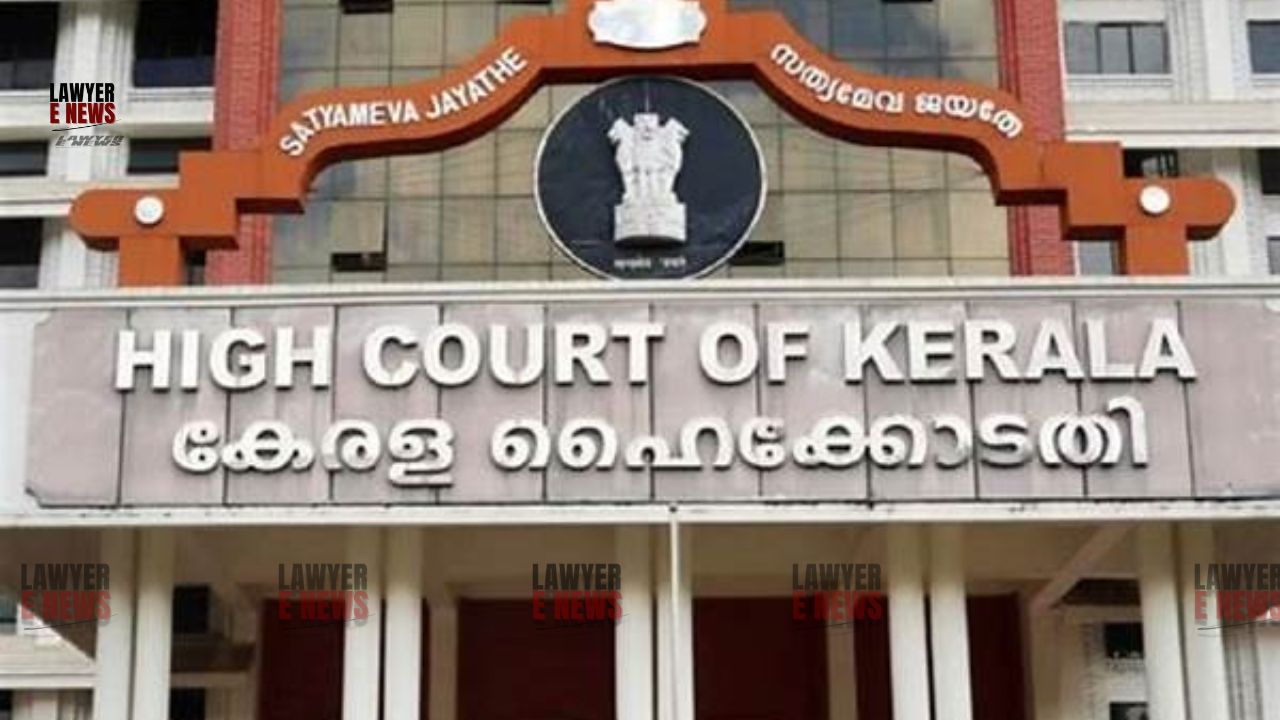
“Demand and acceptance are sine qua non for conviction under Sections 7 and 13(1)(d) of the PC Act”— High Court of Kerala at Ernakulam emphatically held that conviction under the Prevention of Corruption Act cannot be sustained in absence of proven demand and acceptance of illegal gratification. Justice A. Badharudeen observed that the Special Judge had erred in convicting the accused merely on the basis of recovery of money, even when the complainant turned hostile and no direct evidence supported the prosecution's narrative.
“This Court is of the considered view that the Special Court went wrong in holding that the prosecution succeeded in proving the offences beyond reasonable doubt,” Justice Badharudeen stated while allowing the criminal appeal filed by Gopikrishnan, who had been convicted in 2009 for allegedly accepting a ₹250 bribe for issuing an ownership certificate.
“The presumption under Section 20 arises only when foundational facts are proved”: Kerala High Court
The High Court underlined a core legal principle that has now become central in bribery prosecutions under the PC Act—that “mere recovery is not sufficient; demand and acceptance must be affirmatively established”.
Justice Badharudeen, relying heavily on the Supreme Court’s Constitution Bench decision in Neeraj Dutta v. State (NCT of Delhi), AIR 2023 SC 330, reiterated that:
“Proof of demand and acceptance of illegal gratification by a public servant as a fact in issue by the prosecution is a sine qua non in order to establish the guilt under Sections 7 and 13(1)(d)(i)(ii) of the Act.”
The Court further clarified, quoting the apex court, “In the event the complainant turns hostile... demand can still be proved by other witnesses or circumstantial evidence. But in this case, even circumstantial evidence failed to support demand.”
Panchayat Secretary Allegedly Demanded ₹250, Arrested in Trap, But Complainant Denied Bribe Allegation
The Vigilance and Anti-Corruption Bureau (VACB), Thrissur, had filed a case against Gopikrishnan, then Secretary of the Alagappanagar Grama Panchayat, alleging that he had demanded ₹250 from a resident for issuing an ownership certificate. A trap was laid on 18.08.2004, and the accused was arrested following phenolphthalein test, which showed positive traces of the bribe money on his hands and shirt.
However, during trial, the complainant (examined as PW2) completely denied the allegation, stating he had not been asked for a bribe. Although he identified his signature on the written complaint (Exhibit P2), he disowned its contents, and despite being declared hostile and cross-examined under Section 154 of the Evidence Act, the prosecution failed to elicit any admission of demand.
PW3 and PW4, the official witnesses in the trap, did not witness any demand or acceptance, and merely testified to procedural compliance. The Investigating Officer (PW5), Deputy Superintendent of Police, also conceded that the accused claimed the money was given towards tax dues.
“Presumption Cannot Stand on Shaky Foundations”: Court Rejects Section 20 Invocation
Justice Badharudeen observed that the presumption under Section 20 of the Prevention of Corruption Act is not automatic. Citing Aman Bhatia v. State (GNCT of Delhi) [2025 SCC OnLine SC 1013], the Court emphasized: “The presumption under Section 20 can be invoked only when demand is proved. The mere recovery of tainted money is not sufficient to raise the presumption.”
He added that “since the prosecution could not prove demand either through direct or circumstantial evidence, the very foundation of the case collapsed.” The Court held that the legal presumption is a tool of inference, not a substitute for missing facts. “Prosecution Has Failed to Prove Guilt Beyond Reasonable Doubt”
In a decisive conclusion, the High Court noted that the Special Court had convicted the accused despite the complainant turning hostile and no witness supporting the demand of bribe. There was, thus, no foundational fact to invoke presumption under Section 20 or to sustain conviction under Sections 7 or 13(1)(d).
The Court held: “In such view of the matter, it could be found that the Special Court went wrong in holding that the prosecution succeeded in proving the offences beyond reasonable doubt. Holding so, the conviction and sentence under challenge would require interference.”
The conviction dated 30.09.2009 was thus set aside, and the accused was acquitted of all charges under the Prevention of Corruption Act, 1988.
Date of Decision: 15.09.2025