-
by sayum
27 August 2026 5:16 AM







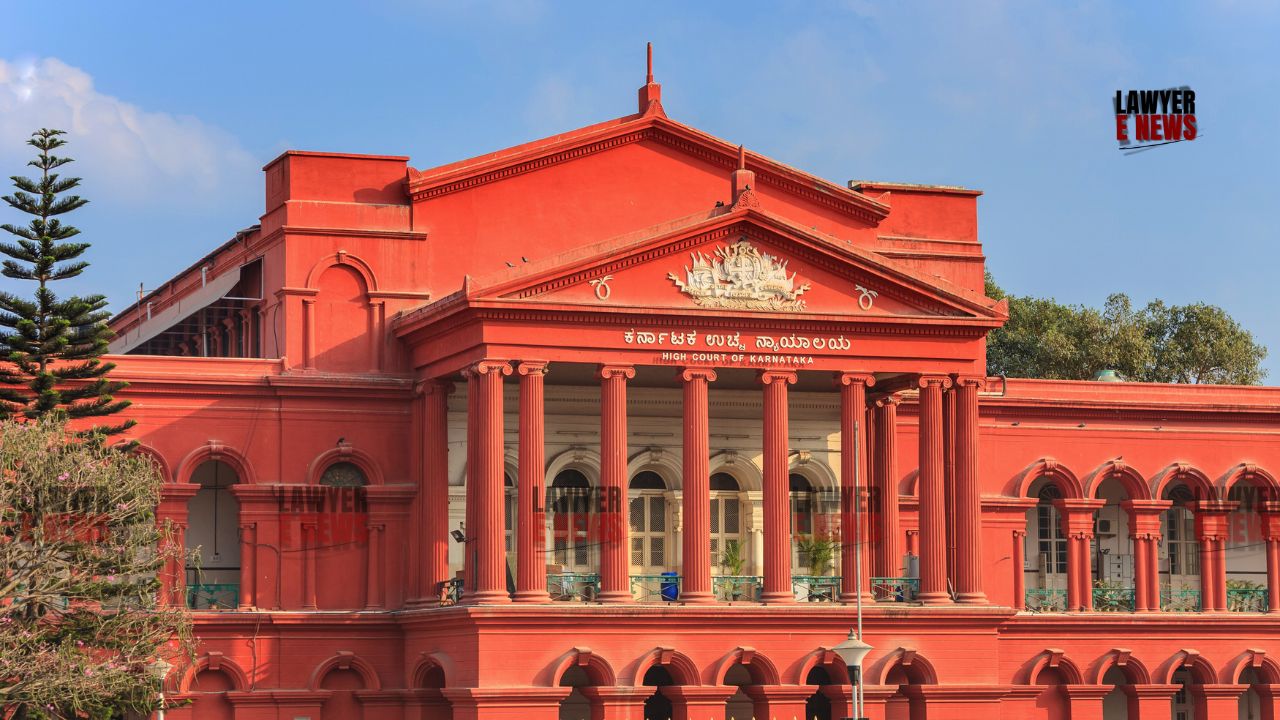
"Such an action on the part of the Presiding Officer cannot be painted red, alleging bias", Karnataka High Court has quashed a transfer order obtained by litigants who concealed from the High Court the fact that they had already filed a transfer petition before the trial court — even as the High Court was simultaneously considering an extension of time for the very same proceedings.
Justice R. Devdas, in a significant ruling, set aside the order of the Principal City Civil and Sessions Judge, Bengaluru, which had transferred two civil suits and a miscellaneous case from CCH-2 to CCH-30, holding that the transfer was sought in suppression of material facts and that the allegation of bias against the Presiding Officer was wholly untenable.
The dispute arose from a property transaction. Petitioner No. 1 purchased the suit schedule property from Respondent No. 3 under a registered sale deed dated March 13, 2024. When Respondents No. 1 and 2 — M/s Srinivasa Trust — sought to interfere with the property, the petitioner filed O.S. No. 2897/2024 for permanent injunction and secured an ex-parte ad-interim order on April 23, 2024. The trial court confirmed the interim order, and Respondent No. 1 challenged it before the Karnataka High Court in MFA No. 6603/2024. The High Court directed status quo and ordered the trial court to dispose of both suits within one year.
Respondents No. 1 and 2 had separately filed O.S. No. 1453/2024 seeking specific performance of an agreement dated March 13, 2023. The miscellaneous case bearing Misc. No. 576/2024 was filed by the same respondents alleging disobedience of an injunction order.
Two distinct legal questions arose before the Court: first, whether a Civil Revision Petition under Section 115 CPC is maintainable against a transfer order passed under Section 24 CPC; and second, whether the transfer order could be sustained on merits given the conduct of the party seeking transfer.
On Maintainability of Revision Against Transfer Orders
Respondents raised a preliminary objection that a revision under Section 115 CPC does not lie against an order under Section 24 CPC, placing reliance on decisions of the Kerala High Court in Wilson Paul v. Pathrose and V. Gopinath Panicker v. Padmini Kunjamma, and a Gujarat High Court ruling in Harshad Babubhai Amin v. Pravinaben Chandrakant Patel.
The Court rejected this objection, preferring instead the reasoning of a Division Bench of the Allahabad High Court (Lucknow Bench) in Babusingh v. Raj Bahadur Singh, which held that a transfer application is "other proceedings" and the order passed thereon is a "case decided."
The Court explained the rationale in clear terms: "A transfer application under Section 24 of CPC, when allowed by the District Court, it amounts to final disposal of the proceedings. The proceedings under Section 24 though ancillary to the suit are judicial in nature, where the court has to consider the grounds for transfer urged by one party and opposed by the other, together with the material on record."
"The order passed on the transfer application by the District Judge disposes it of finally."
Since no appeal lies against such an order, the Court held the civil revision under Section 115 CPC to be fully maintainable.
On Suppression of Facts and the Allegation of Bias
The more damning finding came on the merits. The High Court had, on November 28, 2025, taken up the Presiding Officer's request for extension of time. At that very hearing, while both sides were present, Respondents No. 1 and 2 did not breathe a word about the fact that they had already filed Misc. No. 785/2025 on July 17, 2025 — a petition seeking transfer of the very same matters.
The Court noted the full backdrop of delay: over 130 dates of hearing had taken place; multiple interlocutory applications had been filed; adjournments had been repeatedly sought; a writ petition and a review petition had further stalled proceedings. When the High Court examined the order sheets, it found the Presiding Officer's account to be entirely truthful, and had accordingly imposed costs of Rs. 50,000/- on the respondents while extending time by three months.
Against this backdrop, the respondents' allegation that the Presiding Officer displayed bias by insisting on proceeding with the matter was firmly repelled.
"No fault can be found with the Presiding Officer in insisting the parties to go on with the matter and not granting adjournments. Such an action on the part of the Presiding Officer cannot be painted red, alleging bias."
The Court further reasoned that transferring suits at this stage would be deeply counterproductive: the Presiding Officer who took charge on May 29, 2024 was fully conversant with every aspect of the case after months of proceedings, and handing the matter to a fresh court would only create further delay — which was precisely what the respondents' conduct had been achieving all along.
"At this juncture, if the matters are transferred to another court, the other Presiding Officer will need additional time to understand the facts and conclude the proceedings within the time frame fixed by this Court."
The Civil Revision Petition was allowed. The impugned order dated February 21, 2026 was quashed and set aside. The trial court was directed to conclude proceedings in O.S. No. 1453/2024, O.S. No. 2897/2024, and Misc. No. 576/2024 within three months from the next date of hearing, in terms of the earlier order in MFA No. 6603/2024 dated November 28, 2025.
Date of Decision: March 24, 2026