-
by sayum
27 August 2026 3:32 PM







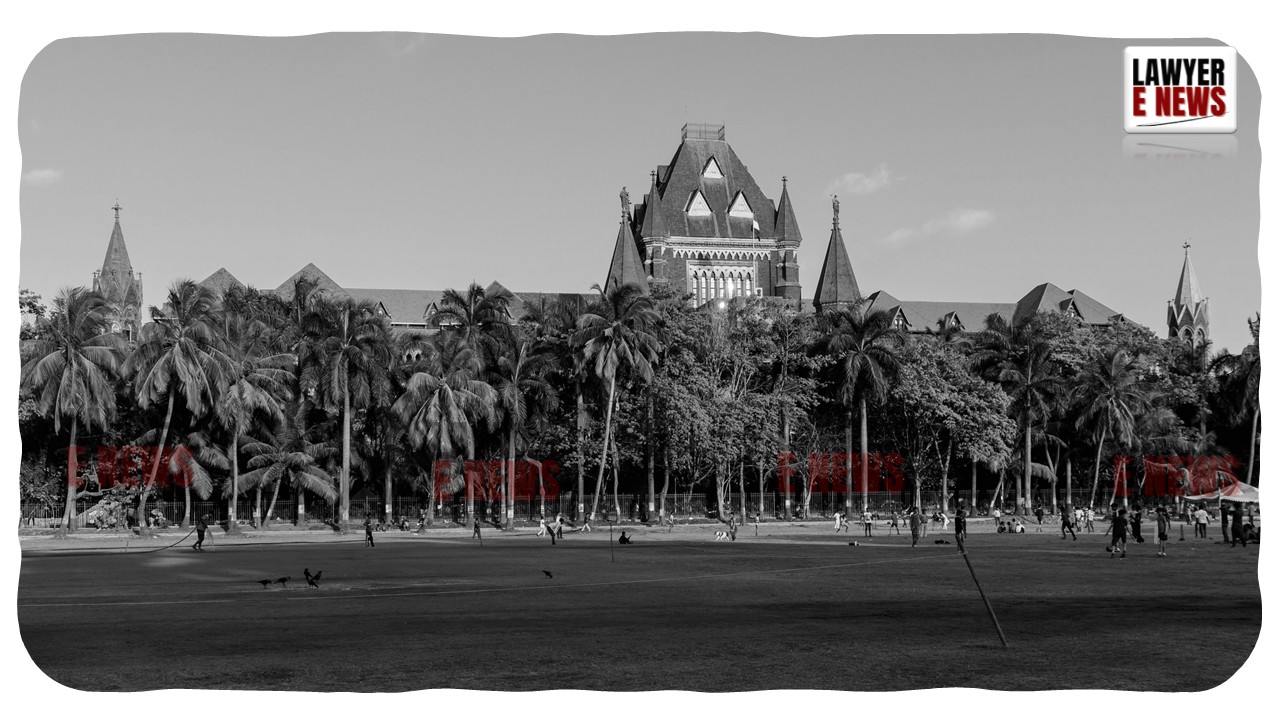
"When a Muslim person is alive, partition of property between him and his heirs is impermissible under Mohammedan Law. It is permissible to such Muslim person to give the part of his property to his sons by way of Hiba", Bombay High Court, in a significant ruling dated April 20, 2026, held that under Muslim Personal Law, the partition of property during the lifetime of the father is legally impermissible.
A single-judge bench of Justice Mehroz K. Pathan observed that inheritance rights in Muslim Law are not birthrights but devolve upon the legal heirs only after the death of the ancestor. The Court clarified that while a father may transfer property through Hiba (oral gift) during his lifetime, a formal partition cannot be recognized while the owner is still alive.
The dispute involved the daughters (Plaintiffs) and sons (Defendants) of one Umar Khan over 13 acres of ancestral land. The daughters filed a suit for partition in 2016 after their father’s death in 2011, while the sons claimed that a partition had already occurred in 1985 via mutation entries. Both the Trial Court and the First Appellate Court ruled in favor of the daughters, granting them their 1/8th share, which the sons challenged in this Second Appeal.
The primary question before the court was whether a partition suit filed in 2016 was within the limitation period considering mutation entries were made in 1985. The court was also called upon to determine whether a mutation entry can serve as proof of partition or gift when parties are governed by Muslim Personal Law and the father was alive at the time of the entry.
Rights Devolve Only Upon Death Of Ancestor
The Court emphasized that under Muslim Law, the concept of "ancestral property" as understood in Hindu Law does not exist in the same form regarding birthrights. The bench noted that Umar Khan, the father, died in 2011, and it was only upon his death that the rights to the property devolved upon his legal heirs. The Plaintiffs’ claim for partition was based on this succession, rendering the defendants' reliance on events from 1985 legally tenuous.
No Fixed Limitation In Partition Suits
Regarding the challenge on limitation, the Court held that in a common suit for partition, there is no fixed limitation period. Joint owners through a common ancestor may claim their shares whenever they realize such rights. The cause of action arises once such a claim is made and subsequently denied by the person in possession.
"Joint owners through a common ancestor may claim their shares in the property as per their legal rights whenever they realize such rights, and once such claim is made and denied by the person in possession, the suit for partition can thereafter be filed within limitation."
Partition Prohibited During Lifetime Of Owner
The Court relied heavily on the precedent set by the Supreme Court in Mansur Sahib vs. Salima (AIR Online 2024 SC 833). It reiterated that as long as a Muslim person is alive, any attempt at partition between him and his heirs is void under Mohammedan Law. While the owner is free to alienate property or execute a Hiba, the legal framework does not recognize "partition" as a valid mode of distribution during the owner’s lifetime.
Mutation Entries Are Not Proof Of Partition
The Court observed that the Defendants relied primarily on Mutation Entry No. 46 from 1985 to claim ownership. However, it was noted that mutation entries in revenue records do not confer title nor do they prove a partition or a gift. The bench found that the Defendants had taken inconsistent pleas, claiming the entry represented a gift at one stage and an oral partition at another.
Requirement To Plead And Prove Hiba
The bench pointed out that the Defendants failed to specifically plead the execution of an oral gift (Hiba) in their written statements. Under Muslim Law, if a party asserts a transfer via Hiba, they must strictly fulfill and prove the legal requirements of a valid gift. In the absence of such pleadings, the mere existence of a mutation entry or separate cultivation for maintenance purposes cannot be construed as a loss of the daughters' inheritance rights.
"If the case of Hiba is put forth, the legal requirements to prove Hiba must be fulfilled by a person putting forth such plea... the claim of partition of the property in the year 1985, as made by defendant No. 1, was invalid under Mohammedan Law."
The High Court found no error in the concurrent findings of the lower courts which had declared the daughters entitled to a 1/8th share each. The bench dismissed the Second Appeal, affirming that the sale deeds executed by the sons without the consent of the sisters were not binding on the sisters' shares. The Collector was directed to proceed with the partition under Section 54 of the CPC.
The ruling reinforces the principle that mutation entries are not documents of title and cannot override the fundamental tenets of Muslim Personal Law regarding succession. It clarifies that any division of property during a father's lifetime is not a "partition" in the eyes of the law, ensuring that the inheritance rights of daughters remain protected until the actual opening of succession.
Date of Decision: 20 April 2026