-
by sayum
29 August 2026 5:20 AM







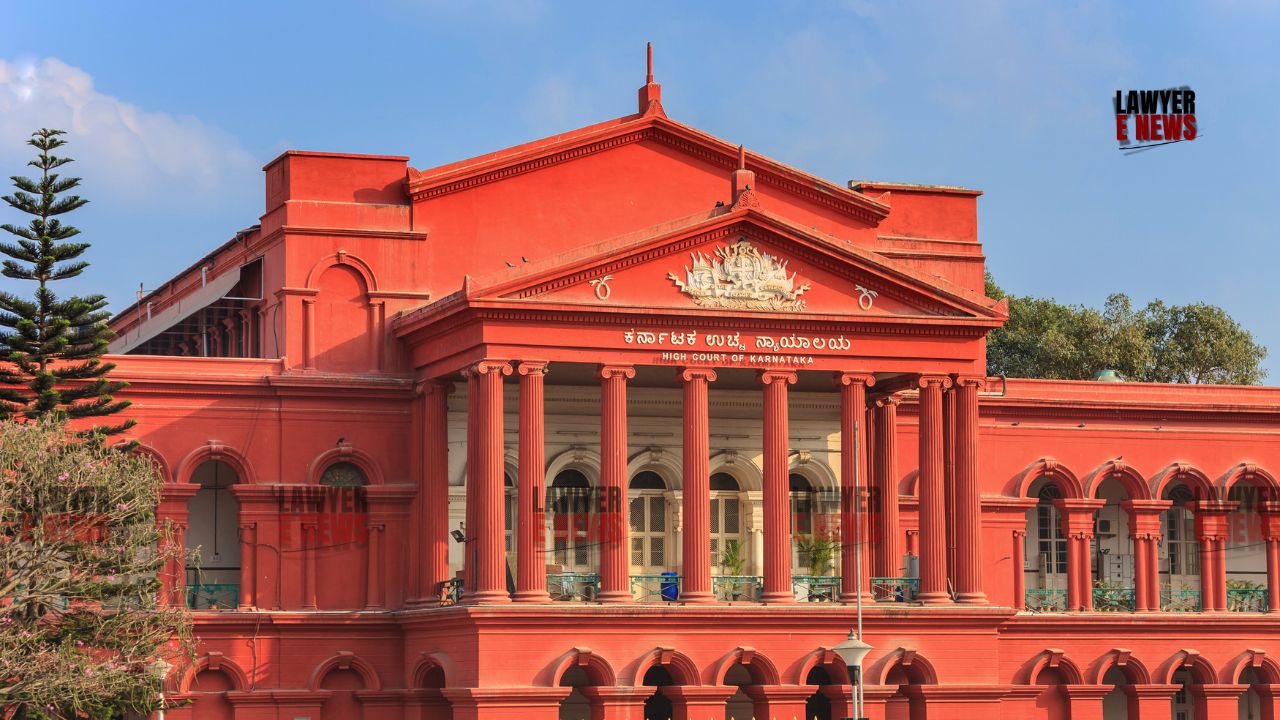
“No Religious Denomination Can Claim Exclusive Rights Over a State-Sponsored Celebration” – Karnataka High Court, through a strongly-worded and constitutionally grounded judgment, dismissed three Public Interest Litigations filed by H.S. Gaurav, Member of Parliament Pratap Simha, and others, who had challenged the Government of Karnataka’s decision to invite Ms. Banu Mushtaq, a renowned author, activist, and public intellectual, as the Chief Guest for the inauguration of the Mysuru Dasara Festival held atop the Chamundi Hills.
A Division Bench comprising Chief Justice Vibhu Bakhru and Justice C.M. Joshi held unequivocally: “Participation of a person practicing a particular faith or religion in celebrations of festivals of other religions does not offend the rights available under the Constitution of India.”
The Court upheld the secular character of state-sponsored events, reinforcing that no individual or group can claim monopoly over public ceremonies organized by the government merely because such events have cultural or religious associations.
“The Petitioners Do Not Represent Any Religious Denomination and Cannot Invoke Article 26” – High Court Says Fundamental Rights Not Affected
Rejecting the petitioners’ arguments that Articles 25 and 26 were violated by allowing a non-Hindu person to inaugurate a traditionally Hindu celebration, the Court held:
“The petitioners do not represent any denomination or any section, whose right to establish or maintain its institution is sought to be curtailed.”
Further elaborating on Article 25, the Court clarified: “The petitioner’s right to practice and propagate religion is not curtailed in any manner by extension of an invitation to respondent No. 4 (Ms. Banu Mushtaq).”
In a crucial legal observation, the Court underscored that "constitutional rights must be seen in their correct legal context and not in the abstract or through communal lenses."
“Dasara Is a Secular State Function and Not an Exclusively Religious Affair” – Invitation to Ms. Banu Mushtaq Fully Justified, Rules High Court
The festival of Dasara, while rooted in Hindu tradition, was described by the Court as a State-sponsored cultural celebration, and not a purely religious ritual confined to temple authorities. The Court clarified: “The festivities are organized by the State every year. An accomplished person is called for the inaugural ceremony. The persons in the past have included scientists, educationists, authors, and freedom fighters.”
Referring to Ms. Mushtaq’s distinguished public record, including being a Booker Prize-winning Kannada author, a former corporator, and an acclaimed women’s rights activist, the State defended its decision, emphasizing merit and public service as the only criteria.
The Court took judicial notice of similar prior instances, noting: “In 2017, Dr. Nissar Ahmed, a poet of the Muslim faith, was also invited as Chief Guest without any controversy or challenge.”
“Religious Sensitivities Cannot Override the Constitutional Principles of Equality and Secularism” – Court Rejects Petitioners' Claims of Hurt Sentiment
In addressing claims that inviting Ms. Mushtaq caused "religious offence" to the sentiments of Hindu devotees, the Court made a vital clarification: “Subjective perceptions of offense cannot become the standard to determine constitutional legality.”
The Bench reiterated that India’s constitutional secularism does not mean the exclusion of religion, but inclusion without discrimination.
The judgment refused to allow religious majoritarianism or the exclusivist interpretation of rituals to dictate state policy, cautioning that "public ceremonies must reflect the inclusive character of the Republic."
“Shirur Mutt, Adi Saiva, and Devaru Precedents Are Not Applicable” – Petitioners’ Legal Foundation Termed Misconceived
However, the Court carefully analyzed and distinguished these judgments: “These cases dealt with internal religious appointments, denominational rights, and temple management. In the present case, there is no interference in the management of a temple or denomination.”
The Court stressed that the petitioners were not managing any institution, nor were they denied access or freedom to perform rituals, rendering their claims legally unsustainable.
"Petitions Are Without Merit – Constitutional Values Must Prevail Over Narrow Sentiment"
Dismissing all three writ petitions, the Karnataka High Court concluded: “In our view, the extension of invitation to respondent No. 4 does not fall foul of any of the values enshrined in the Constitution of India. These petitions are unmerited and are accordingly dismissed.”
This judgment not only reinforces constitutional secularism but also serves as a clear judicial affirmation of the inclusive spirit of Indian festivals and public life.
Date of Decision: 15 September 2025