-
by sayum
29 August 2026 3:15 PM







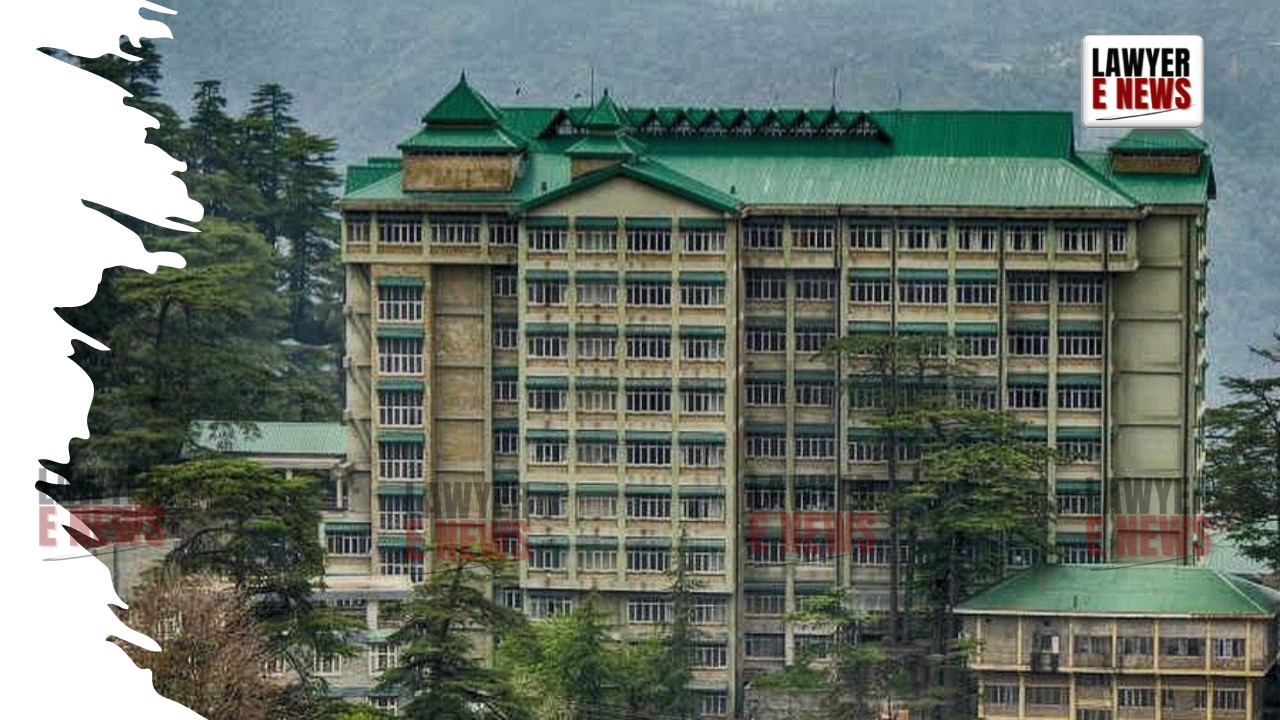
Division Bench of the Himachal Pradesh High Court comprising Chief Justice G.S. Sandhawalia and Justice Ranjan Sharma delivered a significant ruling in Himachal Pradesh State Co-Operative Bank Ltd. & Anr. v. Uttar Pradesh State Financial Corporation & Anr. The Court addressed key issues of jurisdiction, limitation, and entitlement to pendente lite and future interest in a recovery suit concerning unpaid bond interest.
Allowing OSA No. 3 of 2016 (plaintiffs’ appeal) and dismissing OSA No. 5 of 2015 (defendants’ appeal), the Court modified the decree to grant pendente lite and future interest at 8% per annum on ₹76 lakhs from the date of suit till realization, holding that part of the cause of action arose at Shimla and the suit was within limitation under Article 25 of the Limitation Act.
In 2005, the Himachal Pradesh State Co-operative Bank invested ₹9.5 crores in “UPSFC SLR Restructured Bonds Series 2011,” issued by the Uttar Pradesh State Financial Corporation (UPSFC) and guaranteed by the State of U.P., with an agreed interest rate of 8% p.a. Interest was payable half-yearly.
However, the interest instalments due in August 2006 and February 2007—totalling ₹76 lakhs—remained unpaid. The bank served notice under Section 80 CPC but received no payment. The defendants pleaded that the High Court of Himachal Pradesh lacked jurisdiction, the suit was time-barred, and the contract was frustrated under Section 56 of the Contract Act.
A Single Judge partly decreed the suit for ₹76 lakhs without pendente lite interest, citing the plaintiffs’ subsequent sale of bonds to other cooperative banks. Both sides appealed.
Rejecting the jurisdictional challenge, the Bench held that under Section 20(c) CPC, “part of cause of action” arose at Shimla since interest payments had earlier been remitted there.
The Court stressed: “There is nothing to show from the bonds that the parties were restricted by the contract… that the Court at Kanpur shall have jurisdiction exclusively.”
Citing A.B.C. Laminart Pvt. Ltd. v. A.P. Agencies (1989) 2 SCC 163, the Bench reiterated that the absence of an exclusive jurisdiction clause meant that payment of interest at Shimla was a sufficient connecting factor to confer territorial jurisdiction.
On Limitation
The Court applied Article 25 of the Limitation Act, which provides a three-year period “from the date when the interest becomes due” for suits seeking recovery of interest.
The Bench noted: “The interest having not been paid in August 2006 and February 2007 led to the claim… the suit having been filed on 07.04.2009 was within limitation.”
Acknowledgment letters from UPSFC, including one dated 12 November 2006, further extended limitation under Section 18 of the Limitation Act.
Right to Pendente Lite & Future Interest
On the plaintiffs’ cross-appeal, the Court overturned the Single Judge’s denial of pendente lite interest. Referring to Central Bank of India v. Ravindra (2002) 1 SCC 367, the Bench held that interest on the principal adjudged is compensatory in nature:
“The creditor is deprived of such use of the money which it would have made if the debtor had paid the amount of interest on the date due… the creditor needs to be compensated for deprivation.”
The Court clarified that this was not a case of awarding “interest on interest” prohibited in V. Kala Bharathi v. Oriental Insurance Co. Ltd. (2014) 5 SCC 577, but rather awarding interest on the principal sum adjudged (₹76 lakhs), which represented unpaid interest instalments capitalised as principal.
The Division Bench: Allowed OSA No. 3 of 2016, granting pendente lite and future interest at 8% p.a. on ₹76 lakhs from 07.04.2009 till realization.
Date of Decision: 08 August 2025