-
by sayum
26 August 2026 6:42 AM







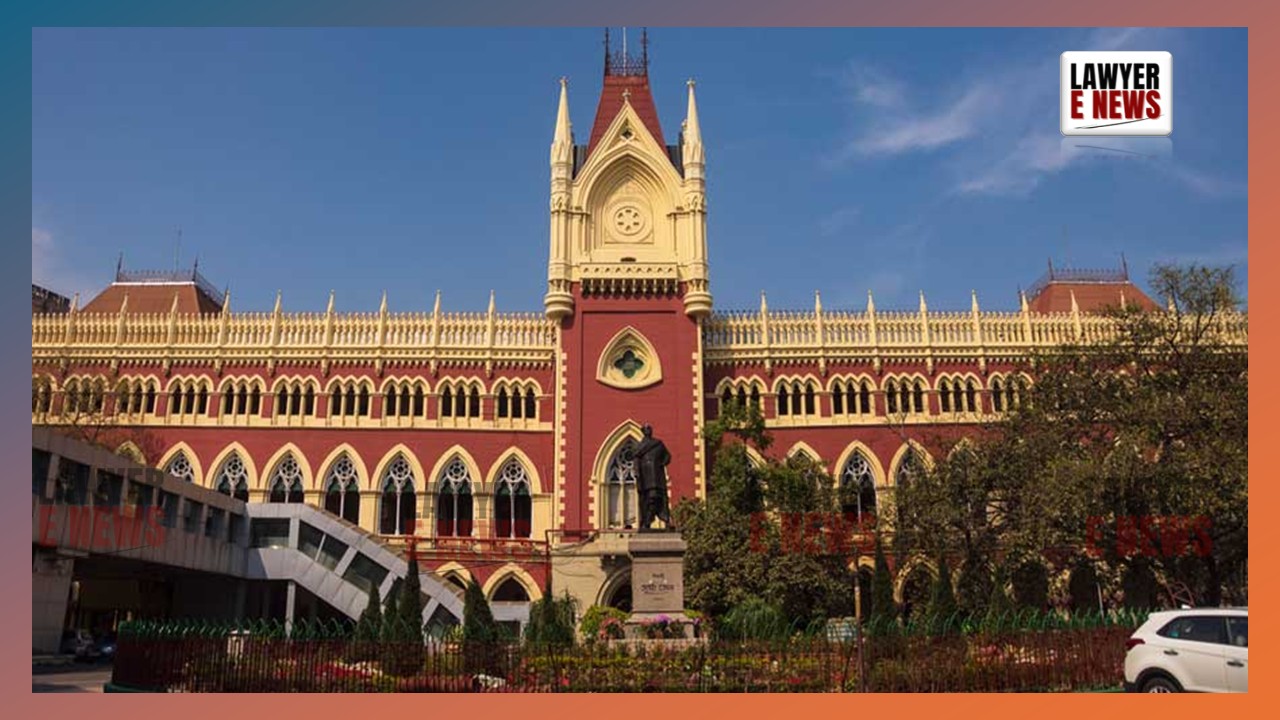
"When it comes to blacklisting, this requirement becomes all the more imperative, having regard to the fact that it is the harshest possible action" – In a significant judgment strengthening procedural fairness in administrative actions, the Calcutta High Court set aside an order blacklisting Helax Healthcare Private Limited for three years and forfeiting its performance bank guarantee on the ground of supplying non-standard quality medicines. Justice Krishna Rao, sitting in writ jurisdiction under Article 226, held that the impugned order issued by the State of West Bengal was violative of the principles of natural justice as no prior notice of the proposed penal action was issued, and critical laboratory test reports relied upon by the State were never disclosed to the petitioner.
The decision, rendered in Helax Healthcare Pvt. Ltd. v. State of West Bengal & Ors., WPA No. 26915 of 2025, reinforces the settled legal position that even where a tender contains clauses authorising blacklisting or debarment, such drastic action cannot be taken without clear and specific notice of intent, and without affording the affected party a meaningful opportunity to respond to the adverse material.
"Existence of Penalty Clause in Tender Does Not Displace Duty to Disclose Proposed Action"
At the heart of the dispute was a blacklisting and debarment order dated September 26, 2025, passed against Helax Healthcare by the Department of Health and Family Welfare, West Bengal, alleging that the company had supplied non-standard quality of the drug "Telmisartan Tablet IP 40 mg." and had failed in timely supply. The petitioner was declared L1 bidder in an e-tender and had submitted a performance guarantee of ₹30 lakh. However, acting under Clause 24(C) of the tender terms, the State not only debarred the petitioner from future tenders for three years but also forfeited the performance bank guarantee.
The petitioner contended that while certain notices were issued alleging that the supplied medicines did not conform to Indian Pharmacopoeia (IP) standards, none of the notices indicated that blacklisting or debarment was being considered. Nor was the petitioner furnished with the test reports forming the basis of these allegations, despite repeated written requests, including offers to participate in joint analysis.
Senior Advocate Mr. Jishnu Choudhury, appearing for the petitioner, forcefully argued that the impugned action was legally unsustainable. Relying on Gorkha Security Services v. Government (NCT of Delhi) [(2014) 9 SCC 105], he submitted that “a show cause notice must not only disclose the factual basis of the charge, but must also indicate the precise nature of action proposed to be taken.” He further relied on UMC Technologies Pvt. Ltd. v. FCI [(2021) 2 SCC 551] to underline that the presence of a blacklisting clause in the tender cannot override the constitutional requirement of natural justice.
Justice Rao accepted these submissions, observing:
“In none of the notices, the respondents have informed the petitioner that the respondents will take penal action against the petitioner in the form of blacklist and debarment...The respondents have neither informed the petitioner in the show cause notice and the personal hearing notice with regard to the penalty...and have also not supplied the report so as to enable the petitioner to file any objection.” [Para 17]
The Court found the absence of disclosure of the test reports particularly troubling. Despite repeated requests on August 8 and September 19, 2025, for sample details, test methods, and validation reports, the petitioner was kept in the dark. Justice Rao termed this a breach of fair procedure, citing the judgment in Indian Commodity Exchange Ltd. v. Neptune Overseas Ltd. [(2020) 20 SCC 106], where the Supreme Court held that “documents relied upon for adverse action must be supplied to the affected party to enable a fair response.”
Judicial Review Not Barred by Availability of Appeal in Face of Natural Justice Violation
The State’s preliminary objection to maintainability—on the ground that Clause 25 of the tender provided for an appellate remedy—was also rejected by the Court. Justice Rao held that the writ petition was maintainable because the impugned order was passed in breach of principles of natural justice, which renders alternative remedy no bar to invoking Article 226.
“This Court finds that the petitioner has filed the present writ application on the ground of violation of principle of natural justice and thus the writ petition is maintainable.” [Para 20]
The Court further made it clear that while the impugned order stands quashed, the respondents remain at liberty to proceed afresh against the petitioner, provided they do so in accordance with law and after affording proper opportunity.
The prayer of the State for a stay on the operation of the judgment was expressly declined by the Court.
Natural Justice Cannot Be a Mere Formality in Blacklisting Actions
With this judgment, the Calcutta High Court has reiterated a vital constitutional safeguard: any form of blacklisting, being a "civil death" for contractors and businesses, must be preceded by adequate notice not just of the allegations, but of the nature of penal action contemplated. The decision sends a strong reminder to government departments that invoking tender clauses or boilerplate penalty terms cannot substitute for basic procedural fairness.
The ruling draws a firm line between administrative convenience and constitutional mandate, holding that the right to be heard must be substantive and not symbolic, particularly when severe consequences like debarment and financial forfeiture are at stake.
Date of Decision: 17 December 2025





