-
by sayum
04 August 2026 1:39 PM







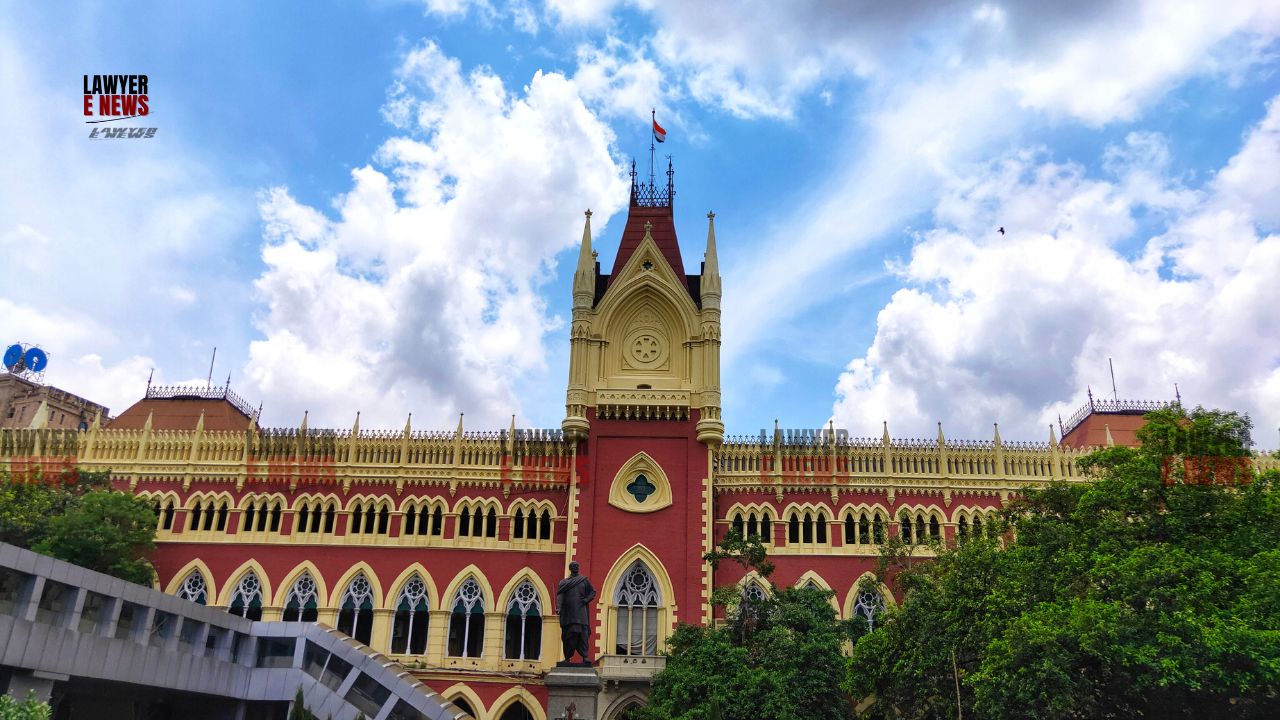
“Unless the final decree is drawn, rights of parties are not conclusively determined—an order merely accepting the Commissioner’s report is interlocutory and can be challenged under Article 227 of the Constitution.” In a significant ruling on the procedural nuances of partition suits, the Calcutta High Court held that an application under Article 227 of the Constitution of India is maintainable against an order accepting the Partition Commissioner’s Report, provided that the final decree has not yet been passed.
Justice Hiranmay Bhattacharyya, deciding C.O. No. 87 of 2025 and C.O. No. 2513 of 2025, clarified that such an order does not constitute a decree within the meaning of Section 2(2) of the Code of Civil Procedure, and therefore is not appealable either under Section 96 CPC or Order XLIII Rule 1 CPC. However, where the order materially affects the rights of parties, supervisory jurisdiction under Article 227 remains open as a constitutional remedy.
“Partition Suits Involve Two Stages—Preliminary Declaration and Final Working Out”: Court Explains Decree Structure and Appeal Limitations
The judgment draws a clear distinction between preliminary decrees, which declare the rights of co-sharers, and final decrees, which implement those rights through division by metes and bounds, as per Order XX Rule 18 and Order XXVI Rules 13 and 14 CPC.
Justice Bhattacharyya elaborated:
“Only after a final decree is passed in a suit for partition, working out the rights of all parties with regard to the subject property, can it be said that the rights have been conclusively determined.”
The Court emphasized that:
“A decree becomes final only when it completely disposes of the suit. Until then, the suit is in continuation, and an order accepting the Commissioner’s Report is not an executable decree.”
“No Appeal Lies From Acceptance of Commissioner’s Report Without Final Decree”: Court Invokes Section 105 CPC to Affirm Supervisory Power
One of the central questions was whether a party aggrieved by an order accepting a Partition Commissioner’s Report—before final decree—is remediless or must await a decree to file an appeal.
The Court answered:
“The order is not independently appealable. Section 105 CPC allows an aggrieved party to challenge such interlocutory orders in an appeal against the final decree. But until such decree is passed, the remedy under Article 227 remains available.”
Referring to multiple precedents, including Mool Chand v. Director, Consolidation and Shankar Balwant Lokhande v. Chandrakant Shankar Lokhande, the Court reinforced that:
“In a partition suit, acceptance of the Commissioner’s Report is a procedural step that may form part of the eventual decree, but until the decree is passed and engrossed on stamp paper, the rights are not enforceable or concluded.”
“Article 227 Jurisdiction Not Barred by Section 115 CPC When Appeal Does Not Lie”: Revisional Scope Reaffirmed
While some earlier decisions, including Sanat Kumar Dey v. Santanu Kumar Dey, had preferred postponing the challenge to the appeal stage, the present judgment clarified that such postponement is not obligatory if the final decree is yet to be passed and the Commissioner's Report is accepted by non-speaking or flawed reasoning.
Justice Bhattacharyya held:
“The fact that such interlocutory order can eventually be challenged under Section 105 CPC does not preclude recourse to Article 227 in the meantime, particularly to prevent a failure of justice.”
Notably, the Court drew a distinction between Section 115 CPC revisions, which are constrained by legislative bars, and Article 227, which operates independently as a constitutional supervisory remedy.
“Acceptance of Commissioner’s Report Must Precede Drawing of Final Decree – Without It, Rights Remain Indeterminate”: Judgment Recalls Core Procedural Framework
Citing the Supreme Court in Venkata Reddi v. Pothi Reddi and Bikoba Deora Gaikwad v. Hirabai Marutirao Ghorgare, the Court reiterated:
“Even where the preliminary decree has determined the shares, without a final decree there is no formal adjudication dividing the property by metes and bounds. Hence, no execution can lie, and no appeal under Section 96 CPC can be maintained until the final decree is passed.”
The Court also examined the language of Order 26 Rule 14(3) CPC, noting that the Court must first confirm or vary the report and only then pass a decree. Therefore, an order merely accepting the report, without final decree, is not the final expression of adjudication.
“Petitions Maintainable—To Be Heard on Merits Separately”: Court Orders De-Tagging of Revision Applications
Concluding that the revisional applications under Article 227 were maintainable, the Court directed the two civil revisions to be de-tagged and listed separately for substantive hearing on merits.
Justice Bhattacharyya noted:
“Whether this Court should now proceed to decide the merits of the challenge to the Commissioner's Report or leave the matter open to be agitated in a future appeal must be addressed after full hearing.”
This authoritative ruling by the Calcutta High Court provides much-needed clarity on a long-disputed procedural issue in partition suits—whether orders accepting Partition Commissioners’ Reports can be challenged before final decrees are passed.
The Court’s nuanced holding affirms that procedural finality does not equate to substantive finality, and until the rights of parties are crystallized through a final decree, constitutional supervision remains available to address errors or procedural unfairness.
This judgment sets a clear precedent that litigants are not required to wait indefinitely to challenge the acceptance of flawed Commissioner’s Reports, provided the challenge is not cloaked as an appeal but framed within Article 227’s supervisory scope.
Date of Decision: November 20, 2025