-
by sayum
24 August 2026 3:22 PM







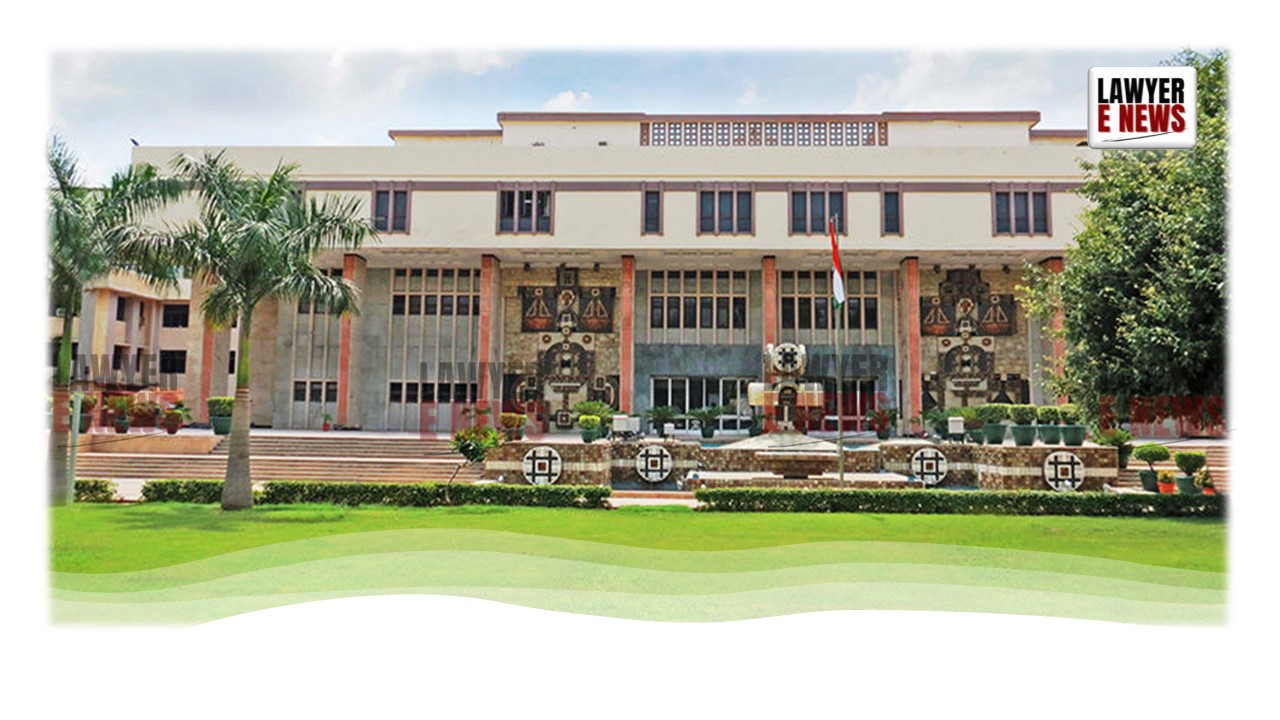
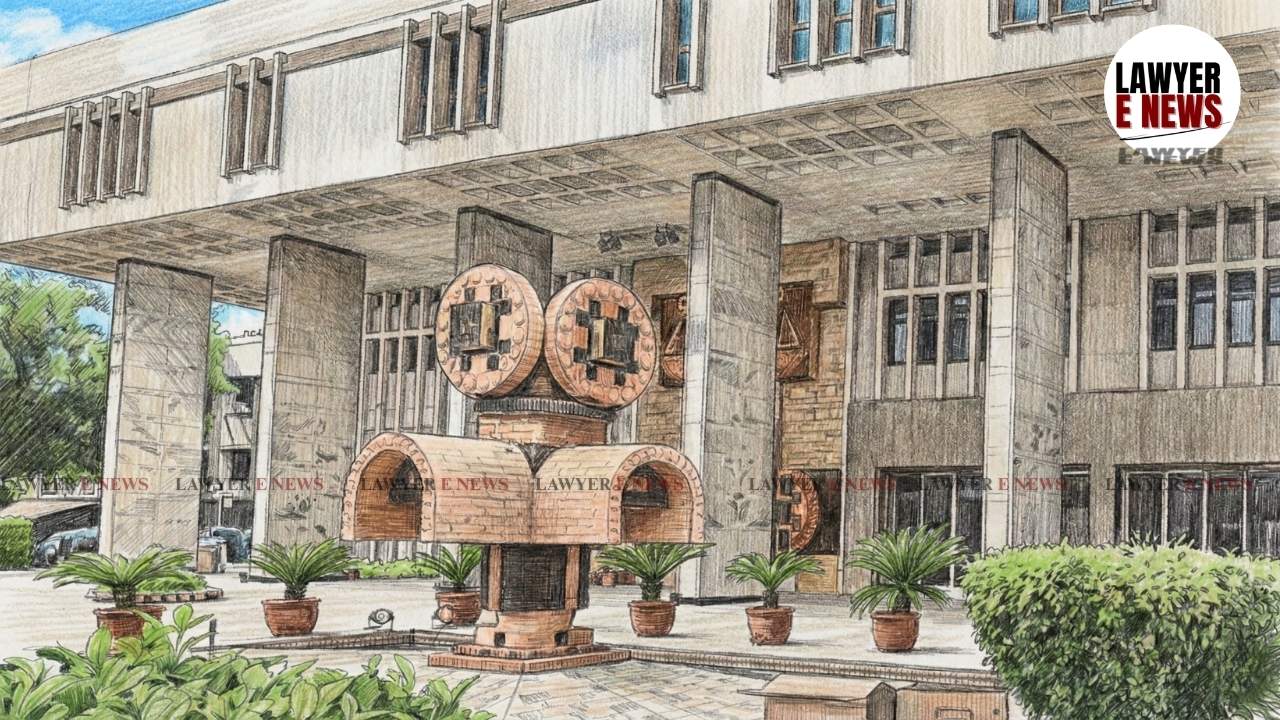
“If the Wrong is Done Where the Defendant Resides, Plaintiff Must Sue There”—Delhi High Court dismissed the suit filed by Sameer Dnyandev Wankhede, IRS officer and former Zonal Director of the Narcotics Control Bureau, against Red Chillies Entertainments Pvt. Ltd., and others, for allegedly defamatory content in the web series “The Ba**ds of Bollywood”*.
The Court, in a detailed and precedent-heavy decision authored by Justice Purushaindra Kumar Kaurav, held that Delhi courts lacked territorial jurisdiction under Section 19 of the Code of Civil Procedure, since the “wrong done” — i.e., the alleged defamation — occurred in Mumbai, which is also the place where both the plaintiff and main contesting defendants reside.
The Court applied the binding precedent of Escorts Ltd. v. Tejpal Singh Sisodia (2019 SCC OnLine Del 7607) and reiterated the principles evolved therein, including the ‘Merger Rule’ and the ‘Maximum Wrong Rule’, effectively foreclosing the possibility of ‘forum shopping’ in online defamation cases.
“The Suit Must Be Filed Where the Wrong Is Done and the Defendant Resides”—Court Enforces Territorial Limits on Cyber Defamation Litigation
The plaintiff, Sameer Wankhede, had filed a suit seeking damages and a permanent injunction against the defendants, alleging that the first episode of a web series titled “The Ba**ds of Bollywood”*, released on 18 September 2025, contained defamatory content between timestamps 32:02 and 33:50. The series was allegedly directed by Aryan Khan, produced by Red Chillies Entertainments Pvt. Ltd. (Defendant No. 1), and broadcast by another Mumbai-based platform (Defendant No. 2).
Wankhede contended that the series was widely accessible online, including in Delhi, and claimed that his reputation was lowered in the eyes of government authorities, colleagues, and the public in Delhi. He argued that the Ministry of Finance, which determines promotions and career advancement, is headquartered in Delhi and that departmental cases are pending in tribunals and courts in Delhi.
However, the Court rejected the claim that such speculative or administrative connections to Delhi could confer jurisdiction. “Section 19 contemplates the place where wrong is done, not where it could have been done, or may likely occur,” the Court observed [Para 63].
“Wrong of Online Defamation Not Done Everywhere It Is Accessible”—‘Tejpal’ Principles Reaffirmed
At the heart of the Court’s reasoning was a reaffirmation and application of the decision in Escorts Ltd. v. Tejpal Singh Sisodia. The Court categorically held:
“If wrong has also been done within the jurisdiction of the Court in which the defendant resides, carries on business or works for gain, the plaintiff must sue at this place of merger and at no place else.” [Para 66.2(c)]
The Court clarified that “wrong done” under Section 19 CPC is not synonymous with universal accessibility of defamatory content online. Instead, the wrong is deemed to occur where the content is actually accessed by third parties who know the plaintiff and in whose eyes the plaintiff’s reputation is harmed.
Quoting extensively from Tejpal, the Court emphasized:
“Merely because the tweets or other material on any other social media/internet can be accessed anywhere, would not amount to a wrong being done to the plaintiff everywhere.” [Tejpal, Para 39; cited in Para 20]
Thus, despite allegations of nationwide harm, Wankhede’s own pleadings revealed that the alleged defamatory content was viewed in Mumbai, where he resides and where the defendants operate. This led the Court to conclude that the “Merger Rule” squarely applied, leaving no jurisdictional option to file the suit in Delhi.
“Misjoinder and Forum Shopping Cannot Manufacture Jurisdiction”—Court Rejects Impleadment of Defendant No. 6
Wankhede had also impleaded “RPSG Lifestyle Media Pvt. Ltd.” (Defendant No. 6), alleging that one of its associates had shared a defamatory post referring to him as an “idiot.” This, he argued, provided a jurisdictional nexus to Delhi since Defendant No. 6 allegedly operated from Delhi.
However, the Court found that:
Defendant No. 6 did not legally exist as described — the actual entity was a different company.
No concrete role of Defendant No. 6 was pleaded in the production or broadcast of the allegedly defamatory content.
The impleadment was a tactical maneuver to create an illusory jurisdictional link.
The Court termed this an abuse of process and held:
“Defendant no. 6 was hunted to create a mirage of having an illusory cause… solely to plead before this Court that Tejpal does not apply… It is an instance of clever drafting aimed at subverting the rigours of jurisdictional principles.” [Para 65]
“Courts Must Resist Clever Drafting That Creates Illusion of Jurisdiction”—Doctrine of Meaningful Reading Applied
The Court reiterated the long-standing principle that pleadings must be read intelligently, not formally, and “clever drafting” will not be allowed to confer jurisdiction where none exists.
Quoting from T. Arivandandam v. T.V. Satyapal [(1977) 4 SCC 467], the Court observed:
“If clever drafting has created the illusion of a cause of action, nip it in the bud at the first hearing… The trial Courts would insist imperatively on examining the party at the first hearing so that bogus litigation can be shot down at the earliest stage.” [Para 51]
This principle was invoked to reject Wankhede’s attempt to plead that the wrong was done in Delhi when his own representations revealed that the alleged harm was also caused in Mumbai.
Delhi Court Has No Jurisdiction—Plaint Returned
Summing up, the Court held:
“With the main contesting defendants residing in Mumbai, the plaintiff himself being a resident of Mumbai, and further the wrong, as per the plaintiff’s own plaint, having also occurred at Mumbai, the Merger Rule of Tejpal applies with full force. The jurisdiction to entertain the present suit lies only with the courts in Mumbai.” [Para 66.3]
Accordingly, invoking Order VII Rule 10 of the CPC, the Court returned the plaint to Wankhede for presentation before a court of competent jurisdiction in Mumbai, while granting liberty to seek further directions under Order VII Rule 10A CPC.
Date of Decision: 29 January 2026