-
by sayum
26 August 2026 12:18 PM







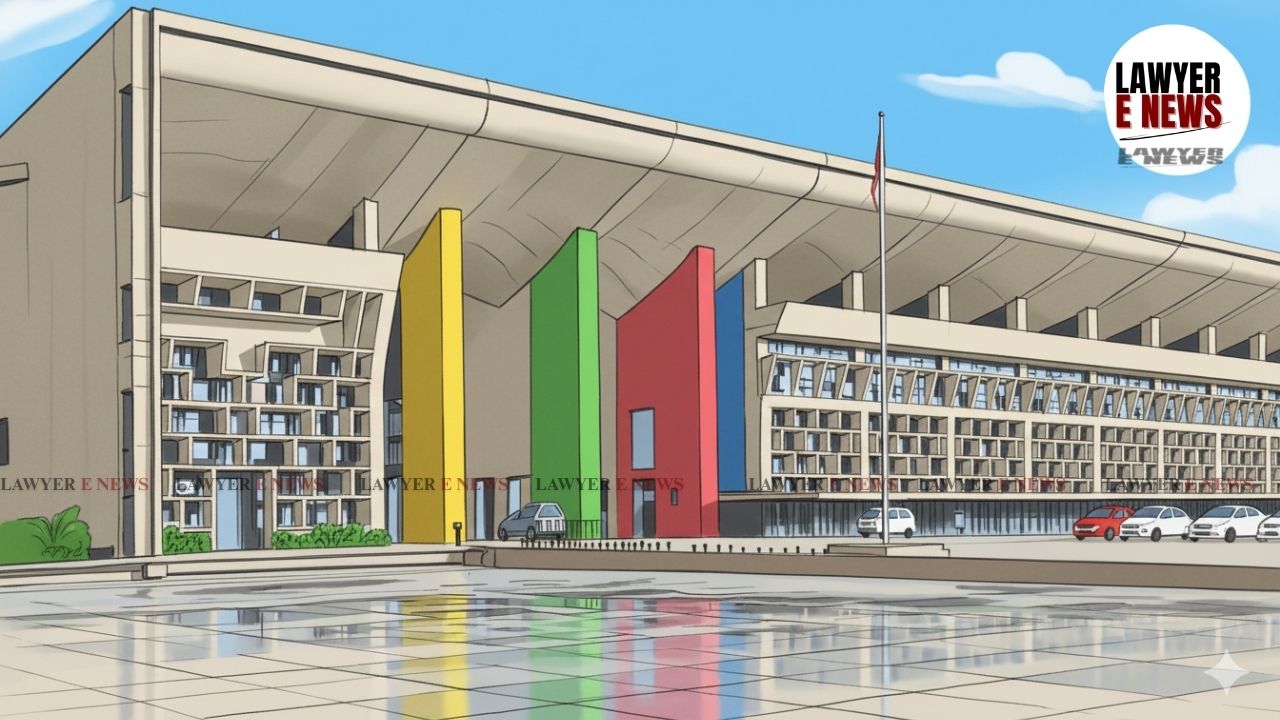
“The Moment the ‘Seat’ is Designated, It Becomes an Exclusive Jurisdiction Clause”, In a significant ruling clarifying the law on territorial jurisdiction in statutory arbitrations under the National Highways Act, the Punjab and Haryana High Court has held that once the seat of arbitration is fixed, courts at that place alone have exclusive supervisory jurisdiction. Dismissing 17 transfer applications filed by landowners, the Court ruled that objections under Section 34 of the Arbitration and Conciliation Act, 1996 must proceed before the competent courts at Jalandhar, where the arbitral proceedings were conducted and the awards pronounced.
Hon’ble Mrs. Justice Archana Puri addressed the contentious issue of whether Section 34 petitions challenging arbitral awards under Section 3-G(5) of the National Highways Act, 1956 should be heard where the acquired land is situated or where the arbitration proceedings were conducted. The outcome decisively affirmed the supremacy of the “seat” principle.
The applicants were landowners whose lands situated in District Amritsar were acquired pursuant to a notification under Section 3-A of the National Highways Act, 1956. Award No. 3 dated 15.04.2021 was passed determining compensation. Dissatisfied with the quantum, the landowners invoked Section 3-G(5) of the Act and sought arbitration before the Divisional Commissioner, Jalandhar, who had been appointed as Arbitrator by Central Government notification dated 23.06.2022.
The arbitration proceedings were conducted at Jalandhar. The award dated 03.12.2024 partly enhanced compensation but did not fully satisfy the landowners. They filed objections under Section 34 of the Arbitration and Conciliation Act before the District Judge, Amritsar. During pendency, the NHAI filed its own objections before the courts at Jalandhar.
The landowners thereafter moved the High Court seeking transfer of the Section 34 petitions filed at Jalandhar to Amritsar, contending that since the acquired lands were situated at Amritsar and their objections were earlier in time, Amritsar courts had jurisdiction.
The central legal issue before the Court was whether, in statutory arbitration under the National Highways Act, the place where the land is situated determines territorial jurisdiction for Section 34 proceedings, or whether the seat of arbitration governs exclusive jurisdiction.
The applicants relied heavily on a policy decision dated 11.10.2021 of NHAI, wherein it was resolved that objections under Section 34 would be filed in civil courts where the land was acquired, rather than at the location of arbitration proceedings. They argued that this policy was intended to avoid multiplicity and ease the burden on landowners. It was further contended that earlier transfer orders had followed this policy.
On the other hand, NHAI argued that the arbitration proceedings were conducted at Jalandhar pursuant to statutory notification, the award was signed and pronounced there, and therefore Jalandhar constituted the juridical seat. Once the seat is determined, only courts at the seat have exclusive supervisory jurisdiction.
The respondents relied upon the Supreme Court decisions in BGS SGS Soma JV v. NHPC Ltd., Hindustan Construction Company Ltd. v. NHPC Ltd., BBR (India) Pvt. Ltd. v. S.P. Singla Constructions Pvt. Ltd., and Inox Renewables Ltd. v. Jayesh Electrical Ltd.
Seat vs Venue in Statutory Arbitration
Justice Archana Puri undertook a detailed examination of Section 20 and Section 42 of the Arbitration and Conciliation Act and the authoritative pronouncements of the Supreme Court.
Referring to BGS SGS Soma, the Court noted the Supreme Court’s categorical declaration:
“Once the ‘seat’ has been chosen, which would then amount to an exclusive jurisdiction clause so far as Courts of the ‘seat’ are concerned.”
The High Court emphasized that even though the arbitration in the present case was statutory and not based on party agreement, the conduct of proceedings was decisive. The Divisional Commissioner, Jalandhar, appointed by notification, conducted the arbitration at Jalandhar. The parties participated without objection. The award was signed and pronounced at Jalandhar.
Rejecting the argument that the notification did not expressly fix the seat, the Court held that the place where arbitration proceedings were conducted and the award pronounced becomes the juridical seat by operation of law and conduct.
The Court observed that in such circumstances, “the moment the ‘seat’ is designated, it is akin to the exclusive jurisdiction,” and once no objection was raised at the relevant stage, parties are deemed to have accepted the seat.
Section 42 and the “Fastest Finger First” Argument Rejected
The applicants argued that since their Section 34 petitions were filed earlier at Amritsar, Section 42 of the Arbitration Act would confer exclusive jurisdiction upon that court.
The Court, relying on BBR (India), rejected this contention, noting that Section 42 applies only where the seat has not been determined prior to filing of court proceedings. In the present case, the seat at Jalandhar had already crystallized before the filing of objections. Therefore, the “fastest finger first” principle was inapplicable.
NHAI Policy of 11.10.2021 Held Subordinate to Settled Law
A significant aspect of the ruling concerns the NHAI policy decision dated 11.10.2021, under which objections were to be filed where the land was acquired.
The Court candidly observed that the policy appeared to have been framed “oblivious of the case law, settling the ‘seat’ of arbitration.” It held that administrative policy cannot override the statutory scheme and binding precedent of the Supreme Court.
Even though earlier transfer orders had followed the policy, those orders were based on administrative convenience and not in consonance with settled law. Once the law declared by the Supreme Court clarifies that courts at the seat alone have jurisdiction, such policy cannot prevail.
Effect of Yashpreet Singh and Subsequent Orders
The applicants relied upon the Supreme Court’s order in the SLP arising from Yashpreet Singh, where interference was declined but territorial jurisdiction was directed to be decided independently.
The High Court held that non-challenge to certain subordinate court orders does not dilute binding Supreme Court precedents like BGS SGS Soma. The seat principle continues to govern.
The High Court concluded that since the arbitration proceedings were conducted at Jalandhar and the awards were pronounced there, Jalandhar constituted the juridical seat. Consequently, courts at Jalandhar alone have exclusive jurisdiction to entertain Section 34 objections.
Accordingly, all 17 transfer applications were dismissed. The Section 34 objection petitions shall proceed before the competent courts at Jalandhar.
Date of Decision: 25 February 2026