-
by sayum
29 August 2026 5:21 AM







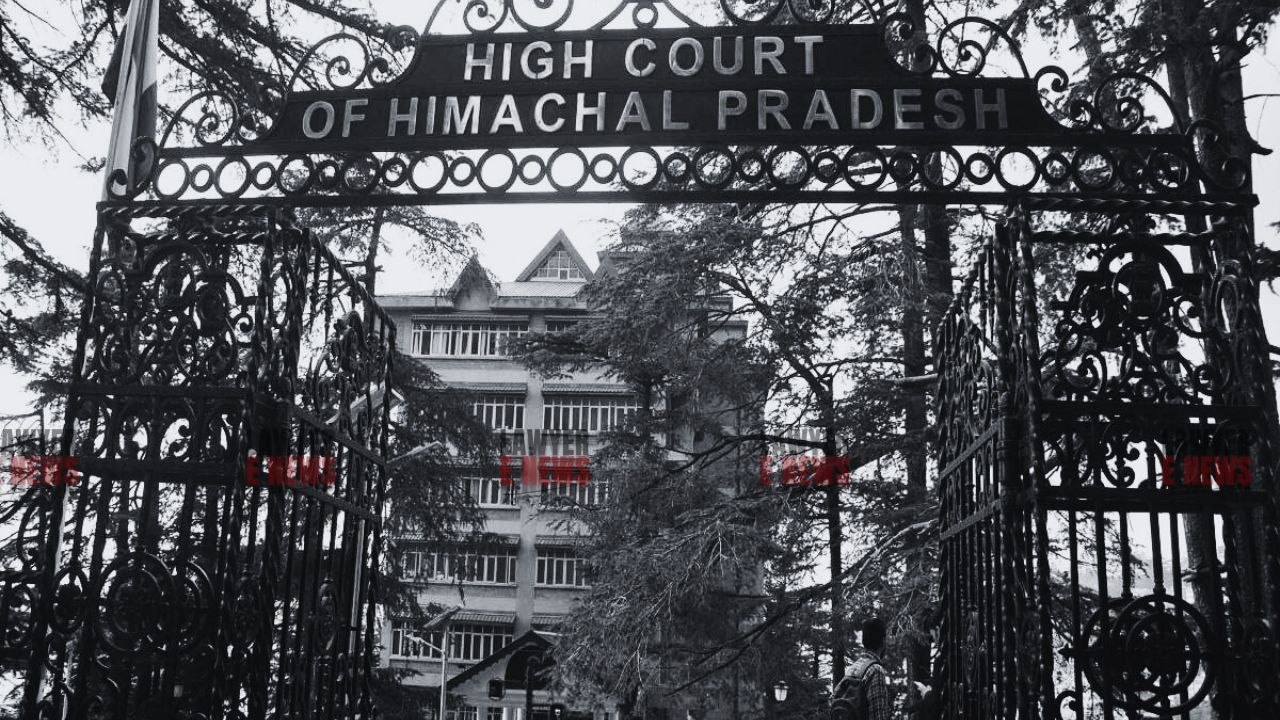
Himachal Pradesh High Court upheld the conviction of the accused under Section 138 of the Negotiable Instruments Act, 1881, rejecting the revision petition that challenged concurrent findings of conviction by the Trial and Appellate Courts. Justice Rakesh Kainthla dismissed the revision, holding that “no perversity or legal infirmity was found” and emphasized that once issuance and signature on the cheque are admitted, the presumption under Section 139 NI Act arises and must be rebutted by a probable defence, not mere assertions.
"Issuance And Signature On The Cheque Are Admitted—Presumption Under Section 139 Is Triggered"
The High Court reiterated that once the accused admitted the cheque bore his signature, the statutory presumption of legal liability under Sections 118 and 139 NI Act arose. The accused’s claim that the cheque was issued as a security was held to be contradictory, unsupported by evidence, and rightly rejected by the courts below.
In a detailed decision rendered on 28th August 2025, the Himachal Pradesh High Court in Manish Gautam v. Yogesh Kumar & Anr. upheld the conviction of the petitioner under Section 138 of the Negotiable Instruments Act, affirming the findings of both the Judicial Magistrate, First Class, Mandi (Trial Court), and the Sessions Judge, Mandi (Appellate Court). The revision petition was dismissed primarily on the ground that the statutory presumption under Section 139 of the NI Act was not rebutted by the accused, and no perversity or miscarriage of justice was shown in the concurrent findings. The case squarely dealt with issues relating to the presumption of liability, service of notice, and the scope of revisional jurisdiction.
The dispute arose from a complaint filed by Yogesh Kumar, the proprietor of Mittal Traders, Ner Chowk, alleging that the accused, Manish Gautam, had purchased goods worth ₹90,000 on credit and issued a cheque dated 25.03.2013 drawn on Punjab National Bank. Upon presentation on 26.03.2013, the cheque was dishonoured due to "funds insufficient". A legal notice dated 17.04.2013 was sent but the amount remained unpaid.
The complainant initiated proceedings under Section 138 of the NI Act, resulting in conviction by the Trial Court on 21.12.2023, sentencing the accused to 2 months' simple imprisonment and payment of ₹1,60,000 as compensation. The Sessions Court upheld the conviction and sentence on 03.07.2024, leading to the present revision.
The accused argued that the cheque was issued only as a security, not for any actual transaction, and alleged non-service of notice and lack of liability, also contending that the complaint was barred by limitation. The Court decisively held that no plausible defence was made out, and no legal infirmity existed in the concurrent judgments.
Presumption Under Section 139 NI Act – A Strong Presumption of Legal Liability
Justice Kainthla emphasized: “The accused admitted in his statement recorded under Section 313 CrPC that the cheque bears his signature… Therefore, a presumption would arise under Section 139 in favour of the complainant.”
The Court relied extensively on APS Forex Services (2020) 12 SCC 724, Triyambak S. Hegde v. Sripad (2022) 1 SCC 742, and Bir Singh v. Mukesh Kumar (2019) 4 SCC 197 to reiterate that once the signature is admitted, “there exists a legally enforceable debt or liability unless rebutted by the accused.”
The High Court noted that the accused failed to produce any bank account statement, receipt, or documentary proof to substantiate the claim that the cheque was a mere security instrument.
“The defence taken by the accused was contradictory… The accused asserted that the complainant used to credit payments into his account, yet produced no account statement to support this.”
Service of Legal Notice – Presumption Under Section 27 of General Clauses Act
The accused denied receiving the statutory legal notice under Section 138(b), but the Court applied the presumption under Section 27 of the General Clauses Act, reiterating the ruling in C.C. Alavi Haji v. Palapetty Muhammed (2007) 6 SCC 555:
“The notice was sent to the correct address and is deemed to have been served... In any case, no payment was made within 15 days of receiving court summons.”
Thus, the plea of non-service was deemed untenable.
Scope of Revisional Jurisdiction – Limited To Correcting Jurisdictional Errors
The Court relied on Malkeet Singh Gill v. State of Chhattisgarh (2022) 8 SCC 204 and Kishan Rao v. Shankargouda (2018) 8 SCC 165, reaffirming that revisional courts “are not appellate courts” and should interfere only if findings are perverse or result in miscarriage of justice.
“The present revision has to be decided as per the parameters laid down by the Hon’ble Supreme Court… The revisional court is not supposed to reappreciate evidence unless there is perversity.”
Defence of Security Cheque – Rejected As Contradictory and Unsubstantiated
The accused claimed that the complainant took 34 blank cheques as security. The Court dismissed this defence as implausible and contradictory:
“No explanation was given why the complainant would credit payments into the accused’s account… No documentary evidence was produced… The defence was rightly rejected.”
Dishonour Due to “Funds Insufficient” – Proved Through Bank Memo
The Court accepted the bank memo (Exhibit CW-1/C) as conclusive proof of dishonour under Section 146 of the NI Act, relying on Mandvi Cooperative Bank Ltd. v. Nimesh B. Thakore (2010) 3 SCC 83.
“No evidence was produced to rebut the presumption… The dishonour due to ‘funds insufficient’ stands proved.”
Sentence and Compensation – Not Excessive, But Justified By Delay and Legislative Purpose
The Court refused to reduce the 2-month sentence and ₹1,60,000 compensation, noting the cheque was issued in March 2013, and conviction was rendered only in December 2023.
“The object of Section 138 is to infuse credibility into cheques… The penal provision is intended to be deterrent.”
Referring to Kalamani Tex v. P. Balasubramanian (2021) 5 SCC 283, the Court held:
“An amount of ₹70,000 over the principal of ₹90,000 as compensation for over 10 years of litigation is neither excessive nor unreasonable.”
The High Court found no merit in the revision petition. It held that the accused admitted his signature, failed to rebut the statutory presumption, raised contradictory defences, and offered no evidence to dispute service of notice or legal liability. Thus, the conviction and sentence were upheld.
“The findings recorded by the learned Courts below that the accused had failed to rebut the presumption cannot be faulted… The present revision fails and is dismissed.”
Date of Decision: 28th August 2025